What should you look for when buying?
First, check whether a freestanding appliance or an integrated model will suit your kitchen. Then consider the load and how quickly you need your dishes washed. For households of two or more, the German Environment Agency also recommends a fully loaded 60 cm model as an efficient option, so check whether you have enough space and can fill it regularly.
| Consideration |
What to check when buying |
Who it matters most to |
| Fit and design |
Check the appliance’s height, width and depth against the niche or available space, and make sure the front and connections are compatible with the specific model. |
If only a particular niche or space will work in my kitchen, I need to choose a design that fits. Around 36% of consumers put fit first. |
| Room for bowls and dinnerware |
Compare your own bowls and plates with the rack height, adjustable upper basket and cutlery arrangement. Place-setting capacity does not determine whether individual bowls will fit. |
If I want to wash breakfast bowls and dinnerware together, the rack layout needs to work for my crockery. Around 29% of consumers prioritise loading space. |
| Having bowls ready in time |
Check the Eco programme duration separately from any suitable short or automatic programmes on the specific model. The Verbraucherzentrale recommends comparing consumption figures on the same programme basis. |
If I need certain bowls again before dinner, a suitable programme needs to fit my daily routine. Around 21% of consumers prioritise having their dishes ready again quickly. |
| Electricity, water and ongoing costs |
Compare electricity consumption per 100 Eco cycles and water consumption per Eco cycle on a like-for-like basis. Check delivery and installation separately. |
If I want to keep an eye on running costs, I compare the Eco figures and also check what services are needed to connect the appliance. Around 14% of consumers pay particular attention to these costs. |
Joybuy freestanding 45 cm models
The following Joybuy offers are for freestanding dishwashers with a width of 45 cm. They may suit you if your available space and connections can accommodate this type of appliance.
 No image available
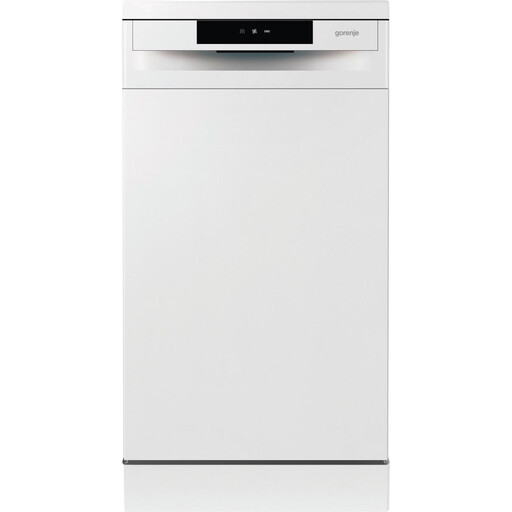
Gorenje GS520E15W, freestanding, 45 cm
An option if you’re looking for a freestanding 45 cm model with programmes for different washing needs.
9 place settings; dimensions 45 × 60 × 84.5 cm; 5 programmes, including Eco, Quick and 1 Hour.
View at Joybuy
 No image available
Beko BDFS26040XQ, freestanding, 45 cm
An option if you’d like flexibility when loading crockery and cutlery. Check how your bowls fit in the racks.
10 place settings; appliance dimensions 850 × 448 × 600 mm; energy efficiency class C; height-adjustable upper basket and cutlery drawer. Beko lists water consumption of 8.9 l per Eco cycle.
View at Joybuy
 No image available
Exquisit EGSP52109-E-030E, freestanding, 45 cm
An option if a freestanding model with a short programme would suit your daily routine.
9 place settings; dimensions 81.5 × 44.8 × 55 cm; 6 programmes, including Short, Intensive and Eco; adjustable basket with cutlery tray.
View at Joybuy
 No image available
Bosch SPS4HKW49E Series 4, freestanding, 45 cm
An option if flexible loading and an additional one-hour programme would suit your schedule.
10 place settings; appliance dimensions 84.5 × 45 × 60 cm; height-adjustable upper basket and cutlery drawer; a 1-hour programme is listed.
View at Joybuy
 No image available
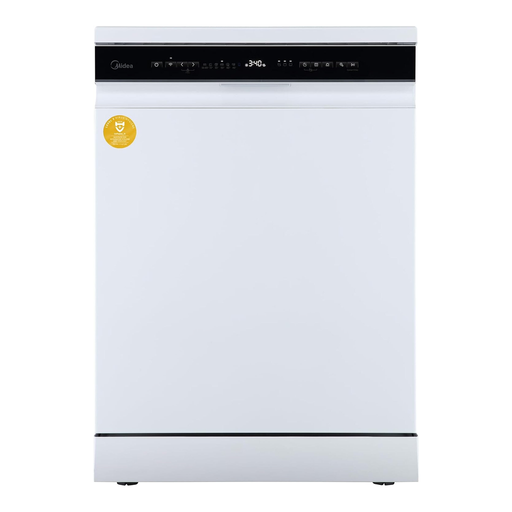
Midea MDWEF1034DW-WE, freestanding, 45 cm
An option if you’re looking for a freestanding dishwasher with an adjustable upper basket and a choice of programmes.
10 place settings; energy efficiency class C; height-adjustable upper basket, cutlery basket and delay start. Midea lists programmes including Eco, Auto and Quick.
View at Joybuy
Frequently asked questions
How can I leave breakfast bowls until the next wash?
Scrape off larger food scraps, but don’t routinely rinse your dishes by hand first. Load them so the water jets can reach their surfaces. For efficient Eco washing, the German Environment Agency recommends running a full load.
What do the energy label consumption figures tell me about a quick wash?
The figures are for the Eco programme: electricity consumption per 100 cycles, and water consumption and duration per Eco cycle. You can’t simply apply these figures to another programme. The European Commission also lists the label figures by programme.
What dimensions and connections should I check before installation?
Compare the appliance’s height, width and depth with the available space or niche. Check the door front, plinth and connections against the documentation for the specific model. Delivery and installation may be separate services.
What’s the difference between statutory rights and a manufacturer’s guarantee in Germany?
If an item is faulty, your statutory rights are against the seller. A manufacturer’s guarantee is an additional voluntary promise, subject to its own terms and conditions. The Verbraucherzentrale explicitly distinguishes between these two rights.
Can I put my old dishwasher in household rubbish?
No. Old electrical appliances must not go in general household waste. The German Federal Government identifies local recycling centres as the proper way to dispose of them. Also check whether the retailer offers to take your old appliance when you buy a new one.


