Households with limited kitchen space
If you only have a narrow space or recess available, make sure a freestanding, semi-integrated or fully integrated model will fit, including its dimensions.


First, choose a design that fits your available space or kitchen recess, then check that your cutlery and other dinnerware will fit together in the baskets. If you need your cutlery again soon, compare the cycle time of your chosen programme. For regular full loads, the Eco consumption figures on the EU energy label provide a useful basis for comparing running costs.
If you only have a narrow space or recess available, make sure a freestanding, semi-integrated or fully integrated model will fit, including its dimensions.
If you want to load your cutlery, plates and glasses together after a meal, check the layout of the specific model against the load you typically wash.
If you use your dishwasher regularly, it’s worth comparing Eco consumption figures and programme duration. The Verbraucherzentrale (German consumer advice centre) recommends looking at figures including electricity per 100 Eco cycles, water per cycle and the duration of the Eco programme.
A good fit if: you don’t have a suitable space for a built-in model with a furniture door and can position the appliance freestanding.
Things to consider: the height, depth and connections must also suit the available space.
A good fit if: you have a suitable space for a built-in model with a furniture door and want a seamless look across your kitchen units.
Things to consider: as well as the width, check the recess height and depth, plinth and door. The controls are hidden behind the furniture door.
A good fit if: you want to build the appliance into your kitchen units but are happy for the control panel to remain visible.
Things to consider: check the installation dimensions and furniture-door requirements. The stated number of place settings doesn’t guarantee that every type of load will fit.
First, measure the available space or recess and decide which design you need. Then compare the interior layout, programme duration and Eco consumption on a like-for-like basis.
| What to consider | What to look for | Who will find this important? |
|---|---|---|
| Design and dimensions | Measure the available space or recess, including its height and depth; check that the design and model dimensions match. | If I have a narrow recess, I want to be sure the appliance and its design will actually fit; around 36% of consumers put fit first. |
| Cutlery and dinnerware | Check the interior layout to see whether cutlery, plates and glasses will all fit together. | If I want to load everything together after a meal, the basket layout matters; around 29% of consumers prioritise space for cutlery and crockery. |
| Cycle time and noise | Check the duration of the programme you actually plan to use and the noise rating of the specific model separately. | If I need my cutlery again soon or the dishwasher will be running during the evening, cycle time and quiet operation matter; around 21% of consumers put these factors first. |
| Eco consumption and running costs | Compare kWh per 100 Eco cycles, litres per Eco cycle and Eco programme duration; factor in delivery and installation separately. | If I use my dishwasher frequently, I want to compare its running costs and use the Eco programme for full loads; around 14% of consumers prioritise running costs. |
The Verbraucherzentrale lists Eco figures and programme duration as points to compare. The German Environment Agency recommends running the dishwasher on the Eco programme only when it’s full, and not pre-rinsing dishes.
A width of 45 cm alone doesn’t tell you whether the height, depth and connections will suit the space you have.
Measure the available space or recess in full, then check the dimensions against your chosen design. For built-in appliances, remember to take the plinth and furniture door into account too.
The stated capacity won’t reflect every individual mix of cutlery, plates and glasses. A cutlery basket, cutlery drawer and adjustable baskets can all affect how much usable space there is.
Check the layout of the specific model and consider whether your usual plates and glasses will fit at the same time.
The figures on the EU energy label refer to the Eco programme; a quick programme is a different way of using the dishwasher.
If cycle time matters, check the duration of your chosen programme. Only compare consumption figures based on the same programme.
The models mentioned include slimline freestanding and fully integrated appliances, with different loading systems.
The models mentioned range from fully integrated slimline appliances to an under-counter model that should no longer be considered a current purchase option.
The semi-integrated DSS28021X is a specific example of a slimline appliance with a cutlery drawer and adjustable upper basket.
The specific slimline models mentioned include a freestanding appliance and a fully integrated appliance.
The EGSP 14895-1 E is another slimline built-in model. You can check its dimensions and interior layout against your kitchen’s requirements.
The Joybuy products featured here are slimline freestanding dishwashers. Check their dimensions against your available space, then make sure the interior layout suits your usual load.
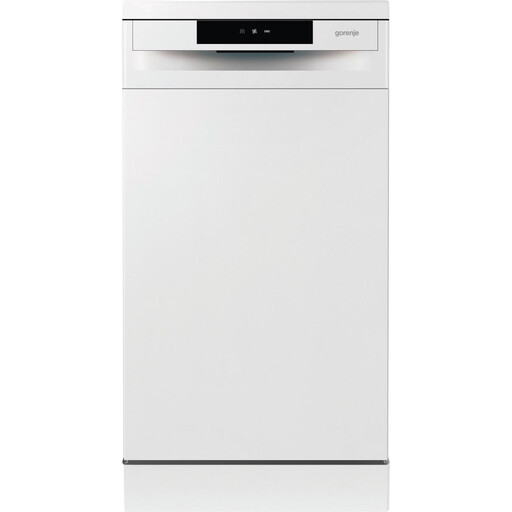 No image available
This freestanding 45 cm model is worth considering if its design suits your available space.
Product details: 9 place settings and 5 programmes.
Check whether your usual load of cutlery, plates and glasses will all fit together.
 No image available
This slimline freestanding model is an option if its design suits the space you have available.
Product details: 10 place settings and energy class C.
Check whether the interior layout can accommodate your usual combination of cutlery and dinnerware.
 No image available
This freestanding model is worth considering if you’re looking for a slimline appliance for an open space.
Product details: 9 place settings and 6 programmes, including Eco and Intensive.
Check whether the interior layout suits the items you want to wash together after a meal.
 No image available
This slimline freestanding appliance is an option if its dimensions suit your available space.
Product details: Vario-Flex basket system and energy class E.
Check the specific basket layout and make sure it suits the cutlery, plates and glasses you use at home.
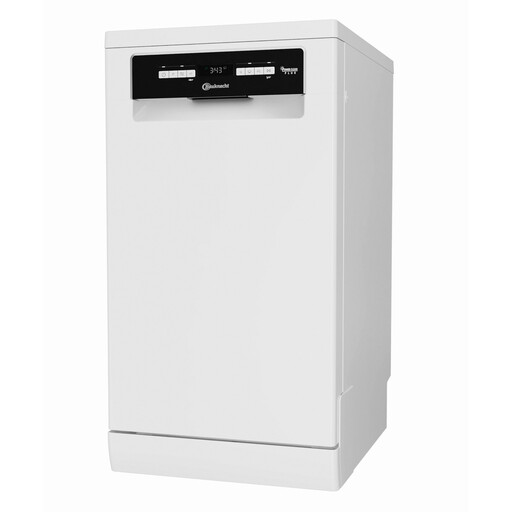 No image available
This model is worth considering if a freestanding dishwasher suits your available space.
Product details: 10 place settings, PowerClean and ActivDry.
Check that the interior layout suits your usual combination of cutlery and dinnerware.
A cutlery drawer can free up space in the lower basket for plates and other dishes. Still, check the height and layout of the other baskets on the specific appliance: a drawer alone doesn’t guarantee that every dinner load will fit.
The German Environment Agency recommends not pre-rinsing dishes, especially with warm water. Check the care instructions to see whether an individual piece of cutlery can go in the dishwasher. The glass-and-fork symbol indicates that an item is suitable for contact with food; it doesn’t replace this check.
The German Environment Agency explains that a dishwasher’s water-softening system needs regeneration salt to soften the incoming water. Follow the instructions for your specific appliance when setting it up and topping up the salt.
New household dishwashers use the EU energy label, with energy classes from A to G, rather than the old plus-rated label. EU labelling rules also apply to online sales; compare the figures for the specific model’s Eco programme. The label doesn’t require you to choose a particular energy class.