A small kitchen with a fixed space
If your kitchen has a fixed space for a dishwasher, measure its height and depth, as well as the clearance needed to open the door. Also check that the installation type works with your existing kitchen units.


A slimline dishwasher can fit in with your lunchbox routine, provided its design and dimensions suit your kitchen and its baskets can accommodate your plates, cutlery and dishwasher-safe containers. Choose between a freestanding, built-under or fully integrated model based on the available space and your kitchen units; then compare capacity, Eco programme consumption, cycle duration and noise levels. Don’t assume Eco figures apply to other programmes.
If your kitchen has a fixed space for a dishwasher, measure its height and depth, as well as the clearance needed to open the door. Also check that the installation type works with your existing kitchen units.
For weekday routines, check whether plates, cutlery and containers marked as dishwasher-safe in their instructions will fit in the baskets together. Look at the basket heights and how the cutlery is arranged.
Compare the Eco programme figures and operating noise rather than choosing on size alone. The Verbraucherzentrale explains how much electricity the Eco programme uses per 100 cycles.
First, check which design and dimensions will suit your kitchen and units. Then compare capacity, consumption and noise using the figures for the specific model and programme.
| Buying priority | What to check | Who it matters most to |
|---|---|---|
| Fit and design | Check the available space or recess, appliance dimensions, door clearance and whether you need a kitchen unit door. | If my kitchen has a fixed space, the appliance design and dimensions, including door clearance, must fit; around 33% of consumers put fit first. |
| Everyday capacity | Compare the basket layout, height adjustment and cutlery arrangement with your own dishes. | I want to fit plates, cutlery and suitable lunchbox items sensibly; around 27% of consumers prioritise everyday capacity. |
| Energy and water consumption | Compare kWh per 100 Eco cycles and litres per Eco cycle on a like-for-like basis. | If I run the dishwasher regularly, I want to compare its Eco programme consumption figures; around 20% of consumers put running costs first. |
| Cycle duration and noise | Check the Eco cycle duration and dB(A) rating, as well as the figures for any alternative programmes you plan to use. | If I need the dishes ready by the next morning or have an open-plan kitchen, I look at cycle duration and operating noise; around 20% of consumers prioritise cycle time or noise. |
Width alone won’t tell you whether the height, depth, door clearance and kitchen unit door will work with your existing kitchen.
Before ordering, compare the model diagram with the available space or recess, and check which installation type you need.
Depending on the offer, delivery, installation or changes to your kitchen layout may cost extra.
The glass-and-fork symbol indicates that an item is suitable for food contact, but it doesn’t tell you whether the container, lid and seals are dishwasher-safe.
Check the instructions for the specific container and each of its parts.
Comparable energy label figures refer to the Eco programme and don’t automatically show how much another programme will use.
Consider the Eco cycle duration and consumption separately from the figures for other programmes.
According to Beko Deutschland, the freestanding BDFS26040XQ is a 45 cm dishwasher with 10 place settings.
The SPV2HMX42E is a fully integrated 45 cm dishwasher for a suitably planned kitchen.
The BSUO 3O33 PF X is a 45 cm built-under model.
The G 5790 SCVi SL is a fully integrated 45 cm dishwasher with a cutlery drawer.
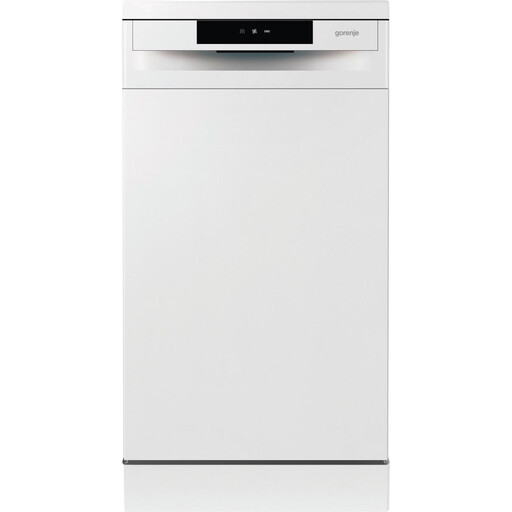
The freestanding 45 cm models below could suit a suitable space where you don’t need a dedicated kitchen unit door. Compare their dimensions with your kitchen and check the basket layout against your own dishes.
 No image available
The freestanding 45 cm design suits a suitable space where you don’t need a dedicated kitchen unit door.
9 place settings; five programmes, including Eco and Quick; AquaStop; self-cleaning filter.
 No image available
The freestanding design could suit a suitable space outside a kitchen layout planned around a dedicated unit door.
10 place settings; height-adjustable upper basket; energy efficiency class C; 59 kWh per 100 cycles; 8.9 litres per cycle; 44 dB(A).
 No image available
This freestanding model is an option if you have space for a 45 cm appliance.
9 place settings; six programmes; height-adjustable basket; cutlery drawer; stated appliance dimensions: 81.5 × 44.8 × 55 cm.
 No image available
This freestanding 45 cm model will fit only if its dimensions suit the space you have in mind.
10 place settings; energy efficiency class E; Eco, Auto and Intensive programmes; height-adjustable basket system and cutlery drawer; stated appliance dimensions: 84.5 × 45 × 60 cm.
 No image available
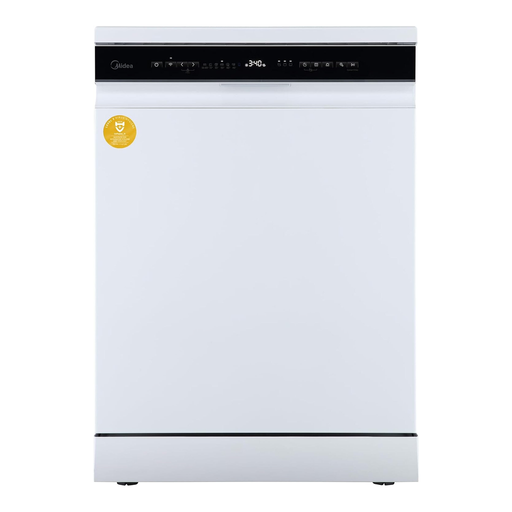
The freestanding design could suit a suitable space where you don’t need a dedicated kitchen unit door.
10 place settings; energy efficiency class C; height-adjustable upper basket; cutlery basket; delay start; Aqua Stop; stated appliance dimensions: 84.5 × 45 × 60 cm.
Check the instructions for the specific container and its individual parts. The Verbraucherzentrale explains that the glass-and-fork symbol indicates suitability for food contact, not automatic dishwasher safety.
The Umweltbundesamt recommends running the dishwasher on the Eco programme with a full load whenever possible. Also follow the instructions for your specific model when using it for the first time and carrying out maintenance.
Measure the available space or recess and compare the height, width, depth, door clearance and design with the specifications for the specific model. Follow the instructions for connection and installation; a stated width of 45 cm alone doesn’t confirm that the appliance will fit.
The EU energy label for household dishwashers uses a scale from A to G, introduced on 1 March 2021. The European Commission also lists electricity consumption per 100 Eco cycles on the label; this figure doesn’t automatically describe the consumption of another programme.