Who might benefit from a slimline dishwasher?

Hosts with lots of lunch boxes

After a bring-and-share meal, you may need to fit several dishwasher-safe containers and lids of different shapes into the dishwasher. Check how the baskets work with your own items rather than relying on the place-setting capacity alone.

Households with lots of plastic items

If you want to put plastic containers away soon after washing, drying features are an important point of comparison. Plastic items may still be damp after the wash cycle.

Households short on kitchen space

If space is limited, first choose between a freestanding model and a built-in option that fits your existing recess. Compare the appliance dimensions and, for built-in models, the recess and cabinet-door requirements.

Buying priorities: what to look for

Freestanding model

A good fit if: you have a suitable space with the right connections and don’t need a matching cabinet door.

Consider: a freestanding model won’t have a fully integrated kitchen door, and its place-setting capacity doesn’t tell you whether your containers will fit.

Semi- or fully integrated model

A good fit if: you have a suitable fitted recess and matching cabinet door. On semi-integrated models, the control panel remains visible.

Consider: the recess height, plinth and cabinet door must suit the specific model. The installation type alone tells you nothing about how well it dries plastic.

What matters What to check before buying Who will find it especially important
Space for containers and lids Measure your usual items and check the basket heights and how space is divided between cutlery and containers. The Verbraucherzentrale points out that the place-setting capacity doesn’t tell you how your specific load will fit. If I want to wash lots of differently shaped containers and loose lids after a bring-and-share meal, the usable basket layout matters more to me than the place-setting capacity; around 33 % of consumers prioritise space for containers and lids.
Drying plastic Compare the drying features listed for the specific model and the conditions attached to the manufacturer’s claims. Bosch Hausgeräte lists specific comparison and programme conditions for PerfectDry. If I want to put plastic containers away again soon, I check the drying technology on the specific model and the conditions it depends on; around 27 % of consumers prioritise drying plastic.
Reusing containers after a meal Check the duration and load requirements of the short or automatic programme you plan to use, as well as the drying time afterwards. The Eco programme duration isn’t a guide to how long a short programme takes. If I need the containers again soon, I compare the duration of a suitable programme, including drying time; around 20 % of consumers prioritise having their items ready to use again quickly.
Energy and water use Compare kWh per 100 Eco cycles and litres per Eco cycle on the same labelling basis. The European Commission and the Verbraucherzentrale explain the figures for the Eco programme. If I use the appliance regularly, I compare the Eco figures without applying them to other programmes; around 20 % of consumers focus primarily on running costs.

Common buying mistakes

  • Assuming place settings mean there’s room for lunch boxes

    The standard capacity figure doesn’t show exactly how oddly shaped containers and loose lids will fit in the baskets.

    Check the basket layout against the dimensions of the items you use most often, and look for adjustable baskets.

    If you can’t fit everything in at once, you may need to run extra wash cycles or wash some items by hand.

  • Using Eco label figures to judge the quick programme

    The figures on the EU energy label relate to the Eco programme and aren’t a general guide to the other programmes.

    Compare Eco figures on the same basis, and check the duration and suitability of a short programme separately.

  • Confusing food-contact suitability with dishwasher safety

    The glass and fork symbol indicates that an item is suitable for food contact, not that it is dishwasher-safe. The Verbraucherzentrale makes this distinction.

    Check the care and usage instructions for each container, lid and other component separately.

Key brands and model ranges

Bosch

Bosch offers slimline freestanding and built-in models. The freestanding SPS6EMI21E is one example with an adjustable basket.

  • Bosch Hausgeräte lists the SPS6EMI21E as measuring 845 × 450 × 600 mm, with energy efficiency class B and an adjustable basket.
  • Claims about PerfectDry apply to suitably equipped models and the specific test conditions stated. You can’t assume they apply to every model just because it’s a Bosch.

Siemens

The German Siemens range includes slimline semi-integrated models with a visible control panel.

  • A visible control panel may suit your existing kitchen design.
  • Zeolith drying is only available on suitably equipped models. Check the model name and recess dimensions individually.

Miele

The fully integrated G 5790 SCVi SL lists QuickPowerWash and AutoOpen among its features.

  • These features give you specific points to compare when looking at programme duration and drying.
  • They don’t provide independent measurements of how your particular load of containers will be cleaned and dried.

Beko

Beko offers slimline freestanding models with a range of features, so check the details for each individual model.

  • Beko lists an adjustable upper basket and energy efficiency class C for the BDFS26040XQ.
  • For the SGS0445PS, Beko lists a non-adjustable upper basket and energy efficiency class F. These details apply to the specific models named.

AEG

The freestanding FFB73527ZM is a slimline dishwasher with AirDry and a height-adjustable upper basket.

  • AEG lists a capacity of 10 place settings and water consumption of 9,9 l per Eco cycle for this model.
  • Check whether the specific basket layout suits your containers and lids. The model details don’t confirm how well your particular load will dry.

Joybuy product overview

The Joybuy models listed are slimline freestanding dishwashers. They’re worth considering if you have a suitable space; before buying, check the appliance dimensions and basket layout for your containers and lids.

Beko BDFS26040XQ, freestanding slimline dishwasher, 45 cm

Beko BDFS26040XQ, freestanding, 45 cm, 10 place settings

The slimline freestanding design is an option if you have a suitable space for it.

Listed with a height-adjustable upper basket and energy efficiency class C.

View at Joybuy

Exquisit EGSP52109-E-030E, freestanding, 45 cm, 9 place settings

Exquisit EGSP52109-E-030E, freestanding, 45 cm, 9 place settings

This slimline freestanding model is an option for kitchens with limited space.

The product details list six programmes, an adjustable-height basket, a cutlery drawer and an Extra-Drying function.

View at Joybuy

Bosch SPS4HKW49E Series 4, freestanding, 45 cm, energy efficiency class E

Bosch SPS4HKW49E Series 4, freestanding, 45 cm

This freestanding 45 cm model may suit you if you want to adjust the basket components to fit items of different shapes.

Listed with a Vario-Flex basket system, height-adjustable upper basket, foldable elements and Extra Drying; energy efficiency class E.

View at Joybuy
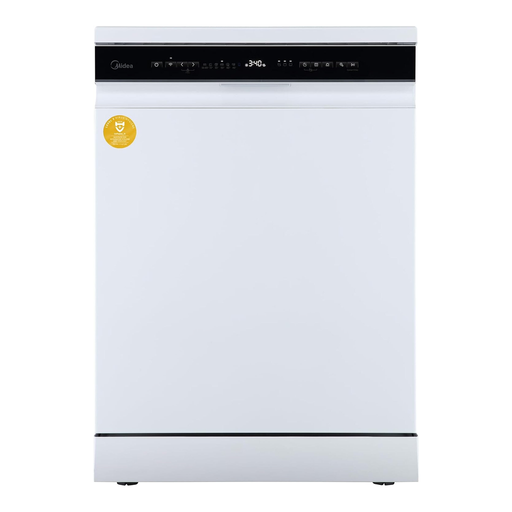
Midea MDWEF1034DW-WE, freestanding, 45 cm, 10 place settings

Midea MDWEF1034DW-WE, freestanding, 45 cm, 10 place settings

The slimline freestanding design is made for a suitable space.

Listed with a height-adjustable upper basket, cutlery basket and energy efficiency class C.

View at Joybuy
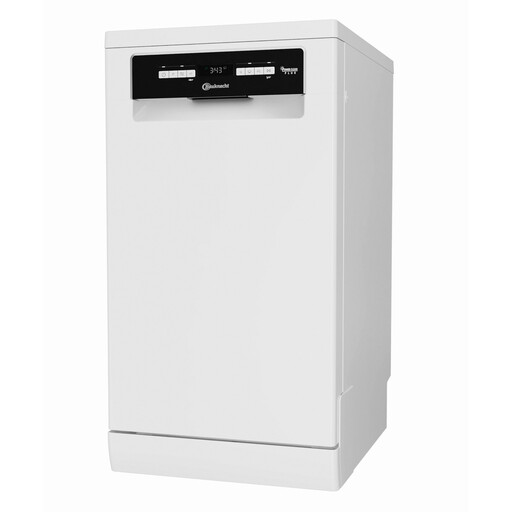
Bauknecht BSFO 3035 PF, freestanding, 45 cm, 10 place settings

Bauknecht BSFO 3035 PF, freestanding, 45 cm, 10 place settings

This slimline freestanding model is an option if your kitchen has room for a freestanding appliance.

Listed with a height-adjustable upper basket, cutlery drawer, flexible basket elements and ActivDry; energy efficiency class D.

View at Joybuy

Frequently asked questions

Is the glass and fork symbol enough to show that a lunch box is dishwasher-safe?

No. The symbol indicates that an item is suitable for food contact, not that it is dishwasher-safe. Check the instructions for the container, lid and any other parts separately.

What should I set before using the dishwasher for the first time?

Find out the water hardness in your area and set the water-softening system according to the instructions for your specific appliance. Bosch also recommends checking the information provided by your water supplier.

How can I compare running costs without mixing up programme figures?

Use the EU energy label figures for kWh per 100 Eco cycles and litres per Eco cycle as a consistent basis for comparison. Your actual costs will also depend on how often you use the appliance, the programmes you choose, and your electricity and water rates.

What labelling and consumer rights apply when buying in Germany?

Since 1 March 2021, covered household dishwashers have used the EU energy label with a scale from A to G, as explained by the European Commission. The Verbraucherzentrale says that, for a consumer purchase, the seller is generally liable for defects that were present at the time of delivery for two years. This is separate from a voluntary manufacturer’s guarantee.

Does a dishwasher programme automatically make containers hygienically safe for any food you bring along?

No. Follow the suitability guidance for each container, and take care to avoid transferring germs between foods when filling and storing them. The German Federal Institute for Risk Assessment explains that cross-contamination can be a way for germs to spread.