Who is a slimline dishwasher suitable for?

Homes with a small kitchen

If space is limited, first decide between a freestanding and built-in model, then check the appliance dimensions against the available space. The consumer advice centre recommends checking the information on the EU energy label before you buy.

People who use cups on weekdays

If you need your cups and any approved removable parts again the next day, consider rack space, how securely they can be arranged and how long the selected programme takes. Siemens recommends putting plastic items in the top basket and making sure the spray arms can rotate freely.

Small households that wash up frequently

If you run the dishwasher regularly, it’s worth looking at capacity and Eco consumption figures together. The European Commission lists energy consumption per 100 Eco cycles, water consumption per cycle and programme duration on the EU energy label, among other details.

What should you consider when choosing one?

Freestanding model

A good fit if: you don’t have a matching cupboard door for a built-in model and there’s enough room for the appliance’s full external dimensions.

What to weigh up: Even with a width of 45 cm, the height, depth and connections must suit the intended location.

Fully integrated built-in model

A good fit if: you have a suitable built-in space and a matching cupboard door.

What to weigh up: As well as the appliance width, check the installation dimensions, door panel and fitting requirements.

What matters What to check before buying Who will find this especially important?
Style and installation dimensions Check the appliance dimensions, including height and depth, against the space, cupboard door and connections. If I need to fit a slimline appliance into a particular kitchen, I first want to know whether the space for a freestanding model or built-in unit will actually work. Around 26% of consumers prioritise the appliance style and installation dimensions.
Space for cups and lids Check basket height, cup shelves and space for small parts using your actual cup dimensions, and make sure each individual part is approved for dishwasher use. If I need to fit tall cups and their lids into one load, I look for a secure arrangement that won’t block the spray arms. Around 26% of consumers put space for cups and lids first.
Wash time before morning Compare the duration of the programme you plan to use, any delay start option and its suitability for the items you’re washing. If I need the cups again the next working day, what matters to me is whether the evening wash will finish in time. Around 21% of consumers prioritise this time window.
Energy and water consumption Compare kWh per 100 Eco cycles and litres per Eco cycle on a like-for-like basis, and take how often you use the dishwasher into account. If running costs matter when I wash up regularly, I want to consider the Eco programme’s consumption figures alongside how often I use it. Around 16% of consumers put running costs first.
Noise in an open-plan kitchen Check the stated airborne noise emissions for the specific model against where you plan to put it. If the dishwasher runs within earshot in the evening, the noise level matters more to me than extra programmes. Around 11% of consumers prioritise quiet operation.

Common mistakes when choosing

  • Assuming a 45 cm width means it will fit your kitchen

    Slimline models vary in height, depth and style. A suitable width alone doesn’t tell you whether the appliance will fit your kitchen.

    Compare the full installation plan with the available space or built-in unit, and check the existing connections.

  • Assuming place settings guarantee room for your cups

    The stated capacity doesn’t tell you whether tall cups and small lid parts will fit securely. Packing items too closely can also block the spray arms.

    Check the baskets and holders with your cups, and make sure each individual part is approved for dishwasher use by its manufacturer.

  • Comparing Eco consumption with a quick programme

    The figures on the EU energy label relate to the Eco programme and don’t necessarily indicate how much a shorter programme uses.

    Compare programme times and consumption figures on the same basis. The European Commission lists Eco consumption and programme duration on the label, among other details.

  • Assuming a model name guarantees the same features

    Details in a specific product listing, such as the cutlery storage or appliance style, may differ from the manufacturer’s information.

    Before you buy, check the full model name, features and installation requirements against the specific product documentation.

Brands and models to consider

Midea

The MDWEF1034DW-WE is a freestanding 45 cm model for kitchens where a freestanding appliance is an option.

  • Midea Germany lists 10 place settings and several programmes.
  • The manufacturer’s listing mentions a cutlery drawer, while the product listing says cutlery basket. Check the features of the specific version.

Bauknecht

According to the manufacturer, the BSFO 3O35 PF is a freestanding model with a width of 45 cm.

  • Bauknecht lists a cutlery drawer and a model-specific PowerClean system.
  • If product listings give conflicting details, confirm the appliance style, placement and installation requirements before choosing.

Bosch

The SPS4HMI49E is a freestanding Series 4 dishwasher with a width of 45 cm.

  • Bosch lists flexible baskets and water consumption of 9.5 l per Eco cycle.
  • This model has an energy efficiency rating of E; these details don’t apply to other Bosch series across the board.

Siemens

The SR63EX25KE is a fully integrated 45 cm model for a suitably fitted kitchen.

  • For this model, Siemens lists a B rating, 8.7 l per Eco cycle and autoOpen dry.
  • The appliance dimensions of 815 × 448 × 550 mm don’t replace checking the full installation requirements.

AEG

The FSE32407Z is a fully integrated 45 cm model with an adjustable top basket and cup shelves.

  • AEG lists 9 place settings and an Eco programme duration of 4:00 hours.
  • This model has a rating of E. The programme duration and efficiency details apply to this appliance.

Joybuy products for a small kitchen

This selection features freestanding 45 cm dishwashers to consider for a small kitchen and when planning your cup-washing routine.

Gorenje GS520E15W, freestanding dishwasher, 45 cm wide

Gorenje GS520E15W, 45 cm

A freestanding model for kitchens with room for a standalone appliance, with a shorter programme that may suit your schedule.

9 place settings and 5 programmes, including Quick and 1-hour.

Appliance dimensions: 84,5 × 45 × 60 cm.

View at Joybuy

Beko BDFS26040XQ, freestanding slimline dishwasher with cup shelves

Beko BDFS26040XQ, 45 cm

A freestanding option for households looking for an adjustable top basket and cup shelves to help arrange cups.

10 place settings, energy efficiency class C, height-adjustable top basket and fold-down cup shelves.

Appliance dimensions: 850 × 448 × 600 mm.

View at Joybuy

Exquisit EGSP52109-E-030E, freestanding dishwasher, 45 cm wide

Exquisit EGSP52109-E-030E, 45 cm

A freestanding option if cup holders and a delayed start are useful for planning your evening routine.

9 place settings and 6 programmes; a quick programme and a start delay of up to 24 hours are listed.

Height-adjustable basket and fold-down cup holders.

View at Joybuy
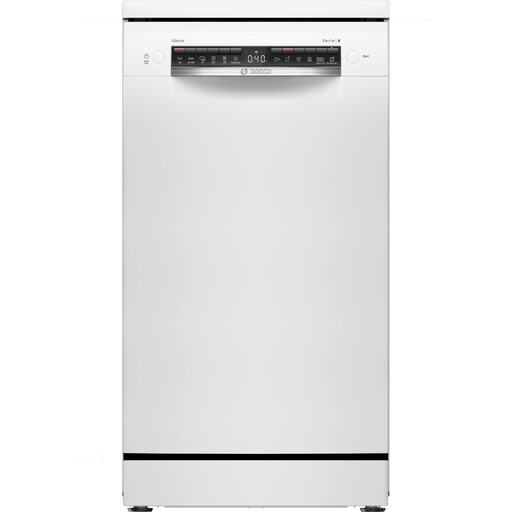
Bosch SPS4HKW49E Series 4, freestanding dishwasher, 45 cm wide

Bosch SPS4HKW49E Series 4, 45 cm

A freestanding option to consider when planning an evening wash. Compare the Eco programme duration with the time you actually have available.

6 programmes, including a 1-hour programme; the Eco programme is listed as taking 3:40 hours.

Height-adjustable baskets, cup shelves and a start delay of 1–24 hours. Energy efficiency class E.

Appliance dimensions: 84,5 × 45 × 60 cm.

View at Joybuy
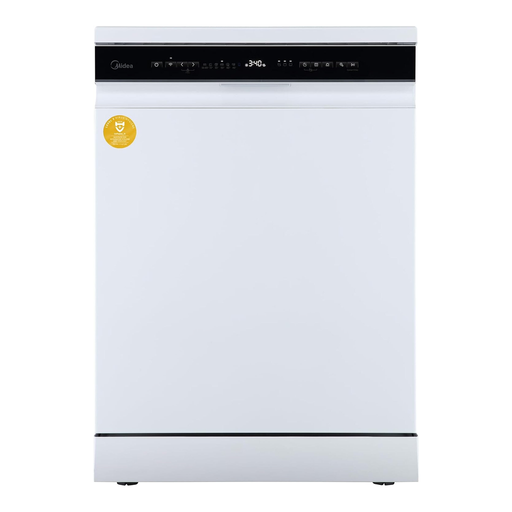
Midea MDWEF1034DW-WE, freestanding dishwasher, 45 cm wide

Midea MDWEF1034DW-WE, 45 cm

A freestanding option with a delay start, so you can fit a wash into your evening routine.

10 place settings, height-adjustable top basket and energy efficiency class C are listed.

The manufacturer’s listing mentions a cutlery drawer, while the product listing says cutlery basket. Check the features of the specific version before buying.

View at Joybuy

Frequently asked questions

Can every part of a dishwasher-safe lunch cup go in the dishwasher?

No. Check separately whether the lid, seals and other removable parts are approved for dishwasher use. Siemens recommends putting plastic items in the top basket and arranging hollow items so water can drain away and the spray arms remain unobstructed.

Which details on the EU energy label can help me choose?

The EU energy label includes the efficiency class, energy consumption per 100 Eco cycles, water consumption per Eco cycle, Eco programme duration, capacity and noise emissions, among other details. The European Commission lists these details for dishwashers; Eco figures don’t automatically show the consumption of a quick programme.

What should I check before installing or fitting a dishwasher?

Check the appliance dimensions and style against the space or built-in unit, and consult the installation instructions for the water inlet, drainage and electrical connection. A fully integrated model also needs a suitable cupboard door.

What maintenance is recommended if I use my dishwasher regularly?

Follow the instructions for your specific model. Siemens’ care advice covers filters, possible limescale deposits and odours; the maintenance required depends on the appliance.

What legal rights apply when buying from a business seller?

According to information from the European Union, faulty goods come with a minimum two-year legal guarantee from the seller. Any additional manufacturer’s guarantee does not replace these statutory rights.