What should you look for when buying?
Start by deciding on the design and checking the space available. Then see whether your usual load will fit, and consider which Eco figures and drying features matter most in your day-to-day life.
| What matters |
What to check when buying |
Who will find this particularly important? |
| Fit and design |
Compare the appliance dimensions with your niche or available space, and check the connections required for the specific model. |
If I first need to know whether a freestanding or built-in appliance will fit in my kitchen, I check the dimensions first. Around 29% of consumers prioritise fit. |
| Space for the weekly load |
Check your largest containers, basket height and a secure place for loose lids; the spray arms must be able to move freely. |
If containers, lids and other dishes all need to fit, the actual basket layout matters most to me. Around 29% of consumers prioritise fitting their usual load. |
| Drying plastic items |
Compare the care instructions for each part of your containers with the drying function of the specific model. |
If I want to put plastic containers away soon after a wash, I look out for any residual moisture. Around 24% of consumers prioritise drying plastic items. |
| Eco consumption and running costs |
Compare kWh per 100 Eco cycles, litres per Eco cycle, programme duration and noise level. |
If I want to compare the running costs of my usual wash cycles, I need figures for the same programme. Around 18% of consumers prioritise consumption and running costs on the Eco programme. |
The EU energy label shows, among other things, electricity consumption per 100 Eco cycles and water consumption per Eco cycle. To work out your own electricity costs, you’ll also need to know how many cycles you run and your electricity tariff. The Eco figure doesn’t tell you how much other programmes use.
Dishwashers at Joybuy
This selection features slimline freestanding dishwashers to help households compare freestanding models with their usual load of containers.
 No image available
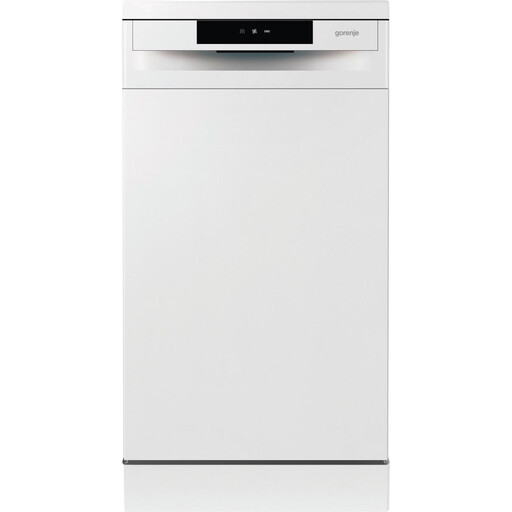
Gorenje GS520E15W
The freestanding 45 cm design may suit a suitable space; check that your containers and lids fit the basket layout.
Specifications include 9 place settings, 5 programmes, a stainless-steel interior and AquaStop.
View at Joybuy
 No image available
Beko BDFS26040XQ
The adjustable upper basket may be useful when loading items of different heights; compare the basket layout with your containers.
45 cm, 10 place settings and energy class C. Beko lists water consumption of 8,9 l per Eco cycle and 44 dB(A) for this model.
View at Joybuy
 No image available
Exquisit EGSP52109-E-030E
Check whether the stated basket features are suitable for your containers and other dishes, and leave enough room to load everything securely.
Specifications include 9 place settings, 6 programmes and a 45 cm width; an Eco mode and silver finish are also listed.
View at Joybuy
 No image available
Bosch SPS4HKW49E Serie 4
If a freestanding appliance is right for your kitchen, compare the height of the upper basket and the basket layout with your usual load.
Bosch lists this model’s dimensions as 845 × 450 × 600 mm. The product name specifies 45 cm and energy class E.
View at Joybuy
 No image available
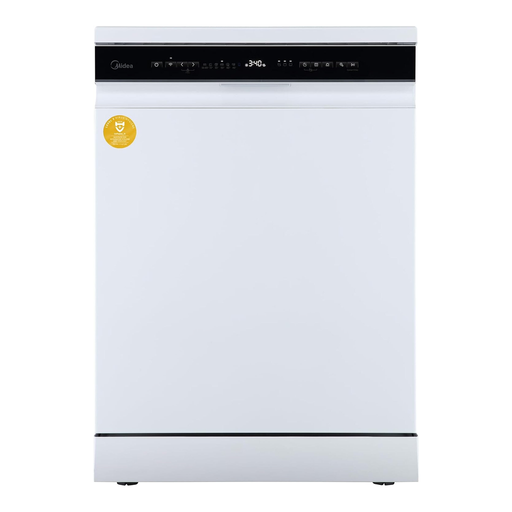
Midea MDWEF1034DW-WE
The adjustable upper basket may be useful for items of different heights; check that containers and lids will fit securely.
Specifications include a 45 cm width, freestanding design, 10 place settings, a cutlery basket and energy class C.
View at Joybuy
Frequently asked questions
Can all parts of a dishwasher-safe lunchbox go in the dishwasher together?
No. Check the care instructions for the container, lid and seal separately. The glass-and-fork symbol indicates that an item is suitable for contact with food; it doesn’t automatically mean it’s dishwasher-safe. Siemens recommends placing suitable plastic items in the upper basket and securing small items.
Which figures on the energy label are useful for comparison?
For comparing Eco programmes, the most relevant figures are kWh per 100 cycles and litres per cycle. The EU label also shows Eco programme duration, capacity and noise level; it doesn’t tell you how much electricity other programmes use.
What should I set before the first wash?
Find out the water hardness in your area and set the water softener according to the instructions for your specific appliance. Bosch also lists dishwasher salt and rinse aid as steps for first-time use; always follow the instructions for your model.
Are a manufacturer’s guarantee and statutory consumer rights the same thing?
No. Statutory consumer rights apply to faults and are the seller’s responsibility; a manufacturer’s guarantee is an additional, voluntary offer with its own terms and conditions. The consumer advice centre explains changes to repair law since 31 July 2026; what applies in an individual case depends, among other things, on the circumstances of the purchase and the fault.
Can an old dishwasher go in household waste?
No. According to information from the German Federal Ministry for the Environment, old electrical appliances must be taken to an authorised collection point. If you’re having a new appliance delivered, check in advance what take-back arrangements apply to your old one.


