What to look for when choosing
First, work out which design and dimensions will suit your space. Then consider whether your mugs will fit, when you need clean dishes and how you usually load the appliance.
Freestanding appliance
A good fit if: you have space with the necessary connections and don’t want to use a built-in recess with a furniture door.
Things to consider: Midea lists several programme types for the MDWEF1034DW-WE. This doesn’t tell you how well it cleans or how efficiently it runs with small loads of mugs.
Semi-integrated appliance
A good fit if: you want a built-in model with a visible control panel. For the Beko DSS28021X, the manufacturer lists features including a height-adjustable upper basket and a delay-start function.
Things to consider: The dimensions, recess, furniture door and your mugs all need to fit together. These details apply to this model, not to every semi-integrated appliance.
Fully integrated appliance
A good fit if: you’re looking for a fully concealed built-in model. Miele lists the G 5790 SCVi SL as a fully integrated 45 cm model.
Things to consider: Check that the recess and furniture door are suitable. The presence of a quick programme doesn’t replace comparing cycle times and consumption with your own usage habits.
| Buying priority |
What to check |
Who it matters most to |
| Having clean mugs ready in time |
Check the cycle time and loading instructions for the specific model. Don’t judge cleaning performance or consumption by the programme name alone. |
If you need your mugs before the next full wash, pay particular attention to the cycle time available; around 33% of consumers put this need first. |
| Finding a suitable narrow space |
Check the design as well as the height, width and depth. For built-in models, also check the recess and furniture door. |
If there’s only one narrow space available in your kitchen, its dimensions will determine which designs will fit; around 33% of consumers prioritise finding a suitable space. |
| Consumption when running repeated cycles |
Compare energy per 100 Eco cycles, water per Eco cycle and Eco cycle duration on the EU energy label. The German Environment Agency recommends a full load and the Eco programme. |
If you wash dishes often and want to limit your ongoing electricity and water use, distinguish Eco figures from other ways of using the appliance; around 25% of consumers prioritise this. |
| Fitting mugs of different sizes |
Compare the height and shape of your mugs with the basket height and adjustment options. Check there’s also enough room for other dishes. |
Tall or wide mugs need to sit securely and fit properly in the basket; around 9% of consumers put mug fit first. |
Joybuy products for narrow spaces
This product selection features slimline freestanding dishwashers for kitchens without a suitable built-in space. Before choosing, check the dimensions, basket layout and cycle time that matters for your day-to-day use.
 No image available
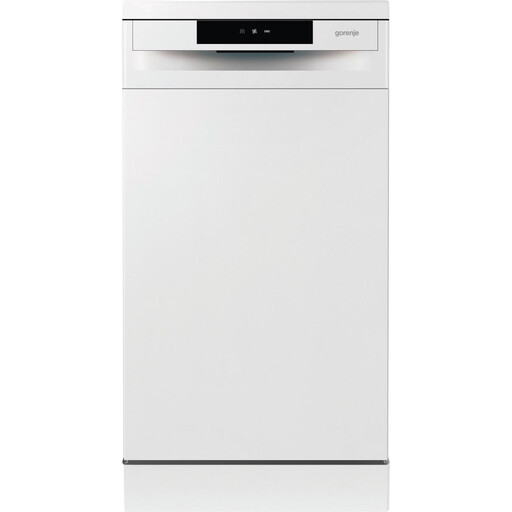
Gorenje GS520E15W, freestanding, 45 cm, white
An option if you need a slimline freestanding appliance; check that the basket layout can accommodate your mugs.
The product title lists 9 place settings and 5 programmes.
Joybuy
 No image available
Beko BDFS26040XQ, freestanding, 45 cm, energy class C
This freestanding design is intended for a narrow space without a suitable built-in option; compare the appliance dimensions with the space you have.
The product title lists 10 place settings and energy class C.
Joybuy
 No image available
Exquisit EGSP52109-E-030E, freestanding, 45 cm, silver
For a narrow freestanding space; check that the dimensions and basket layout suit your kitchen and mugs.
The product title lists 9 place settings, 6 programmes and a delay-start function.
Joybuy
 No image available
Bosch SPS4HKW49E Series 4, freestanding, 45 cm, energy class E
A freestanding option for a narrow space; compare the full dimensions and check whether the basket layout will suit your mugs.
The product title lists the Vario Flex basket system.
Joybuy
 No image available
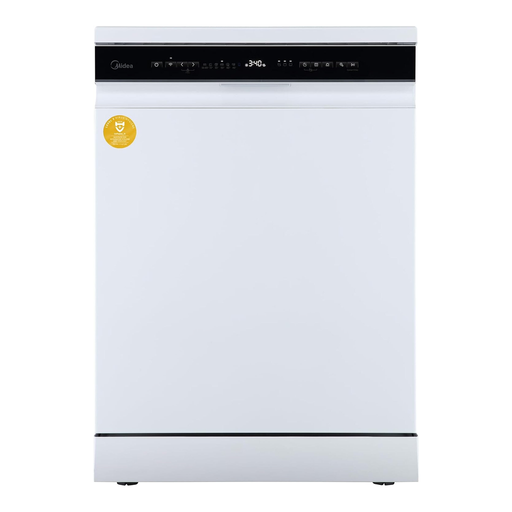
Midea MDWEF1034DW-WE, freestanding, 45 cm, 10 place settings
For a narrow freestanding space; check the basket layout if you load mugs of different heights.
The product title lists energy class C, a height-adjustable upper basket and a delay-start function. The manufacturer’s information about the cutlery arrangement differs from the product description; check which version is being sold.
Joybuy
Frequently asked questions
Should I run a quick programme straight away if I’ve only used a few mugs?
If you’ll need the mugs again soon, compare the actual cycle times of the programmes available. To save resources, however, the German Environment Agency recommends a full load and the Eco programme. Energy label figures relate to Eco, not to quick programmes in general.
What should I know before using the appliance for the first time and if limescale stains appear?
Bosch recommends checking your local water hardness first, then setting the water softener as described in the appliance instructions. The exact steps depend on the model you buy.
Which consumption figures should I compare?
The EU energy label for household dishwashers includes information such as energy consumption per 100 Eco cycles, water consumption per Eco cycle, Eco programme duration, capacity and noise emissions. Compare the Eco figures separately from how you actually use short or partially loaded programmes.
How can I return an old dishwasher in Germany?
Under German take-back requirements, as explained by stiftung ear, retailers who are required to do so must take back an old appliance free of charge when you buy or hand over a new one of the same appliance type and with essentially the same function. Before ordering, check whether the retailer is required to offer this service and how collection will be arranged if your appliance is delivered.
Does the glass-and-fork symbol on a mug mean it’s dishwasher-safe?
No. According to the German consumer advice centre, the symbol indicates that the item is suitable for contact with food. Check the mug’s separate care instructions to find out whether it can go in the dishwasher.


