Shared flats with a narrow kitchen run
When space is limited, the dishwasher’s design and full dimensions need to suit your kitchen. The stated width alone won’t tell you whether it will fit in the space you have in mind.


A slimline dishwasher can work in a shared-flat kitchen if its design and full dimensions suit the available space, and its baskets can accommodate your breakfast bowls, mugs and cutlery. If you regularly run full loads, it’s worth comparing Eco cycle consumption. If you need clean dishes again soon, or your kitchen doubles as a living space, the specific model’s programme duration and noise level also matter. Quick programmes and Eco cycles are not like-for-like comparisons.
When space is limited, the dishwasher’s design and full dimensions need to suit your kitchen. The stated width alone won’t tell you whether it will fit in the space you have in mind.
If bowls, mugs and cutlery all need washing at once, what matters is the usable basket space and loading options – not just the number of place settings.
If you’re still cooking, eating or working while the dishwasher is running, the specific model’s noise level is an important factor in your choice.
First, check that the dishwasher’s design and dimensions suit the available space. Then see whether your usual bowls, mugs and cutlery will fit in the baskets. Compare consumption, programme duration and noise level for the specific way you plan to use it.
The percentages refer to consumers choosing a slimline dishwasher for shared breakfast dishes; each figure reflects their top purchasing priority.
| Purchasing priority | What to check before buying | Who is it most important to? |
|---|---|---|
| Fit and design | Check the appliance type and full appliance and recess dimensions against the intended location. | If kitchen space is tight, I want to know whether the appliance will really fit where I plan to put it. Around 31% of consumers would make fit their top purchasing priority. |
| Space for breakfast dishes | Compare the size of your bowls, mugs and cutlery with the basket layout and loading options. | When we have several bowls and mugs to wash at once, I want to be able to fit them all into the baskets sensibly. Around 25% of consumers put usable loading space first. |
| Electricity and water consumption | Compare kWh per 100 Eco cycles and litres per Eco cycle on the same label basis. | If I’m running the dishwasher regularly, I want to keep an eye on consumption over multiple cycles. Around 19% of consumers prioritise ongoing electricity and water costs. |
| Clean dishes when you need them | Check the programme duration and whether the chosen programme suits the usual level of soiling. | If we need our bowls again soon, I want to know when the next wash will be finished. Around 13% of consumers make having clean dishes ready again quickly their top priority. |
| Noise in a shared space | Check the specific model’s noise level and airborne acoustical noise emissions class on its energy label. | If the kitchen is being used while the dishwasher is running, I want to carry on chatting and getting on with other things with as little disruption as possible. Around 12% of consumers put operating noise first. |
Freestanding and built-under appliances have different designs and overall dimensions. Height and depth can also be crucial for the space you have in mind.
Measure the available space or recess, then check all the relevant dimensions against the details for the exact model.
The capacity figure doesn’t necessarily tell you how many of your bowls and mugs will fit in the baskets at the same time.
Compare your usual dishes with the basket layout and loading details for the specific appliance.
The energy label refers to the specified Eco cycles. A short programme combination advertised by the manufacturer runs under different conditions.
Only compare consumption and duration for like-for-like programmes, and check the running time of the programme you actually intend to use.
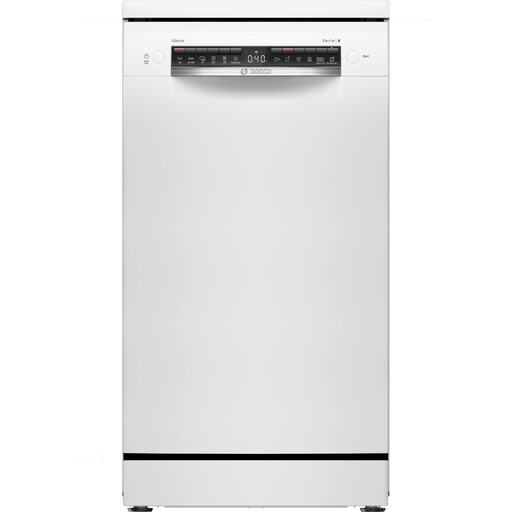
Freestanding models with a stated width of 45 cm; the SPS6EMI21E is one specific example.
Built-under models with a stated width of 45 cm; the SR43ES24ME is an example of this design.
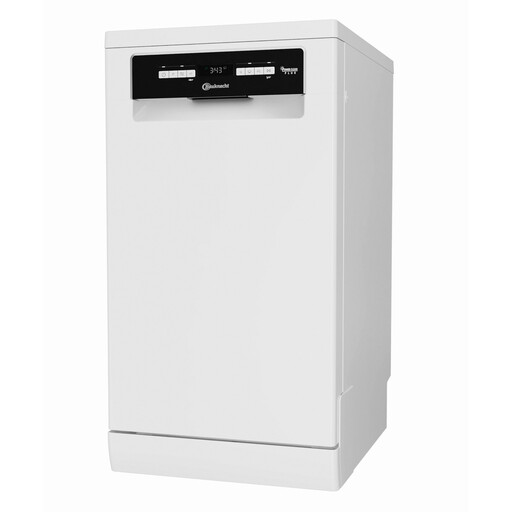
Built-under models with a stated width of 45 cm; the BSUO 3O33 PF X is one specific example.
Freestanding models with a stated width of 45 cm; the GS541D10W is one example in this range.
The Joybuy products below are freestanding dishwashers with a width of 45 cm. Before buying, check that their dimensions suit the intended location.
 No image available
Designed for a narrow freestanding space; product details list 9 place settings.
70 kWh per 100 cycles and 9 l per Eco cycle.
47 dB; five programmes, including Eco, Intensive and Quick.
 No image available
Designed for a narrow freestanding space; listed features include 10 place settings and a cutlery drawer.
59 kWh per 100 cycles, 8,9 l per cycle and 44 dB(A).
Six programmes; the upper basket is height-adjustable.
 No image available
Designed for a narrow freestanding space; product details list 10 place settings and an adjustable basket.
76 kWh per 100 Eco cycles, 8,9 l per Eco cycle and 44 dB(A).
Eco, Auto and Intensive programmes are listed, along with a Silence programme.
 No image available
Designed for a narrow freestanding space; listed features include 10 place settings and a cutlery drawer.
67 kWh per 100 Eco cycles, 9 l per Eco cycle and 44 dB(A).
An Express option and a multi-zone function for the upper or lower basket are listed.
No. The design and full dimensions of the specific appliance need to suit the space you have in mind. Bosch lists dimensions of 845 × 450 × 600 mm for the freestanding SPS6EMI21E; Bauknecht lists 82,0 × 44,8 × 59 cm for the built-under BSUO 3O33 PF X. Measure the available space or recess before choosing a model.
That depends on the size and shape of your bowls, as well as the basket layout of the specific model. The place-setting figure won’t tell you whether your bowls and mugs will fit at the same time, so compare them with photos of the baskets and the loading details.
No. The label figures refer to the specified Eco conditions and don’t automatically apply to a quick programme. Compare consumption and programme duration for the programmes you actually intend to use; manufacturer details for a fast programme combination apply to that specific combination.
Compare figures on the same basis: the Verbraucherzentrale identifies electricity consumption in kWh per 100 Eco cycles and water consumption per Eco cycle as important details. To work out your own costs, you’ll also need your electricity tariff and the number of cycles you expect to run.
The Umweltbundesamt recommends not rinsing dishes by hand before loading them, and running the dishwasher as full as possible on the Eco programme to save resources. Scrape off any large food scraps and load the dishes so that the water jets can reach their surfaces.