What to look for when buying
Start by checking the available space and how your cups fit in the baskets. Then assess energy and water use, programme duration and noise as separate criteria.
| Buying consideration |
What to check |
Who is this important to? |
| Design and space |
Check the available floor space or built-in dimensions, connections and door clearance. Bosch home appliances and Siemens home appliances each list dimensions of 815 × 448 × 550 mm for their models; Beko offers a 45 cm freestanding model. |
If the appliance needs to fit into an existing kitchen, I’d want to check the design, niche and door clearance first. Around 36% of consumers are primarily concerned with space and design. |
| Cups and availability |
Check how your own cups fit in the baskets; don’t treat the place-setting capacity as a cup count. Beko lists an adjustable upper basket for one model. |
If lots of people share the cups, I’d want to know how they fit in the basket alongside the other dishes and when they’ll be clean again. Around 29% of consumers prioritise cup capacity and availability. |
| Energy and water use and running costs |
Compare electricity use per 100 Eco cycles, water use per Eco cycle and Eco programme duration on the EU label. Consider other programmes separately. The European Commission explains this label information. |
If the appliance runs frequently, I’d want to estimate its energy and water use on the programmes I’ll actually use, and factor in how many cycles I run. Around 21% of consumers focus on energy and water use and running costs. |
| Everyday noise |
Check the noise rating for the specific model on the EU label and consider when the kitchen will be in use. |
If people are working or talking right next to the kitchen, I’d want to know how noisy the dishwasher is when it’s running. Around 14% of consumers consider quiet operation their main buying priority. |
Joybuy products for freestanding installation
These are slimline freestanding dishwashers for kitchens without a suitable furniture door for a fully integrated appliance.
 No image available
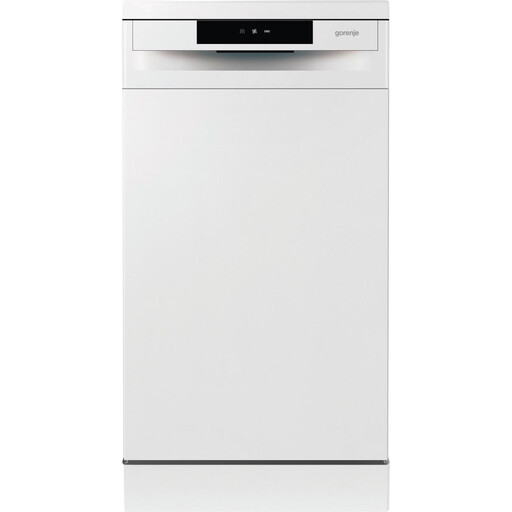
Gorenje freestanding dishwasher, 45 cm
The freestanding design may suit your kitchen if you don’t have a built-in niche with a furniture door.
- 9 place settings and 5 programmes, including Eco and Quick
- Stainless steel interior, AquaStop and self-cleaning filter
- Place settings don’t guarantee a certain number of cups; check how your cups fit.
View at Joybuy
 No image available
Beko BDFS26040XQ, 45 cm
The freestanding design is an option if you don’t have a suitable furniture door for a built-in appliance.
- 10 place settings and energy efficiency class C
- Adjustable upper basket; Beko lists 44 dB(A) and 8,9 l of water per Eco cycle
- The place-setting capacity doesn’t confirm how many cups will fit; check the basket layout with the rest of your dishes.
View at Joybuy
 No image available
Exquisit EGSP52109-E-030E, 45 cm
The freestanding design is a suitable option if you’re not looking for a fully integrated appliance.
- 9 place settings and 6 programmes
- Eco and Intensive modes, plus a delay start
- The stated capacity doesn’t guarantee a certain number of cups; remember to allow for your other dishes too.
View at Joybuy
 No image available
Bosch SPS4HKW49E Series 4, 45 cm
The freestanding design is made for kitchens without a suitable furniture door.
- 10 place settings and energy efficiency class E
- Vario-Flex basket system, cup racks and AquaStop
- The place-setting capacity doesn’t tell you how many of your cups will actually fit.
View at Joybuy
 No image available
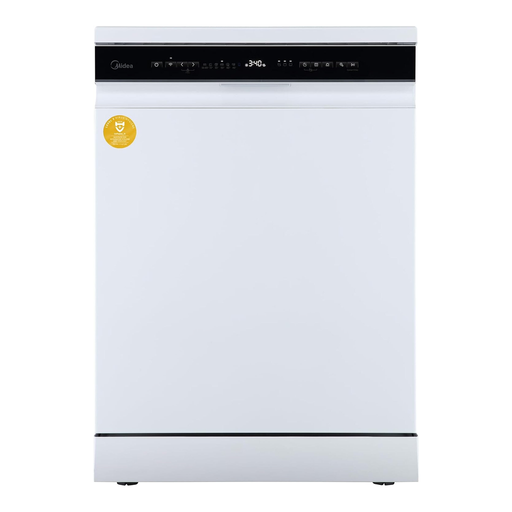
Midea MDWEF1034DW-WE, 45 cm
The freestanding design may suit your kitchen if you’re not looking to fit a fully integrated appliance behind a furniture door.
- 10 place settings and energy efficiency class C
- Height-adjustable upper basket, cutlery tray and delay start
- The stated capacity doesn’t guarantee a particular number of cups will fit.
View at Joybuy
Frequently asked questions
Does the glass-and-fork symbol on a cup mean it’s dishwasher-safe?
No. The symbol indicates that the item is suitable for contact with food, not that it can be washed in a dishwasher. Follow the manufacturer’s care instructions for delicate cups.
What should I check before installing and connecting the dishwasher?
Check the design, full appliance dimensions, door and basket movement, and required connections against the instructions for the specific model. A general width measurement isn’t enough.
Which running costs can I compare before buying?
The EU label shows electricity use per 100 Eco cycles, water use per Eco cycle and the Eco programme duration. To estimate running costs, you’ll also need to consider how often you run the dishwasher and your tariffs; don’t assume other programmes use the same amount as Eco.
How can you keep a dishwasher in a shared kitchen in good condition?
Agree who is responsible for loading and caring for the appliance, and follow the care instructions for your chosen model. Bosch home appliances notes that the recommended approach may vary by model.
Are the same hygiene requirements that apply to catering businesses required in every shared kitchen?
No. Sharing a kitchen doesn’t in itself mean those requirements apply. If the kitchen is part of a food business, it must meet the food hygiene requirements relevant to its activities, and the suitability of the specific dishwashing process must be checked. The European Commission explains the hygiene requirements for food businesses.


