First, choose between a freestanding and an integrated dishwasher. The key factors are the available space or housing unit, the connections and the dimensions of the specific model. Then compare capacity, Eco programme consumption and noise levels. The Consumer Advice Centre recommends checking consumption and place settings, while EU energy label figures are based on set conditions.
Who is a slimline dishwasher suitable for?
A small kitchen with a dedicated space
When space is limited, check the type, height and depth together – the stated width alone won’t tell you whether the appliance will fit. The manufacturers’ dimensions for the Bosch SPS4EMW02D and Siemens SR63EX25KE show that freestanding and fully integrated models need to be planned for differently.
A household that washes dishes every day
If you run the dishwasher daily, compare the place settings and basket layout with your own plates, glasses and pans. The manufacturer information for the Beko BDFS26020WQ and Bosch SPS4EMW02D shows that capacity and interior layout are separate things to consider.
A household with an open-plan kitchen
If your kitchen is part of a shared living space, noise levels and Eco programme consumption may influence your choice. The Consumer Advice Centre recommends comparing consumption figures on a like-for-like basis; the specific figures apply to the model and programme stated.
What should you look for when buying?
Freestanding 45 cm dishwasher
A good fit if: there’s a suitable space next to your kitchen units, with the connections you need.
Things to consider: the height and depth also need to fit the space; width alone isn’t enough.
Fully integrated 45 cm dishwasher
A good fit if: your kitchen design includes a suitable housing unit and furniture door.
Things to consider: the housing unit, door fixing, plinth and connections all need to match the installation instructions for the specific model.
| What matters |
What to check before buying |
Who it matters most to |
| Type and fit |
Freestanding or integrated; check the height, width, depth and connections against the space available. |
If I have limited space, I mainly want to be sure the appliance will physically fit. Around 33% of consumers put fit first. |
| Everyday loading |
Compare the place settings and basket layout with your own plates, glasses and pans. |
If there are dishes to wash every day, I want to know whether larger items will fit comfortably too. Around 27% of consumers put this first. |
| Electricity and water consumption |
Compare kWh per 100 Eco cycles and litres per Eco cycle, and consider how you use the appliance. |
If I want to estimate running costs, I look for comparable Eco figures rather than isolated marketing claims. Around 20% of consumers prioritise consumption. |
| Everyday noise |
Check the noise emission level for the specific model; don’t assume one measurement applies to every programme. |
In an open-plan kitchen, I want to take the noise rating into account when making my choice. Around 20% of consumers put this first. |
Avoid common buying mistakes
-
Assuming “45 cm” means it will fit the housing unit
Freestanding and fully integrated appliances can differ in height and depth. So a model won’t necessarily fit an existing housing unit just because its width is similar.
Choose the type first, then compare all the appliance dimensions and the installation instructions for the exact model with the space available.
If the installation space isn’t suitable, you may need to allow for extra adaptation or installation work.
-
Assuming place settings guarantee room for large pans
The stated capacity doesn’t necessarily mean your largest regularly used dishes will fit comfortably.
Compare your largest plates, pans and glasses with the interior layout, and check whether the baskets can be adjusted.
-
Assuming Eco consumption applies to every use
The stated Eco figures apply to that programme and don’t necessarily reflect the consumption of other programmes or every load.
Compare label figures for the same programme and take your own usage into account. The German Environment Agency recommends using the Eco programme and running the machine with a full load where possible.
Key brands at a glance
Bosch
The freestanding 45 cm SPS4EMW02D is an option if you don’t want to fit a furniture door.
- Bosch lists dimensions of 845 × 450 × 600 mm, energy efficiency class B and water consumption of 8,7 l per Eco cycle for this model.
- Check the height and depth against the space available; these figures don’t apply to all Bosch appliances.
Siemens
The fully integrated 45 cm SR63EX25KE requires a suitable installation space.
- Siemens lists dimensions of 815 × 448 × 550 mm, energy efficiency class B and water consumption of 8,7 l per Eco cycle for this model.
- The furniture door and housing unit need to match the specific installation plan; this doesn’t say anything about the brand as a whole.
Beko
The freestanding BDFS26020WQ is designed for a suitable space.
- For this model, Beko lists 10 place settings, an adjustable upper basket, energy efficiency class E, 8,7 l per Eco cycle and 46 dB(A).
- These figures apply to the BDFS26020WQ, not to other Beko models.
Midea
The freestanding 45 cm MDWEF1034DW-WE is listed with a capacity of 10 place settings.
- Midea lists dimensions of 850 × 450 × 600 mm and a noise level of 44 dB(A) for this model.
- The manufacturer lists a cutlery tray, while the Joybuy listing specifies a cutlery basket. Check the features of the exact variant before buying.
Miele
The fully integrated 45 cm G 5790 SCVi SL Edelstahl is designed for a suitable installation space.
- For this model, Miele lists energy efficiency class C, a noise level of 44 dB(A) and a cutlery tray.
- Check the furniture door, housing unit and features against your installation space; the model details don’t prove a brand-wide advantage.
Freestanding 45 cm dishwashers at Joybuy
This selection features freestanding 45 cm dishwashers for a suitable space and everyday washing-up needs.
 No image available
Gorenje GS520E15W
For a slim space, provided the height, depth and connections are suitable.
45 cm wide; listed for 9 place settings and 5 programmes.
Check the available space against the stated dimensions of 845 × 448 × 600 mm.
View at Joybuy
 No image available
Beko BDFS26040XQ
For everyday washing-up in a space suitable for a freestanding appliance.
45 cm wide; listed for 10 place settings and energy efficiency class C.
Check the available space against the stated dimensions of 850 × 450 × 590 mm.
View at Joybuy
 No image available
Exquisit EGSP52109-E-030E
For a freestanding space; check the dimensions against the room available.
45 cm wide; listed for 9 place settings and 6 programmes.
The product details give dimensions of 81,5 × 44,8 × 55 cm and mention an adjustable-height basket.
View at Joybuy
 No image available
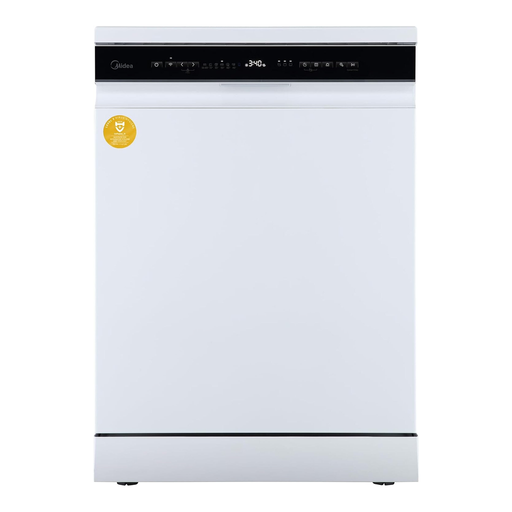
Midea MDWEF1034DW-WE
For a suitable space and households looking for a stated capacity of 10 place settings.
45 cm wide; listed with a cutlery basket and an adjustable upper basket.
Check the dimensions of 84,5 × 45 × 60 cm and confirm the cutlery storage for the exact variant.
View at Joybuy
 No image available
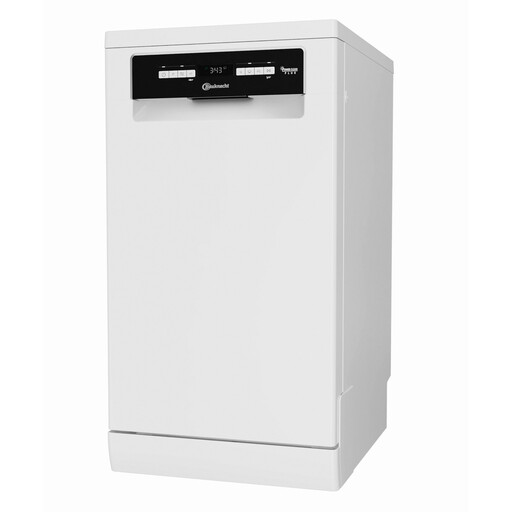
Bauknecht BSFO 3035 PF
For a freestanding space that suits the dimensions and connections.
45 cm wide; listed for 10 place settings and energy efficiency class D.
Check the available space against the stated dimensions of 850 × 450 × 590 mm.
View at Joybuy
Frequently asked questions
Is “45 cm” enough information for planning?
No. A stated width of 45 cm doesn’t confirm that the height, depth, type and connections will suit the space. Compare the dimensions of the specific model with the space available or the housing unit.
How can I run my dishwasher as economically as possible?
The German Environment Agency recommends using the Eco programme, loading the machine as fully as possible and avoiding a warm pre-rinse. Energy label figures are based on the Eco programme.
How should I care for my dishwasher in a hard-water area?
The German Environment Agency explains that water softening requires regenerating salt or suitable tablets. Follow the settings and care instructions in the manual for your specific appliance.
How do I compare running consumption?
Compare figures on the same programme basis: the Consumer Advice Centre identifies kWh per 100 Eco cycles and litres per Eco cycle as key figures. Also take your own usage into account when estimating consumption.
Does a retailer in Germany have to take back my old dishwasher free of charge?
For retailers covered by the take-back obligations under the ElektroG, stiftung ear explains that they must take back an equivalent old appliance free of charge when delivering the new one; if the new appliance is delivered, the old one can also be collected from your home. Check the arrangements with the retailer in good time. This doesn’t automatically apply to every retailer.


