Households with staggered mealtimes
If you need your breakfast bowls again before your next shared meal, programme duration and the delay start are important factors to consider.


First, choose a design that suits your available space or fitted kitchen recess, then check that the baskets can accommodate your breakfast bowls. If you need the dishes again soon, the conditions for a quick programme matter. If you can wait until you have a full load, compare the Eco programme duration and consumption, the delay start and the noise level for the specific model.
If you need your breakfast bowls again before your next shared meal, programme duration and the delay start are important factors to consider.
If space is limited, decide whether a freestanding or integrated model is right for you, and check the full appliance or installation dimensions.
If you collect dishes until you have a full load, you can compare Eco consumption and programme duration. The European Commission includes these details on the energy label; the German Environment Agency recommends running the dishwasher on the Eco programme with a full load wherever possible.
For a shared cooking routine, the dishwasher’s design, capacity and programmes need to suit both your kitchen and your daily schedule.
A good fit if: you have a suitable space with the right connections and don’t need the dishwasher to fit into a kitchen unit.
Things to consider: The front of the appliance will be visible. As well as the stated width, check its height and depth, and make sure there’s room to open the door.
A good fit if: you have a suitable installation recess and a compatible kitchen unit door.
Things to consider: Before buying, check that the recess and door dimensions suit the specific model. The stated width alone isn’t enough to plan your installation.
| What matters | What to check before buying | Who is this important to? |
|---|---|---|
| Dishes ready when you need them | Programme conditions and duration; delay start, if available | If I need the same bowls again before the next cooking session, I look for a suitable programme and a start time I can plan around. This is the main priority for around 33% of consumers. |
| Fits your kitchen and bowls | Full appliance or recess dimensions; basket height and space for the spray arms | If space is tight or you need to fit tall bowls in the baskets, the dimensions and interior layout need to work together. Fit and usable space are the top priorities for around 27% of consumers. |
| Energy and water consumption | kWh per 100 Eco cycles, litres per Eco cycle and Eco programme duration | If I run the dishwasher regularly, I want to estimate ongoing energy and water costs on a like-for-like basis. Consumption is the main priority for around 20% of consumers. |
| Noise while you’re using the kitchen | The model’s noise rating; whether you can delay the start | If people are cooking or chatting while the dishwasher is running, I want to schedule a cycle for a suitable time. Keeping things quiet during shared time in the kitchen is the top priority for around 20% of consumers. |
EU energy label figures relate to the Eco programme and can’t simply be applied to a quick programme. To work out your own costs, you’ll also need your tariff and the number of cycles you expect to run.
A measurement of “45 cm” doesn’t tell you on its own whether the appliance will fit in your available space or installation recess. Full dimensions, door clearance and basket layout matter too.
Measure the space you have in mind and check the installation instructions for the specific model. Try your usual bowls in the baskets, and make sure the spray arms can rotate freely.
A stated short cycle time may only apply to a particular programme combination. Eco consumption figures, meanwhile, relate to the Eco programme.
Check the conditions and duration of the programmes you actually plan to use, separately from the figures on the energy label.
The details below apply to the models mentioned, not necessarily to every appliance from each brand.
The freestanding BDFS26040XQ is an example of a slimline model to consider when comparing basket flexibility and timing options.
The freestanding SPS2HMI42E is an example to consider when checking full appliance dimensions and basket features.
The fully integrated GV583C10 is a specific example to consider if you have a suitable installation space and programme conditions matter to you.
The fully integrated G 5790 SCVi SL is an example for households with a suitable recess and compatible kitchen unit door.
This selection features slimline freestanding dishwashers for kitchens with a suitable space. The models vary in capacity, programmes and scheduling options.
 No image available
A possible choice if you’re looking for a freestanding 45 cm dishwasher with programme options to suit your household’s routine.
45 cm wide, with 9 place settings and 5 programmes. The product title also mentions a stainless steel interior, AquaStop and a self-cleaning filter. Quick and one-hour programmes are listed as options.
 No image available
An option if you want a freestanding 45 cm dishwasher with a delay start to fit around your household’s routine.
Beko lists 10 place settings, energy class C, 44 dBA, a height-adjustable upper basket and a delay start of up to 24 hours for this model. Fast+ doesn’t mean every programme has a fixed duration.
 No image available
An option if you’re looking for a slimline freestanding dishwasher with a delay start.
9 place settings and 6 programmes. Other listed features include an adjustable-height basket, a cutlery tray and a delay start of up to 24 hours. The short programme is listed for lightly soiled dishes.
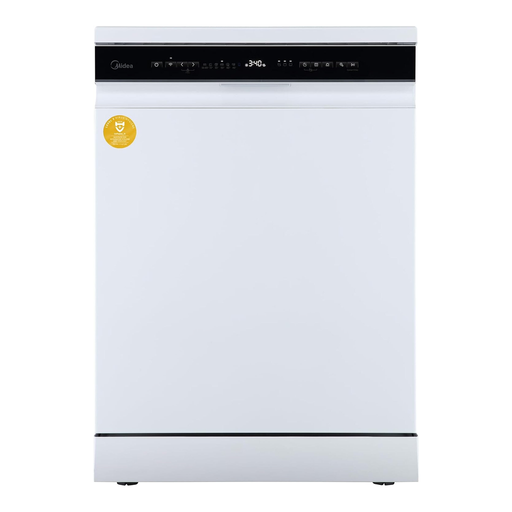 No image available
An option if you want a slimline freestanding dishwasher with a delay start to fit around your cooking schedule.
45 cm wide and listed for 10 place settings. Other stated features include a cutlery basket, a height-adjustable upper basket, Aqua Stop, a delay start and energy class C.
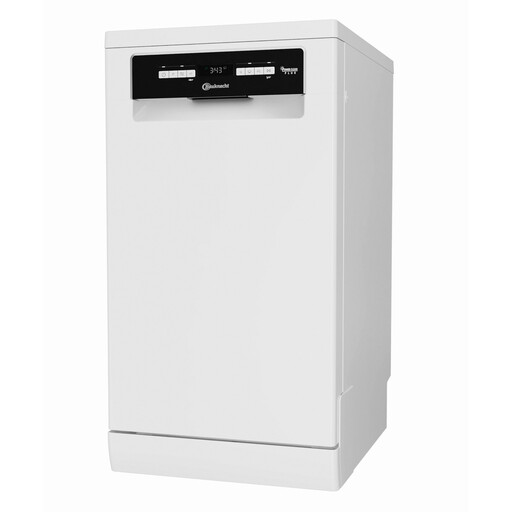 No image available
An option if you’re looking for a freestanding 45 cm dishwasher with a delay start and an Express option to suit your household’s routine.
Listed for 10 place settings, with a height-adjustable upper basket and a cutlery tray. According to the product details, the delay start can be set from 1 to 24 hours; the product title lists energy class D.
No. Check the full appliance and recess dimensions, as well as the space in front of the door. The freestanding Bosch SPS2HMI42E and fully integrated Miele G 5790 SCVi SL are examples of different designs.
No. This time doesn’t apply to every programme and load. Gorenje lists 15 minutes for the GV583C10 when using the one-hour programme with SpeedWash. Check the programme conditions and whether it’s suitable for your dishes.
The German Environment Agency recommends running the dishwasher on the Eco programme with a full load wherever possible, and avoiding pre-rinsing, especially with hot water. For correct loading and care, also follow the instructions for your chosen appliance.
The EU energy label shows electricity consumption per 100 Eco cycles, water consumption per Eco cycle and the Eco programme duration. To work out your own costs, you’ll also need your tariff and the number of cycles you expect to run; the label figures don’t automatically apply to other programmes.