Leading a larger cookery group
You’re planning a batch of ragù for several participants and want to keep serving time on track.


First, choose a slow cooker that can hold the full quantity of meat, vegetables and sauce within its usable capacity. Then consider whether you can brown food in the cooking pot and whether a timer will suit the class schedule. A keep-warm function is no substitute for checking the temperature: the German Federal Institute for Risk Assessment recommends keeping heated food at a minimum of 60 °C throughout until it is served.
You’re planning a batch of ragù for several participants and want to keep serving time on track.
You’re looking for a manageable pot for a smaller recipe quantity and want to demonstrate the cooking steps clearly.
You want to brown the meat before slow cooking and need to check whether the specific pot supplied with the appliance can be used on a hob.
Start by comparing the full recipe quantity with the usable pot capacity and the filling guidance. Then consider your class schedule, whether you need to brown ingredients first, and how easy the appliance is to clean.
| What to consider | What to check before buying | Who should pay particular attention? |
|---|---|---|
| Suitable batch size | Compare the total quantity of meat, vegetables and sauce with the pot capacity and the filling guidance in the instructions. | If I want to cook the whole recipe in one go, it needs to fit within the usable capacity. Around 36% of consumers put choosing the right batch size first. |
| Timing and serving | Check the cooking time and keep-warm function. The German Federal Institute for Risk Assessment (BfR) recommends that heated food is kept at a minimum of 60 °C throughout until served. | If food needs to be served at a set time during the class, I want to be able to plan the cooking time and check the temperature. Around 29% of consumers prioritise serving time. |
| Browning in the cooking pot | Check the model number and confirm that the specific pot is explicitly approved for use on a hob. | If I want to demonstrate browning, I’ll only use the pot on the hob if it’s approved for that exact model. Around 21% of consumers prioritise being able to brown food in the pot. |
| Cleaning and other uses | Check separately whether the pot and lid are dishwasher-safe, and only consider programmes you actually need. | If I want to minimise hand-washing after the class or use the cooker for other purposes later, I’ll check how it cleans and what programmes it offers. Around 14% of consumers put clean-up and other uses first. |
The quantity you need depends on the meat, vegetables and sauce. Manufacturer serving estimates don’t replace checking the capacity against your own recipe.
Check the full batch against the filling guidance for the specific model. If it won’t fit, you may need to cook it in more than one batch or use another pot.
A programme setting doesn’t confirm that the ragù has reached the BfR-recommended temperature of at least 60 °C throughout.
Plan to check the temperature of the dish in several places before serving.
Approval for hob use only applies to pots designed for it; you can’t assume it applies to other slow cookers.
Only use the pot on a hob if the instructions explicitly allow it for that exact model. Otherwise, brown the meat separately.
Using a pot on the hob without approval could damage it.
The CSC063X is a large, traditional slow cooker. The manufacturer states that it has a 7.5 l capacity and an adjustable cooking timer.
The Cook@Home 22740-56, with a 3.5 l capacity, and the MaxiCook 22750-56, with a 6 l capacity, offer different pot sizes for a cookery class.
The VS-3915 is a compact slow cooker with a 3.5-l ceramic pot; the manufacturer says it makes up to four portions.
The Duo is a multi-cooker alternative if you want to prepare more than just ragù. The German-language instructions describe an adjustable slow-cook programme.
These appliances include compact slow cookers and multi-cookers with a slow-cook function, to suit different recipe quantities and class schedules.
 No image available
A compact option if the full batch of ragù fits in the 2.6-l pot.
According to the product information, this appliance is intended for domestic use, not commercial use.
Features two manual heat settings, a coated inner pot and a steaming basket.
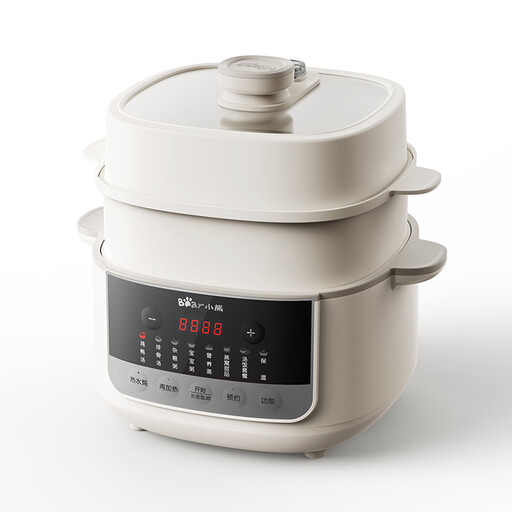 No image available
If you want to cook the ragù in one pot, check the recipe quantity against the capacity of the main pot.
The product description lists a 2.5-l main pot and four 0.4-l pots; the 4.1L figure is part of the product name.
According to the product information, the ceramic pot must not be placed over an open flame.
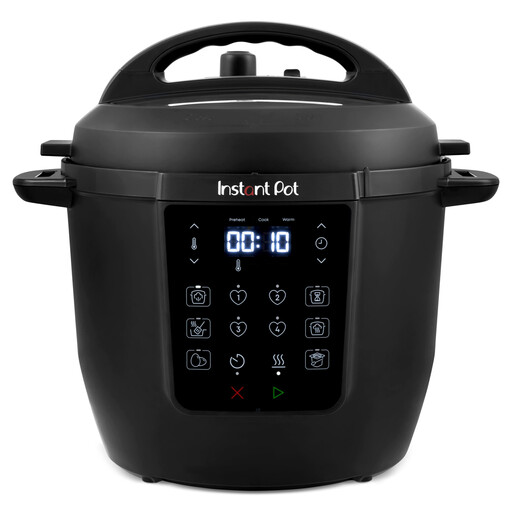 No image available
A multi-cooker option if you’d like to use a sauté function as well as slow cooking.
Features a 5.7 l capacity, slow-cook function and sauté function.
According to the product information, the inner pot isn’t designed for use on a hob or induction hob.
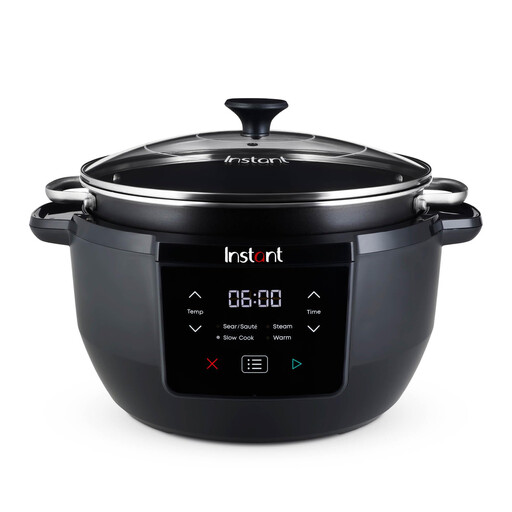 No image available
Could suit a larger batch, provided the full recipe fits within the usable capacity.
The product description lists adjustable cooking time and temperature, as well as a sauté function.
According to the product information, the inner pot must not be used in an oven, on a hob or on an induction hob.
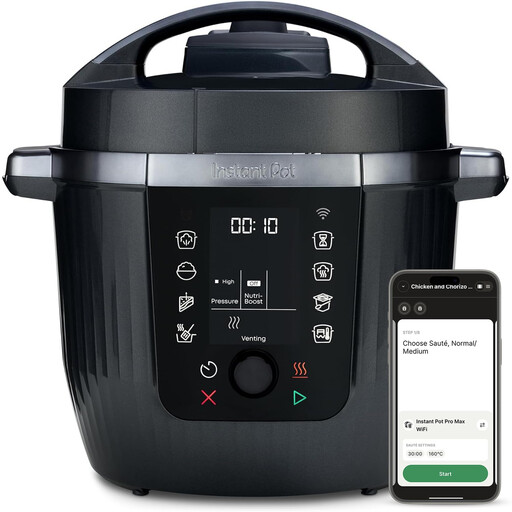 No image available
An option if you want to use the sauté function and other cooking programmes as well as slow cooking.
Features a 5.7 l capacity, slow-cook and sauté functions, and 1200W.
According to the product information, the inner pot is dishwasher-safe.
Count the meat, vegetables and sauce as one batch, then compare the total with the capacity and filling guidance for the specific model. Manufacturer serving estimates are a guide based on the portion size they have used.
No, the specific pot must be approved for hob use. Russell Hobbs lists hob use for the pots supplied with models 22740-56 and 22750-56; this doesn’t mean other models are approved.
The programme setting alone doesn’t confirm the temperature of the food. The BfR recommends keeping heated food at a minimum of 60 °C throughout until it is eaten. Check the ragù accordingly.
Section 4 of the German Food Hygiene Regulation (LMHV) requires appropriate expertise for handling highly perishable food. Whether and how the rules apply to a particular class depends, among other things, on the type of business and how the food is served. Without those details, it isn’t possible to give a general answer about registration.