Batch cooks preparing lunches for the week
You want to divide a larger batch of ragù into individual lunches. As well as enough pot capacity, you’ll need space to cool the portions quickly.


Choose the pot size to suit your recipe and how many portions you can realistically cool or freeze quickly. A cooking timer can help you plan around a working day; a hob-safe insert or a sauté function may let you brown the meat in the same appliance. Neither replaces thorough cooking, rapid cooling or keeping your lunch portions chilled in transit.
You want to divide a larger batch of ragù into individual lunches. As well as enough pot capacity, you’ll need space to cool the portions quickly.
You want to fit cooking around your daily routine and know whether an appliance simply sets a cooking time or automatically switches to keep warm afterwards.
You cook smaller quantities or want to brown the meat before slow cooking without using an extra pan. These needs point to different pot sizes and types of appliance.
When making ragù to take for lunch, it’s not just about what fits in the pot. You also need to be able to portion and store the finished dish safely.
| What to look for | What to check before buying | Who will find it useful? |
|---|---|---|
| Batch size | Compare the quantity in your recipe with the fill-level guidance for the specific model. The manufacturer’s serving estimates won’t necessarily apply to every ragù recipe. | If I’m cooking ahead for several lunches, my recipe needs to fit in the pot. Around 28% of consumers put choosing the right batch size first. |
| Portioning and cooling | Check in advance whether you’ll have shallow containers and somewhere to chill the portions when you’re ready to eat them. The German Federal Institute for Risk Assessment (BfR) recommends cooling food promptly before storing it for later. | If I’m taking ragù with me, I want to portion it in good time and keep it chilled while travelling. Around 22% of consumers prioritise safe storage for their lunch portions. |
| Planning cooking time | Check the instructions separately for the cooking timer, any delayed start and automatic keep-warm function. Don’t leave raw ingredients unrefrigerated just because the appliance has a start-time function. | If I have a set routine during the working week, I want to know when the cooking programme will finish. Around 22% of consumers prioritise being able to plan cooking time. |
| Browning | Check whether the specific insert is approved for hob use or whether the appliance explicitly has a sauté function. Don’t put an insert on the hob unless it’s approved for that use. | If I want to brown the beef before slow cooking, it matters whether I can do it in the same pot. Around 17% of consumers prioritise browning without an extra pan. |
| Counter space and cleaning | Check the model’s dimensions and the cleaning instructions for the insert and lid separately. | If I’m short on kitchen space or time for washing up, I want an appliance that fits my routine. Around 11% of consumers prioritise space and cleaning. |
The meat, vegetables and sauce all need to stay within the permitted fill level. The number of servings quoted by the manufacturer may vary depending on the recipe.
Compare your recipe with the fill-level guidance for the specific model and have suitable containers ready for portioning.
A keep-warm function and chilled storage serve different purposes. The BfR recommends cooling food promptly if it’s going to be stored for longer.
Divide the ragù into portions for later lunches once it’s cooked, then chill them rather than leaving them in the appliance on keep warm.
An insert is only suitable for hob use if this is explicitly stated for that specific insert.
Before browning, check the instructions for the model, insert and type of hob. Otherwise, use a separate pan or an explicitly stated sauté function.
The models below show a range of sizes and features. The details apply to the specific product lines mentioned, not necessarily to every appliance made by each brand.
Worth considering if you’re choosing between a small batch and a larger one with browning in the insert.
The CSC063X is an option if you’re making larger batches of ragù and want to set the cooking time.
The VS-3915 is a mid-sized option with simple cooking settings.
The Superior Slow Cooker 140-6128-01-EU is worth a look if you want to combine slow cooking with other cooking functions.
The Lono Sous Vide Cooker Pro may suit you if you specifically want to prepare sous-vide dishes as well as slow-cooked food.
This selection includes compact slow cookers for smaller batches, as well as larger and multi-function appliances for preparing several portions. Browning in the same appliance is only possible where a sauté function is explicitly listed.
 No image available
For a small batch of ragù with straightforward manual settings.
The title lists a 2.6 l capacity; the description mentions two heat settings and a non-stick inner pot.
The description advises using a separate pan to brown food at a high temperature before slow cooking.
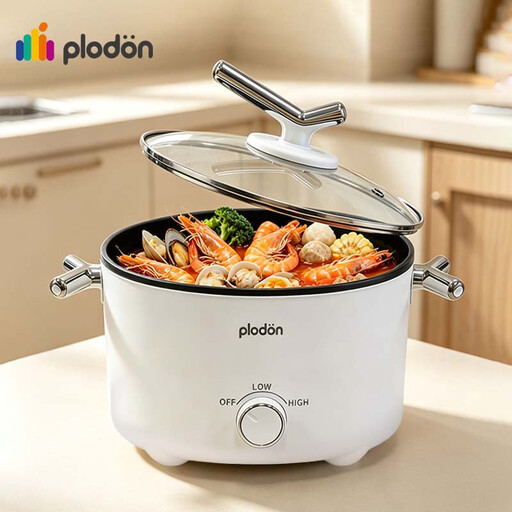 No image available
For smaller batches of ragù if you’re looking for a compact pot with manual settings.
The title lists a 2.0 l capacity and 1000 W; the description mentions two heat settings and recommends filling the pot no more than two-thirds full.
The description advises using a separate pan to brown food at a high temperature before slow cooking.
 No image available
For ragù and other dishes, with separate inner pots that are handy for cooking different quantities.
The title lists a 4.1 l capacity; the description mentions a 2.5 l main pot and four separate 0.4 l inner pots.
Wait a few minutes before opening after cooking, as the description warns that hot steam may escape.
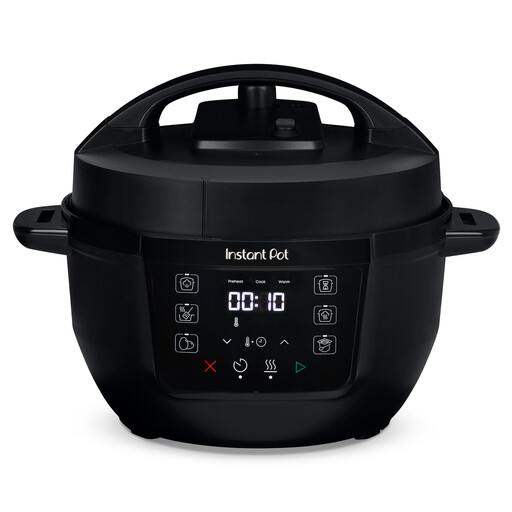 No image available
For smaller batches of ragù if you want slow cooking and other functions in one appliance.
The description lists capacity for up to four portions, a timer, sauté function and a dishwasher-safe inner pot, lid and accessories.
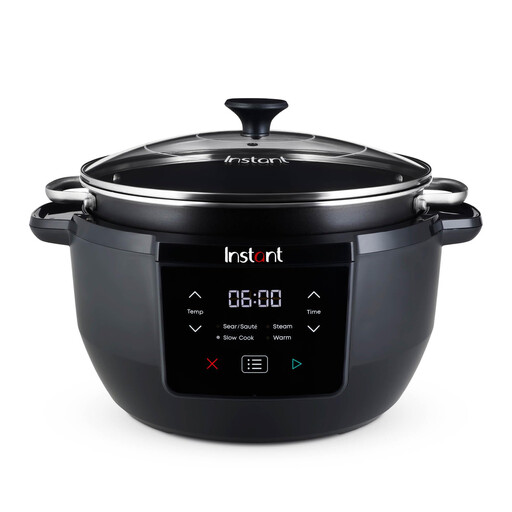 No image available
For larger batches of ragù if you want to slow cook and brown food in the appliance.
The EU version is listed as having a 7.1 l capacity and enough room for up to ten portions; the description includes sauté and slow cooking functions.
The description states that the inner pot must not be used on a hob or induction hob, or in an oven. Use the sauté function to brown food.
The German Federal Institute for Risk Assessment (BfR) recommends quickly cooling hot food to below 7 °C if it’s going to be stored for longer. Divide larger quantities between shallow containers to help them cool. Leftovers should be kept in the fridge and eaten within two to three days; freeze portions promptly if you want to keep them for longer.
The BfR recommends planning for chilled storage where you’ll be eating and carrying food containers in a cool bag. When reheating food, its hygiene guidance says it should reach at least 70 °C throughout for two minutes. Keeping food lukewarm doesn’t meet this recommendation.
It depends on the specific model and part. Russell Hobbs describes the browning insert for the MaxiCook 22750-56 as suitable for hob use; Crock-Pot states that the insert and lid of the CSC063X are dishwasher-safe. Don’t assume these approvals apply to other inserts, and always check the relevant instructions.
The BfR notes that cooking ahead for several days may be less suitable for pregnant people, older adults and people with certain pre-existing conditions. If you’re in one of these groups, take particular care when planning storage times and preparation. This doesn’t mean slow cookers are generally unsuitable for all buyers.