Preparing lunches for work in advance
If you’re making beef stew for several lunch portions, the recipe quantity needs to suit the insert. You’ll also need room to chill or freeze the portions once they’re packed.


Choose a slow cooker with an insert large enough for the meat, vegetables and liquid in your planned recipe, and make sure you can follow its fill guidelines. A timer can help fit the cooking time around your day. For lunches on later days, however, it’s essential to cool the stew promptly, store it in the fridge and transport it chilled – the keep-warm function is no substitute for these steps.
If you’re making beef stew for several lunch portions, the recipe quantity needs to suit the insert. You’ll also need room to chill or freeze the portions once they’re packed.
If you want to fit cooking around work and the end of your day, check whether the specific model has a timer and what happens when the set time is up. Keeping food warm isn’t the same as storing it safely.
If you’d like to brown the meat before slow cooking and save on cookware, consider a cooking pot that’s approved for this purpose. Check the instructions for your exact model to make sure the insert is suitable for your hob and care requirements.
| What matters when buying | What to check | Who is it important for? |
|---|---|---|
| Getting the portion size right | Check the recipe quantity, insert dimensions and fill guidelines; allow space for chilling or freezing. | If I’m preparing meals for several workdays, my recipe needs to fit in the insert, with enough room left to chill it afterwards. Portion size is likely to be the main buying consideration for around 33% of consumers. |
| Planning the cooking time | Check whether the timer controls the cooking time or the start time, and what the appliance does when the time is up. | If I want to fit cooking around my working day, I need to know when the cooking process ends. Around 27% of consumers are likely to focus primarily on being able to plan the cooking time. |
| Browning and cleaning | Check that the insert is approved for your type of hob, and read the instructions about materials and cleaning. | If I want to brown the meat in the cooking pot before slow cooking, the insert must be explicitly suitable for my hob. Browning and cleaning are likely to be the main considerations for around 20% of consumers. |
| Chilling and taking food with you | Plan how to cool the food, where to store it in the fridge or freezer, and how to transport it chilled. | If I’m not eating the stew until later workdays, I need a practical plan for chilling and taking the portions with me. Around 20% of consumers are likely to prioritise storage and transport above all else. |
The number of portions your beef stew makes depends on the recipe quantity and the fill guidelines for the particular insert. Manufacturer portion estimates aren’t a guarantee for every recipe.
Plan how much you’ll be making, then check the dimensions and permitted fill level in the instructions before choosing a compact or larger slow cooker.
An insert that’s too small may mean you need to cook in batches; a larger one takes up more space, both for the appliance and the portions you store.
The Federal Institute for Risk Assessment recommends cooling hot food promptly to below 7 °C if it’s to be stored for an extended period. Perishable food should be kept at between 2 °C and no more than 7 °C, and kept chilled while you’re on the move.
Transfer the stew to suitable portions for cooling, and plan where you can chill it at work as well as using a cool bag for transport.
Whether an insert can be used on the hob for browning, and how it can be cleaned, depends on the model. You can’t assume that features of another slow cooker apply to yours.
Check the instructions for your exact model to see whether it’s approved for your type of hob and to find its care guidance. If the insert isn’t suitable for browning, you may need to use a separate frying pan.
The VS-3915 and VS-3920 offer different approaches to slow cooker controls.
The CSC025X, CSC052X and CSC063X vary in size and controls.
The Cook@Home 22740-56 and MaxiCook 22750-56 are slow cookers with removable cooking pots.
The Instant Superior Slow Cooker instructions describe several cooking functions in addition to Slow Cook.
The Joybuy products below include slow cookers and appliances whose product names specify a slow-cooker function. Compare the listed capacity with the quantity in your planned recipe, and check for any model-specific limitations.
 No image available
Could be worth considering for beef stew if the stated capacity suits the quantity in your planned recipe.
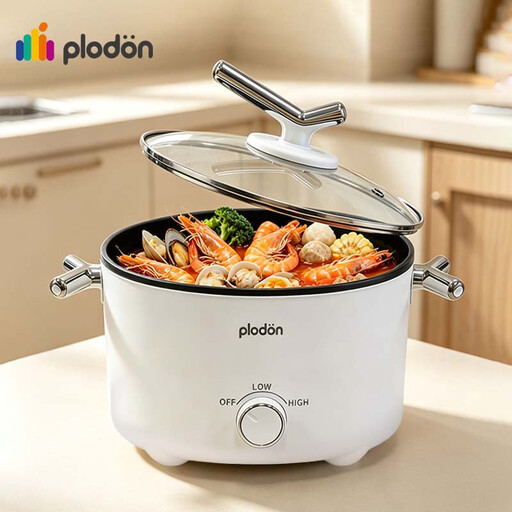
The product name specifies a 2.6 l capacity, two manual heat settings and a non-stick coating. The description recommends gentle cooking and advises against high-temperature frying.
 No image available
Its compact size may suit smaller recipes. Compare the capacity with the meat, vegetables and liquid in your recipe.
The product name specifies a 2.0 l capacity and a slow-cooker function.
 No image available
If you’re preparing several portions, compare the stated capacity with your recipe quantity and the space you have available for chilling.
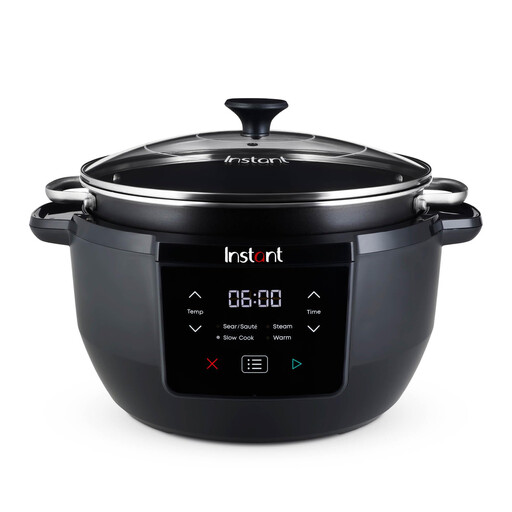
The product name specifies a 4.1 l capacity. It also lists a steamer and soup maker.
The product description warns that hot steam may escape when you open the appliance, and recommends waiting a few minutes after cooking.
 No image available
The larger stated capacity may suit several planned portions. Check that it works for your recipe quantity and that you have enough room to store the chilled portions.
The product name specifies a 7 l capacity and a grey finish. According to the product description, the inner pot must not be used on a hob, induction hob or in an oven.
 No image available
If you’re looking for an appliance with a slow-cooker function for several portions, check whether the 8 l capacity and the other functions suit the way you cook.
The product name specifies an 8 l capacity and 1200 W. The description warns about hot steam when pressure cooking, and advises against opening the appliance while it’s under pressure.
The Federal Institute for Risk Assessment (BfR) recommends cooling hot food promptly to below 7 °C if it’s to be stored for an extended period, and keeping perishable food at between 2 °C and no more than 7 °C. Make sure you can keep it chilled at work too, and transport the containers in a cool bag. Keeping it warm in a slow cooker for several days isn’t a substitute for these steps.
According to BfR recommendations, food should be heated to at least 70 °C throughout for two minutes, and kept at a minimum of 60 °C throughout when held hot. A keep-warm indicator doesn’t confirm the temperature of the stew itself; if that temperature matters, check the food directly.
Only if the instructions for the exact model explicitly say it’s suitable for your type of hob. Russell Hobbs says the MaxiCook 22750-56 cooking pot is suitable for browning on a hob. This doesn’t mean other inserts or types of hob are approved.
Mains-powered appliances that fall within the scope of the EU Low Voltage Directive must meet the relevant electrical safety requirements. CE marking is required when applicable harmonised EU legislation requires it; it isn’t an independent quality mark. Parts intended to come into contact with food must also meet EU requirements for food contact materials. Check the model, markings, plug and instructions for the specific product listing.
Your statutory rights are generally against the seller. A manufacturer’s guarantee is separate and voluntary. The consumer advice centre Verbraucherzentrale explains that, if a product is faulty, you can initially ask for the issue to be put right through a repair or replacement.