Choose your slow cooker based first on the full recipe quantity and the filling guidance for the specific model; the manufacturer’s portion figures are only a guide. If you need to stick to a set class schedule, an adjustable cooking time can make planning easier, but a keep-warm setting does not mean the food has been heated sufficiently or is at a safe temperature. If the curry contains dried pulses, allow separately for preparing and cooking them.
Who is cooking in the class?
Class leader cooking for a group
You’re planning vegetables, sauce and liquid for several participants in one go. Russell Hobbs and Tristar specify different capacities and serving sizes for different models; what matters most is the quantity in your recipe.
Class leader working to a set schedule
You want to coordinate preparation, cooking time and serving. Manufacturer guidance on cooking times and keep-warm functions varies by model; a keep-warm setting is not the same as a timer.
Cooking a pulse-based curry
You’re planning to use beans, chickpeas or lentils, so you’ll need to factor in how to prepare them and how to keep the finished dish ready to serve. The German Federal Institute for Risk Assessment provides guidance on preparing dried pulses and keeping food hot.
What to look for when buying
First check the recipe quantity and fill limit, then consider time controls and how you’ll serve the food. Finally, look at ease of use and any extra programmes you’ll actually use in the class.
| Consideration |
What to check |
Who is this important to? |
| Recipe quantity |
Check the full recipe quantity against the filling guidance for the specific model and the space available at your class venue. Manufacturer serving-size figures are no substitute for planning the curry itself. |
If I’m cooking for several people in the class, the curry and sauce need to fit within the recommended fill range. Around 33 % of consumers put making sure the recipe quantity is sufficient first. |
| Cooking and serving time |
Check whether the model has heat settings, a timer to set the cooking time or a function that switches over when the programme ends. |
If I have a set serving time, I want to coordinate when cooking finishes with the class schedule without confusing a timer with a keep-warm function. Around 27 % of consumers prioritise being able to plan cooking and serving times. |
| Preparation and keeping food hot |
The BfR recommends soaking dried chickpeas, kidney beans and lentils for at least five hours, discarding the soaking water and cooking them in fresh water. Heated food should be kept at a temperature of at least 60 °C throughout until it is eaten. |
If the curry contains dried pulses or will be served later, I’ll plan their preparation and temperature checks separately from the appliance settings. Around 20 % of consumers put safe preparation and keeping food ready to serve first. |
| Handling and cleaning |
Check the instructions for using and cleaning the insert and lid, and for hob compatibility, for the exact model. Only consider extra programmes if you’ll use them in the class. |
If I have little time to clean up after the class, I want to know which parts are actually approved for the dishwasher or hob. Around 20 % of consumers prioritise ease of use, cleaning and having multiple functions they’ll actually need. |
Common buying and planning mistakes
-
Assuming the manufacturer’s serving sizes match your curry quantity
Serving-size figures apply to individual models. Depending on the recipe, vegetables, sauce and liquid can take up different amounts of space in the pot.
Work out the full recipe quantity and compare it with the filling guidance for the specific appliance.
If the quantity exceeds the usable fill range, you may need to cook in two batches or use additional cookware.
-
Assuming the keep-warm setting makes food safe to serve
A keep-warm setting does not prove that the food has reached the required temperature throughout. The German Federal Institute for Risk Assessment highlights the risk of keeping heated food at too low a temperature.
Plan to check the temperature of the finished dish; don’t rely on the control setting alone.
-
Overlooking the need to pre-cook pulses
The German Federal Institute for Risk Assessment recommends soaking dried pulses such as chickpeas, kidney beans and lentils, then cooking them in fresh water. Slow cooking is not a suitable alternative for most pulses.
Before the class, decide whether to use ingredients that have already been cooked appropriately or to allow enough time for soaking and cooking them.
-
Assuming removable inserts are suitable for every hob or the dishwasher
Approvals vary by model: according to the Russell Hobbs instructions, the insert for the MaxiCook 22750-56 is suitable for gas and electric hobs, but not induction. The manufacturer does not specify that the accessories for the Compact Home 25570-56 are dishwasher-safe.
Check the guidance on the insert, lid, hob compatibility and cleaning against the full model number.
Key brands at a glance
Russell Hobbs
The models mentioned cover different pot sizes for cooking for one or for a group.
- Russell Hobbs lists the Compact Home 25570-56 as having a 2 l capacity for up to two servings, and the MaxiCook 22750-56 as having a 6 l capacity for up to eight servings.
- The instructions for the MaxiCook 22750-56 exclude induction hobs. For a group recipe, also check whether the capacity of the specific model will be sufficient.
Tristar
Manufacturer information distinguishes between heat settings on the VS-3915 and a digitally adjustable cooking time on the VS-3920.
- Tristar lists the VS-3915 as having a 3,5-l ceramic pot and two heat settings. The VS-3920 is listed with a 4,5-l ceramic pot and a timer for setting the cooking time.
- The keep-warm function on the VS-3915 is not the same as the digital timer on the VS-3920. These specifications apply to the models named.
Crock-Pot
The UK manufacturer’s website describes the CSC113X as a digital 3,5-l option with a timer.
- According to Crock-Pot, you can set the cooking time; once cooking is complete, the appliance automatically switches to keep-warm mode.
- This information about the CSC113X does not confirm its availability in Germany or the plug and warranty terms of any specific offer.
Instant Pot
The German DUO instructions describe a slow-cook programme as one of several cooking functions on a multicooker.
- For the DUO range, the instructions list selectable slow-cook settings and an adjustable cooking time.
- The instructions do not establish that its handling or cooking performance is equivalent to that of a dedicated slow cooker. Follow the fill and lid guidance for the specific appliance.
Joybuy products for slow cooking
The following Joybuy listings include slow cookers and multicookers with a slow-cook function. Compare the pot size with your full recipe and choose extra cooking functions only if you’ll actually use them in the class.
 No image available
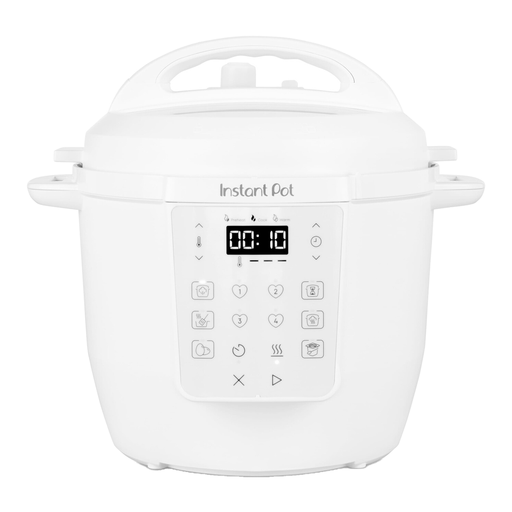
Instant Pot 7-in-1 multicooker, 5,7 l, 1000 W, pressure cooker and slow cooker, preset programmes, stainless steel pot
An option if you want to use both pressure cooking and slow cooking in your class, and your recipe quantity will fit in the 5,7-l pot.
Specifications in the product name: 7-in-1, 5,7 l, 1000 W, pressure cooker and slow cooker, preset programmes and stainless steel pot.
Before buying, check the EU product information that applies to the specific model and whether CE marking is required.
View on Joybuy
 No image available
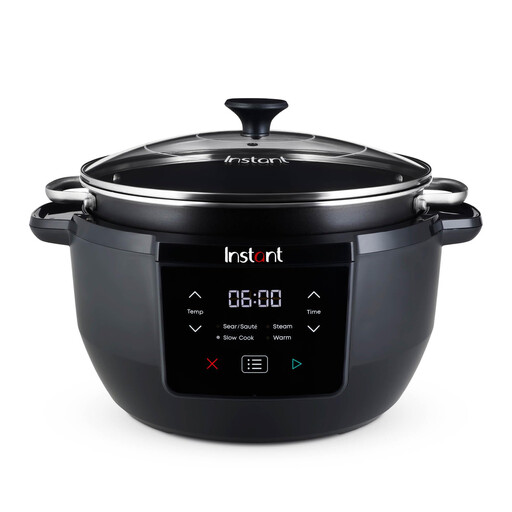
Instant Pot Superior Slow Cooker, 7 L, Grey – 140-6128-01-EU
It may suit a planned class schedule if the cooking time and temperature settings, followed by the keep-warm function, fit your serving plan.
Specifications in the product name: 7 L, grey, model 140-6128-01-EU. The inner pot is not suitable for use in an oven or on a hob, including induction; temperatures above 175 °C may damage the coating.
Before buying, check the EU product information that applies to the specific model and whether CE marking is required.
View on Joybuy
Frequently asked questions
Can I put dried beans or chickpeas straight into the slow cooker?
No, this is not a substitute for the recommended preparation. The German Federal Institute for Risk Assessment recommends soaking dried pulses such as chickpeas, kidney beans and lentils for at least five hours, discarding the soaking water and cooking them in fresh water. Slow cooking is not a suitable substitute for most pulses.
Is the keep-warm setting enough if the class is eating later?
The keep-warm label alone does not prove that the food is at a safe temperature. The German Federal Institute for Risk Assessment advises keeping heated food at a temperature of at least 60 °C throughout until it is eaten. Make sure you plan to check the temperature of the food.
Can every removable insert go on the hob or in the dishwasher?
No, approvals depend on the model. According to the instructions, the insert for the Russell Hobbs MaxiCook 22750-56 is suitable for gas and electric hobs, but not induction. The manufacturer says the accessories for the Russell Hobbs Compact Home 25570-56 are not dishwasher-safe. Check the instructions for the exact model before using the insert or lid in this way.
What are my rights when buying online in Germany?
According to the Verbraucherzentrale, online consumer purchases generally come with a 14-day right to cancel, starting from the conclusion of the contract or receipt of the goods; you must notify the other party to the contract that you wish to cancel. If goods are faulty, the seller is generally responsible for your statutory rights relating to defects, not automatically the manufacturer. A voluntary manufacturer’s guarantee is separate from these rights.
Does CE marking mean the slow cooker has been independently tested?
No, CE marking, where required, is not an independent quality mark. According to information from the European Union, the manufacturer uses it to declare that the product meets the relevant requirements, where CE marking is required for that specific product.


