Families cooking with dried lentils
If you’re planning to make dal with dried pulses, factor in the BfR’s recommended preparation before choosing an appliance solely for its slow-cooking function.


The right slow cooker size depends on the amount of dal you’re actually making: a published recipe from Slow Cooking Works Better is designed for six to eight portions in a 3.5-litre slow cooker; larger models offer more capacity for bigger batches. For dried lentils, the Federal Institute for Risk Assessment (BfR) recommends soaking them for at least five hours, pouring away the soaking water and cooking them in fresh water. Slow cooking alone has not been shown to be a substitute for this preparation.
If you’re planning to make dal with dried pulses, factor in the BfR’s recommended preparation before choosing an appliance solely for its slow-cooking function.
If you’re making several portions, make sure the recipe quantity and liquid fit the pot’s capacity and the fill guidance for the specific model. A recipe from Slow Cooking Works Better is designed for six to eight portions in a 3.5-litre slow cooker.
If you want to time the cooking to suit a mealtime, compare simple heat settings with an adjustable cooking time. Manufacturers describe different controls for individual models, but don’t provide verified results for dal.
| Buying priority | What to check when buying | Who it matters most to |
|---|---|---|
| Preparing lentils safely | The BfR recommends soaking dried pulses for at least five hours, pouring away the soaking water and cooking them in fresh water. Don’t rely on slow cooking alone as a substitute. | If I use dried red lentils, I want to plan for the recommended preparation rather than relying solely on the slow-cook setting. Around 36% of consumers put the safe preparation of dried lentils first. |
| Portion size and pot capacity | A recipe from Slow Cooking Works Better is designed for six to eight portions in a 3.5-litre slow cooker. Compare the quantities of ingredients and liquid with the fill guidance for the specific model. | When I’m cooking for my family, the recipe and liquid need to fit in the pot; for batch cooking, I need extra capacity. Around 29% of consumers prioritise having the right portion size and pot capacity. |
| Cooking time and consistency | Check the appliance’s heat settings and timer against the recipe, and check the consistency before serving. | If the dal needs to be ready for a particular mealtime, I want to be able to plan the cooking process and the consistency I’m aiming for. Around 21% of consumers put cooking time and consistency first. |
| Cleaning and running costs | Check the cleaning instructions for the pot and lid. When comparing costs, take the appliance’s power consumption over the cooking time into account. | If I use the appliance often, I want to weigh up the cleaning involved and the actual running costs. Around 14% of consumers prioritise maintenance and running costs. |
A low or high slow-cook setting doesn’t prove that the recommended preparation for dried pulses has been followed. The BfR recommends soaking them and then cooking them in fresh water; it does not consider gentle cooking methods suitable for most pulses.
Prepare the lentils in line with the BfR’s recommendation, and don’t treat slow cooking as a proven substitute.
A recipe from Slow Cooking Works Better is designed for six to eight portions in a 3.5-litre slow cooker. That doesn’t guarantee the same number of portions for every model or dal recipe.
Compare the full recipe quantity, including the liquid, with the fill guidance for the specific appliance.
The BfR recommends that heated food kept hot should reach at least 60 °C throughout. A keep-warm function alone doesn’t confirm that the dal has reached this temperature.
Check the temperature if you’re keeping the food warm for longer. Cool leftovers and store them in the fridge; the BfR recommends eating them within two to three days.
The documented slow cookers range from 3.5 l to 7 l, with different controls depending on the model.
The VS-3915 is a 3.5-litre slow cooker with simple heat controls.
One documented 5.7-litre multi-cooker is aimed at buyers who want to use cooking methods beyond slow cooking.
The following Joybuy products include slow cookers and multi-cookers with a slow-cook function, to suit different recipe quantities and cooking routines.
 No image available
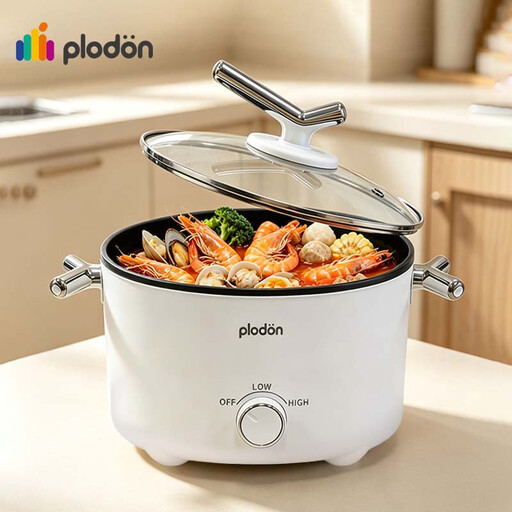
May suit smaller recipe quantities; the product name lists a 2.6-litre pot, a steaming insert and two manual heat settings.
 No image available
A compact option if you’re looking for the hot pot and wok uses listed in the product name as well as a slow-cooker function; the name specifies a 2.0-litre capacity.
 No image available
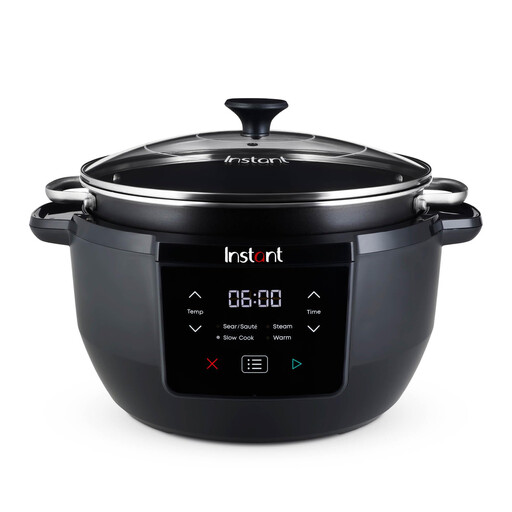
For a family meal that calls for slow cooking and additional cooking methods; the product name lists a 4.1-litre capacity, as well as steaming and soup functions.
 No image available
A 7-litre option for larger batches; the product name describes it as a slow cooker. Check the manual for the specific model for recipe and fill guidance.
 No image available
For larger family meals or batch cooking when you want several cooking methods; the product name lists an 8-litre capacity, 1200 W and 12 pre-set programmes. Follow the appliance’s fill guidance when cooking foods that expand.
Don’t rely on a slow-cooker recipe alone for this. For dried pulses, the BfR recommends soaking them for at least five hours, pouring away the soaking water and then cooking them in fresh water; it does not consider gentle cooking methods suitable for most pulses.
It may be: a published recipe from Slow Cooking Works Better is designed for six to eight portions in a 3.5-litre slow cooker. The quantities of your ingredients and liquid, as well as the fill guidance for the specific model, are what matter.
No. The BfR recommends that food kept hot should reach at least 60 °C throughout. A keep-warm function doesn’t confirm that the dal has reached this temperature; cool leftovers and store them in the fridge.
Follow the instructions for the pot and lid, and check before buying whether a suitable replacement insert is available. If the appliance you bought has a fault, statutory consumer rights against the seller are separate from a voluntary guarantee, as explained by the Verbraucherzentrale.
Electrical appliances must meet the applicable EU requirements. The European Commission lists conformity assessment, technical documentation, an EU declaration of conformity and CE marking as the manufacturer’s responsibility; materials that come into contact with food must comply with the relevant EU rules. CE marking is not an individual test of a dal recipe.