Course organiser preparing one shared batch of soup
You’re planning one shared batch and need to coordinate the cooker size, cooking time and serving. Crock-Pot and Russell Hobbs list models with different capacities for larger batches.


Start by choosing a slow cooker based on the total quantity of leeks and liquid in your recipe, as well as the fill limit for the specific model. For one shared batch, a larger cooker with a cooking timer may be suitable; for separate groups or for softening the leeks first, consider smaller appliances or a model with a dedicated sauté function. A keep-warm setting does not prove that the soup has reached the required temperature throughout.
You’re planning one shared batch and need to coordinate the cooker size, cooking time and serving. Crock-Pot and Russell Hobbs list models with different capacities for larger batches.
You’re letting groups prepare separate portions and need cooking pots with a capacity that suits each recipe. Tristar lists the VS-3915 as having a removable 3.5-l ceramic pot.
You want to soften the leeks before slow cooking and need to check whether the instructions allow the pot to be used on your type of hob, or whether an integrated sauté function would fit the process better.
First work out the total quantity for the recipe. Then plan when cooking will finish and how you’ll serve it, before deciding whether to brown the ingredients in the same appliance.
| What matters | What to look for when buying | Who should pay particular attention? |
|---|---|---|
| Usable capacity | Compare the full recipe quantity, including liquid, with the fill limit for the specific model. | If I’m preparing one shared batch for the course, everything needs to fit below the maximum fill line. Around 40% of consumers are likely to prioritise having enough capacity. |
| Finishing and serving | Check the cooking timer and keep-warm function separately; the German Federal Institute for Risk Assessment recommends keeping heated food at a minimum of 60 °C throughout until it is eaten. | If you need to fit serving around a fixed course schedule or serve at different times, you’ll want cooking you can plan around. Around 30% of consumers are likely to have this as their main concern. |
| Softening the leeks | Only use a cooking pot on the hob if the instructions for that exact model allow it on your type of hob; alternatively, choose a model with an integrated sauté function. | If softening the leeks is an essential recipe step, I want to know whether I can do it in the same appliance. Around 20% of consumers are likely to prioritise this step. |
| Use and cleaning | Check the footprint, the space around the appliance and the cleaning instructions for the pot, lid and base. | If you’re setting up the course room and tidying up after cooking, you’ll want to pay particular attention to placement and ease of use. Around 10% of consumers are likely to focus on this. |
The capacity in litres alone doesn’t tell you how much soup the recipe will make within the permitted fill level. You need to account for both the leeks and the liquid.
Work out the full recipe quantity before you buy, then compare it with the instructions for the specific cooker.
If the batch won’t fit in the pot, you may need to cook it in stages or use a second appliance.
An appliance setting doesn’t prove that the soup has reached at least 60 °C throughout. The German Federal Institute for Risk Assessment recommends maintaining this temperature in all parts of the food until it is eaten.
If serving is spread over a longer period, check the soup’s temperature and plan accordingly.
A removable ceramic pot isn’t automatically suitable for use on a hob. Whether it can be used this way depends on the specific model and your type of hob.
Check the instructions before browning ingredients in the pot; otherwise, use a separate pan or an appliance with a sauté function.
A pot that isn’t suitable for hob use could be damaged; using a separate pan may also take up extra space and require more handling.
Crock-Pot describes the CSC063 as a large slow cooker with a 7.5-l pot and a cooking timer.
The German product pages list the Cook@Home 22740-56 with a 3.5-l capacity and the MaxiCook 22750-56 with a 6-l capacity.
The VS-3915 is a slow cooker with a removable 3.5-l ceramic pot.
According to the manufacturer, the 2904/03 combines sautéing and slow cooking, so you can carry out several steps in one appliance.
These appliances cover everything from smaller batches for groups to larger recipes; some models also include an integrated sauté function. Compare the usable pot capacity and suitability for your planned course with your recipe requirements.
 No image available
Could suit a smaller batch for a group; compare the recipe quantity with the maximum fill level.
Stated capacity: 2.6 l. The product title lists two manual heat settings and a non-stick coating.
 No image available
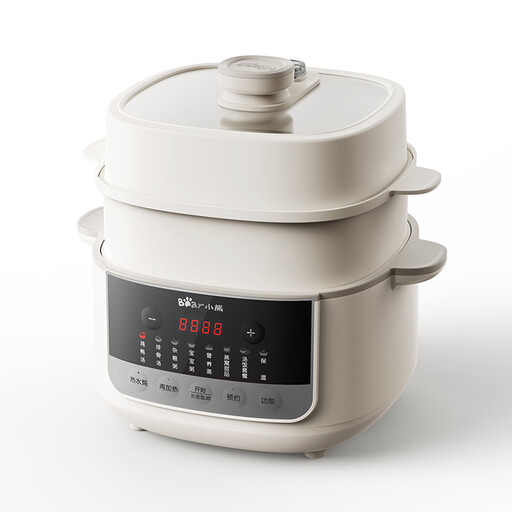
The additional inserts may be useful for preparing separate small portions; check how much capacity is actually available for your soup batch.
The product title lists a 4.1-l capacity, as well as steaming and soup functions. The main pot is listed as 2.5 l, with each of the four additional inserts holding 0.4 l.
Do not place the ceramic pot over an open flame. Watch out for escaping steam when opening it.
 No image available
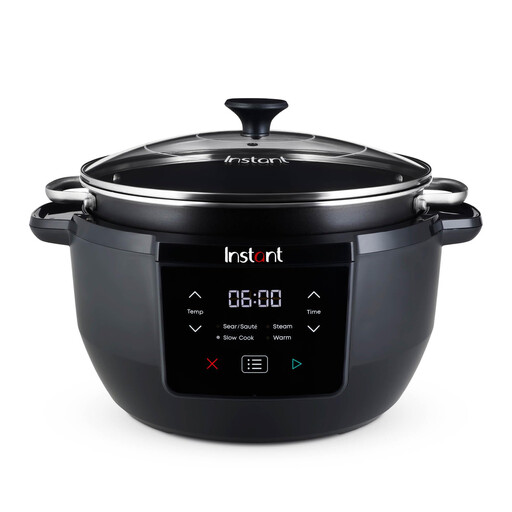
Could be suitable if you want to slow cook a larger batch and soften the leeks in the appliance; compare the recipe quantity with the usable capacity.
The product title lists a 7-l capacity. The product description includes slow cooking, sautéing, adjustable time and temperature, and keep warm.
According to the product description, the inner pot must not be used on a hob, induction hob or in an oven. Use the integrated sauté function to soften the leeks.
 No image available
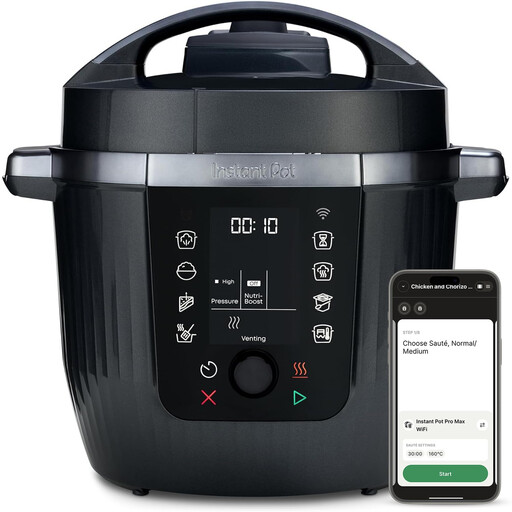
The listed slow-cooking and sauté functions may be useful for a course recipe that includes a browning step; first check that the stated capacity is sufficient for your recipe.
The product description lists a 5.7-l capacity and says it serves up to six portions.
According to the product description, the appliance is for domestic use and not for commercial use. Check whether this restriction applies to your course.
 No image available
Could be worth considering for a larger recipe with a browning step, if its features suit the appliance and the planned course use.
The product description lists an 8-l capacity, a 24-hour delay timer and automatic keep-warm for up to 12 hours.
According to the product description, the appliance is for domestic use and not for commercial use. Check whether this restriction applies to your course.
No. Compare the total recipe quantity, including the leeks and liquid, with the maximum fill level for the specific model. A serving suggestion from the manufacturer won’t necessarily apply to your soup recipe.
A keep-warm setting alone doesn’t prove the soup is at the right temperature. The German Federal Institute for Risk Assessment recommends keeping heated food at a minimum of 60 °C throughout until it is eaten. Check the temperature of the food; the BfR also recommends heating food to 70 °C throughout for at least two minutes.
Follow the instructions for the specific appliance. The Tristar VS-3915 instructions specify a stable, level surface; the electrical base must not be immersed in water. Don’t assume these model-specific requirements apply to other appliances without checking.
The term ‘cookery course’ doesn’t automatically mean that all participants have a briefing requirement. The IHK explains the briefing requirements under § 43 IfSG for people who handle food commercially and carry out the activities described. Check the specific course arrangements and activities with your local health authority.
The European Union includes electrical and electronic equipment among the product groups subject to relevant CE requirements; the CE marking is the manufacturer’s declaration of conformity, not an independent quality mark. According to the Verbraucherzentrale, consumers generally have a 14-day right to cancel an online purchase. This consumer protection rule cannot automatically be applied to purchases made as part of a commercial course activity.