For larger batch-cooked portions
If you want to cook several portions of ragout in one go, all the ingredients and liquid need to fit in the pot. Remember to allow space for portioning and cooling, too.


Choose a pot size that can hold the full quantity of lentils, vegetables and liquid within the filling guidelines for that particular model – a larger stated capacity isn’t automatically better. A timer can make it easier to plan cooking, but it’s no substitute for preparing dried lentils properly or cooling finished portions promptly.
If you want to cook several portions of ragout in one go, all the ingredients and liquid need to fit in the pot. Remember to allow space for portioning and cooling, too.
If you want to use dried rather than pre-cooked lentils, factor in their preparation and the need to cook them thoroughly when choosing a recipe.
If you want to fit cooking time around your daily routine, check whether the model has a timer and what happens when cooking ends.
First compare the quantity in your recipe with the pot’s filling guidelines, then plan how you’ll prepare, cook and store the food.
| Priority | What to check before buying | Who should consider this? |
|---|---|---|
| Suitable batch size | Compare the total quantity of ingredients and liquid with the model’s filling guidelines, and allow room for cooling. | If I cook several portions at once, everything needs to fit in the pot and be easy to divide afterwards. That’s why around 33% of consumers put a suitable batch size first. |
| Suitable preparation of lentils | Check in advance whether you’ll be using dried or pre-cooked lentils. For dried pulses, the Federal Institute for Risk Assessment recommends soaking them for at least five hours, discarding the soaking water and cooking them in fresh water. | If I use dried lentils, I want to plan their preparation and thorough cooking to suit the recipe. Around 27% of consumers prioritise the right way to prepare dried lentils. |
| Cooking time you can plan around | Check whether the timer controls the cooking time and whether the keep-warm function starts afterwards. When keeping food hot, the Federal Institute for Risk Assessment recommends a temperature of at least 60 °C throughout. | If I want to fit the ragout around my daily routine, an adjustable cooking time and a clear process once cooking is over matter to me. Around 20% of consumers put planning their cooking time first. |
| Cleaning and storage | Check the cleaning instructions for the specific cooking pot, and plan suitable containers and fridge space for your portions. The Federal Institute for Risk Assessment recommends cooling hot food promptly to below 7 °C for longer storage. | If I cook a larger batch, I want the pot to be easy to clean and the portions straightforward to chill afterwards. Around 20% of consumers focus on ease of use and storage. |
A recipe that calls for a short soaking time doesn’t automatically follow the Federal Institute for Risk Assessment’s recommendations for dried pulses, which include lentils.
Follow the BfR’s recommendation: soak for at least five hours, discard the soaking water and cook the lentils in fresh water. Choose a suitable cooking method, and check both the recipe and the appliance instructions.
Manufacturers’ stated capacities and portion counts apply to the specific model; the actual amount of ragout you’ll make depends on the recipe and the filling guidelines.
Work out the combined quantity of lentils, vegetables and liquid, and remember to allow for containers and fridge space for the finished portions.
A keep-warm function doesn’t prove that the ragout reaches at least 60 °C throughout. This is the temperature recommended by the Federal Institute for Risk Assessment when keeping food hot.
If you want to keep the food warm, check its temperature. For later storage, the BfR recommends cooling hot food promptly to below 7 °C.
Tristar offers manual and digital slow cookers in a range of sizes.
According to the manufacturer, the range runs from the 2 l Compact Home Mini to the 6 l digital MaxiCook 22750-56.
The CSC030X is a 3.5 l slow cooker for smaller batches.
Tefal offers multi-cookers with slow-cooking and pressure-cooking functions.
This selection is aimed at larger meal-prep batches where slow cooking and additional cooking methods are useful.
 No image available
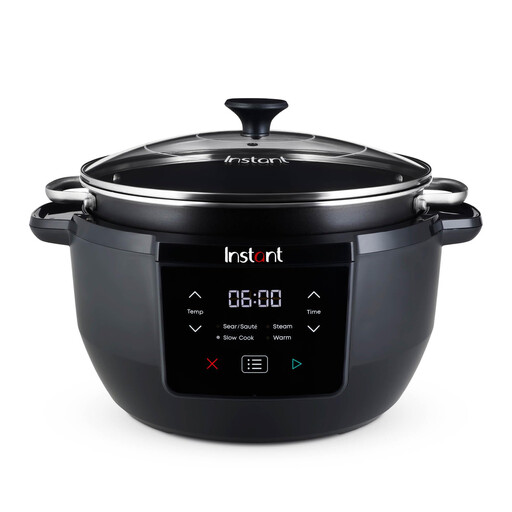
For larger meal-prep batches when you want additional cooking methods as well as slow cooking.
The product name states 7 L; the product description gives a capacity of 7.1 l and up to 10 portions. It also lists slow cooking, steaming, sautéing and keeping warm, along with adjustable time and temperature settings.
According to the product description, some parts are dishwasher-safe. It also says the inner pot must not be used in the oven or on a hob or induction hob. The Federal Institute for Risk Assessment’s preparation recommendations for dried lentils apply regardless of the slow-cooker setting.
Don’t rely on the heat setting alone. For dried pulses, including lentils, the Federal Institute for Risk Assessment recommends soaking for at least five hours, discarding the soaking water and cooking them in fresh water. Check a suitable recipe and the appliance instructions; pre-cooked lentils are a different starting ingredient.
Don’t leave a large batch to cool slowly in the full cooking pot. The Federal Institute for Risk Assessment recommends cooling hot food promptly to below 7 °C for longer storage. Plan ahead for suitable shallow containers and enough room in the fridge.
The name of the function alone isn’t enough to guarantee that. When keeping food hot, the Federal Institute for Risk Assessment recommends a temperature of at least 60 °C throughout the finished dish. If you want to store the ragout, cool it promptly instead, without assuming it has been kept at a safe temperature.
A mains-powered appliance must meet the relevant EU product requirements and carry the required CE marking; this marking is not an independent quality seal. For a purchase by a consumer, the statutory warranty should be distinguished from a voluntary guarantee. The Verbraucherzentrale explains that sellers are generally liable for defects present at the time of delivery for two years.