Which appliance is right for you?

Cooking without access to a hob

During the renovation, you’ll need a safe place for a standalone cooking appliance. An integrated browning function can replace a step on the hob if you need it; always follow the setup instructions for the specific model.

Making minestrone in batches

If you’re making several portions at once, the pot needs to fit all the vegetables, beans and stock. Also make room to cool and store leftovers quickly.

Cooking with limited washing-up facilities

If you have limited facilities for washing up, check whether the insert is removable and whether the manufacturer says the insert and lid are dishwasher-safe.

What should you look for when buying?

What matters when buying What to check Who is it important for?
Cooking without a hob Check the space available and the model’s setup instructions. Choose an integrated browning function only if you want to brown ingredients without a hob. If my hob is temporarily out of action, I need a suitable place to cook and want to keep the number of steps I have to do elsewhere to a minimum. This is the top buying priority for around 36% of consumers.
Making the right amount of soup Compare the full quantity of ingredients with the appliance’s capacity and fill-level guidance. Make space for shallow containers and leftovers in the fridge. I want to make either a small batch or several meals without assuming that a recipe written for a different pot size will work in my appliance. Getting the amount of soup right is the main concern for around 29% of consumers.
Cooking time and mealtimes Check whether the timer sets the cooking duration or lets you programme a start time, and see when pasta or leafy vegetables should be added to the recipe. If my mealtimes vary, I want to plan the start of cooking and when to add ingredients later on. A predictable finish time is the top priority for around 21% of consumers.
Cleaning and leftovers Check whether the insert and lid of the exact model are dishwasher-safe, and plan how to chill leftovers quickly. If I have limited washing-up facilities, I want to know how much cleaning will be involved and where I can chill leftovers. Cleaning and leftover storage are the main concerns for around 14% of consumers.

Common misconceptions

  • Treating tinned beans and raw beans as interchangeable

    According to the Federal Centre for Nutrition, tinned beans are already cooked and ready to eat. Dried beans need to be prepared separately: the Federal Institute for Risk Assessment recommends soaking them for at least five hours, throwing away the soaking water and cooking them in fresh water.

    For an easy minestrone while your kitchen is being renovated, you can use the pre-cooked tinned beans specified in the recipe. If using dried beans, follow the preparation guidance from the Federal Institute for Risk Assessment.

  • Assuming the stated capacity is the same as the usable soup capacity

    The stock, vegetables and beans all take up space in the pot. The Academy of Nutrition and Dietetics’ minestrone recipe is specifically designed for a 6- or 7-quart slow cooker; you can’t assume that this recipe will fit every appliance.

    Compare the full quantity of ingredients with your model’s fill-level guidance before choosing a pot size.

  • Buying a hob-safe insert when you can’t use your hob

    According to the manufacturer, the insert for the Russell Hobbs MaxiCook 22750-56 can be used for browning on a hob. That’s not the same as an integrated browning function, and it won’t help if your hob is out of action during the renovation.

    If you want to brown ingredients without a hob, check whether the specific appliance has an integrated programme for this. If you don’t brown anything for your minestrone, this feature isn’t essential.

  • Assuming “keep warm” means leftovers can be stored safely

    The name of the function doesn’t prove that the soup reaches a particular temperature throughout. The Federal Institute for Risk Assessment recommends keeping hot food at a minimum of 60 °C throughout and, if you plan to store it for longer, cooling it to below 7 °C within a few hours.

    Plan serving, keeping food hot in practice and cooling it quickly separately from the cooking time you set. You can divide larger quantities between several shallow containers to help them cool.

Brands to consider

Russell Hobbs

The models mentioned cover small batches with the Compact Home 25570-56 and larger quantities with the MaxiCook 22750-56.

  • The manufacturer lists a 2 l capacity and up to two portions for the Compact Home. For the MaxiCook, it lists digital time control and an insert for browning on the hob.
  • According to the product page, the Compact Home accessories aren’t dishwasher-safe. The MaxiCook insert needs a usable hob for browning.

Tristar

The manually operated VS-3915 has a stated capacity of 3.5 l. According to the manufacturer, the VS-3920 holds 4.5 l and lets you set the cooking time digitally.

  • For both models, the manufacturer lists removable ceramic inserts and a keep-warm function.
  • No digital cooking timer is specified for the VS-3915. A keep-warm function alone doesn’t prove that the soup reaches at least 60 °C throughout.

Crock-Pot

The digital CSC060X is a 3.5-l model suited to smaller batches.

  • Crock-Pot lists an adjustable cooking time of 30 minutes to 20 hours, automatic switching to keep-warm mode, and a dishwasher-safe insert and lid.
  • The timer makes it easier to plan, but it doesn’t replace checking the actual food temperature or cooling leftovers quickly.

Instant Pot

The Instant Superior Slow Cooker is worth considering if you need functions such as browning or steaming as well as slow cooking.

  • The manufacturer’s instructions list Slow Cook, Steam, Sauté and Warm.
  • The instructions require a stable, level, non-combustible surface and warn against using the appliance near water. The additional functions don’t remove the need to check your temporary cooking space.

Joybuy products for minestrone

The Joybuy products below include compact, manually operated slow cookers, larger slow cookers and multi-cookers. Compare the stated pot capacity and product features with the full quantity in your recipe and the space you have available.

IAGREEA slow cooker with a 2.6 l capacity

IAGREEA Slow Cooker 2.6 l

A good choice for smaller batches of soup if you want to adjust the heat manually. The product title lists a 2.6 l capacity, two manual heat settings, a steaming insert and a non-stick coating. The instructions say to use it on a stable, flat, heat-resistant, well-ventilated surface, away from water.

View at Joybuy
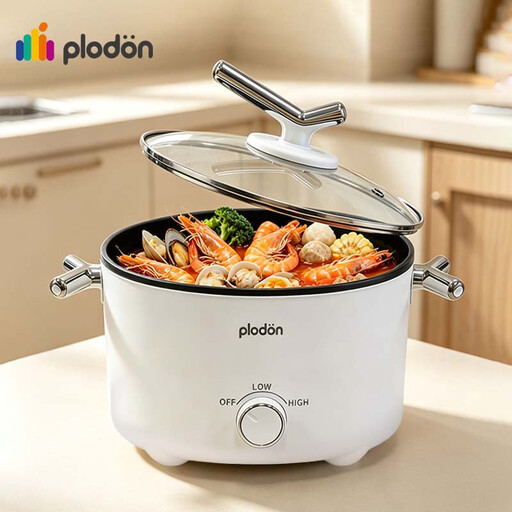
plodon Electric Hot Pot with a 2.0 l capacity

plodon Electric Hot Pot 2.0 l

A compact option if you’re looking for a hot pot with a slow-cooker function and manual power settings. The product title lists a 2.0 l capacity, 1,000 W and dual power control. The instructions say not to fill the pot more than two-thirds full.

View at Joybuy
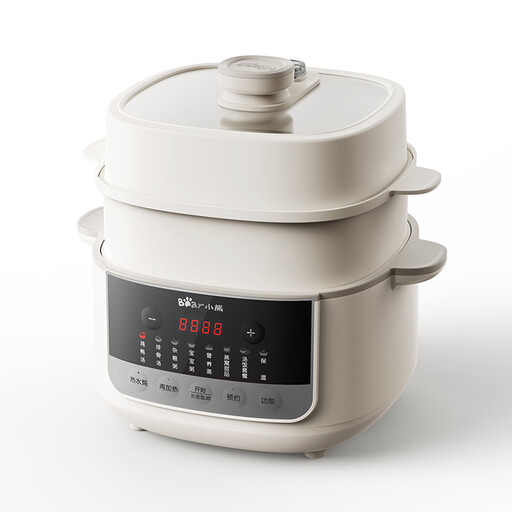
Bear DDZ-J25G2 slow cooker and steamer

Bear DDZ-J25G2 Slow Cooker 4.1 l

For anyone looking for a slow cooker with additional steaming and soup functions. The product title lists a 4.1 l capacity and a multi-purpose steamer. The product details specify a 2.5 l main pot and four 0.4 l inner pots; pay attention to the fill-level mark and escaping steam.

View at Joybuy
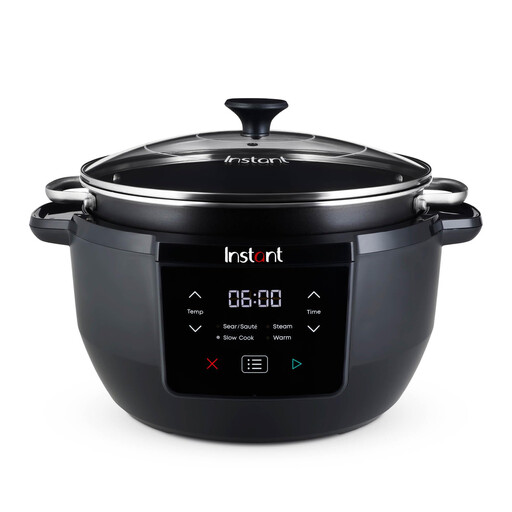
Instant Pot Superior Slow Cooker with a 7 l capacity

Instant Pot Superior Slow Cooker 7 l, Grey

For larger batches, provided the 7 l pot suits your recipe quantity and available space. The product title lists the Grey finish and model number 140-6128-01-EU. According to the product details, the inner pot must not be used on a hob or induction hob.

View at Joybuy
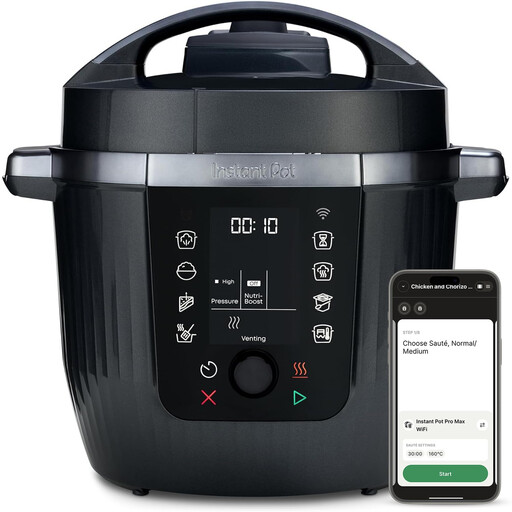
Instant Pot Pro 10-in-1 multi-cooker with a 5.7 l capacity

Instant Pot Pro 10-in-1 Multi-Cooker 5.7 l

For anyone looking for more cooking functions in one appliance alongside slow cooking. The product title lists a 5.7 l capacity and functions including pressure cooking, rice cooking, steaming, sautéing and yoghurt making.

View at Joybuy

Frequently asked questions

Do tinned beans need to be cooked before adding them to minestrone?

No. The Federal Centre for Nutrition describes pulses from tins or jars as pre-cooked and ready to eat. Don’t confuse them with dried beans: the Federal Institute for Risk Assessment recommends soaking dried beans for at least five hours, throwing away the soaking water and cooking them in fresh water.

Can I put my slow cooker on any available surface during the renovation?

No. Check the instructions for your specific appliance and make sure you have a suitable power socket. The instructions for the Instant Superior Slow Cooker, for example, require a stable, level, non-combustible surface and warn against using it near water. These requirements don’t automatically apply to every slow cooker.

Is a keep-warm function enough for cooked soup and leftovers?

Not on its own. The Federal Institute for Risk Assessment recommends keeping hot food at a minimum of 60 °C throughout and, if you plan to store it for longer, cooling it to below 7 °C within a few hours. You can divide larger quantities between several shallow containers to help them cool; an appliance function doesn’t guarantee these temperatures.

What are my rights when buying a slow cooker online in Germany?

If you buy online from a business seller, you generally have a 14-day right to cancel, starting from the day you receive the goods; exceptions and possible return postage costs should be taken into account. You’re also entitled to a statutory minimum two-year legal guarantee from the seller. A voluntary manufacturer’s warranty doesn’t replace these rights. The European Commission explains these consumer rights for purchases in the EU.

Is a CE mark an independent safety test?

No. The European Commission explains that, for products covered by the rules, CE marking is the manufacturer’s declaration that the product meets the applicable EU requirements. There is no central EU body that issues a general certificate for this. Check the product and manufacturer details for the specific appliance.