Cooking without a usable hob
If you don’t have a hob available during your kitchen renovation, you can cook pulled chicken in a freestanding electric appliance. Set it up in a suitable spot and follow the instructions for the specific model.


Choose a slow cooker with enough usable capacity for your full recipe, and make sure you can use it in the space you have available. A basic model will do if you can keep an eye on when cooking starts and finishes. A timer or multicooker is worth considering if you’ll make use of its extra scheduling options or cooking methods. No automatic function can replace cooking the chicken thoroughly or checking its temperature while keeping it warm.
If you don’t have a hob available during your kitchen renovation, you can cook pulled chicken in a freestanding electric appliance. Set it up in a suitable spot and follow the instructions for the specific model.
If you want to make a larger batch of pulled chicken in one go, check that the slow cooker’s capacity suits the full recipe and follow the appliance’s filling instructions.
Timers and keep-warm functions can be useful when mealtimes vary. But they’re no substitute for handling poultry safely or checking the temperature before serving.
First, check that you can use the appliance in your temporary cooking space and that it has room for your recipe. Then decide whether you need cooking-time controls, other cooking methods or a particular cleaning option.
Your choice will depend on what matters most during your kitchen renovation.
| Priority | What to check before buying | Who is this important for? |
|---|---|---|
| A suitable cooking spot | Check the external dimensions and cable reach; follow the setup and clearance guidance in the instructions for the specific model. | If I need to cook without a usable hob, I’ll need a suitable spot with a power socket. Around 26% of consumers are likely to prioritise where they can cook. |
| Safe cooking and serving | Keep poultry chilled until you’re ready to cook, and thaw it before slow cooking. Check the centre temperature and the temperature while keeping it warm. The BfR recommends heating food to at least 70 °C for two minutes and keeping it hot at a minimum of 60 °C throughout. | When cooking chicken, I want to be sure it’s thoroughly cooked and kept safely hot afterwards. Around 26% of consumers are likely to prioritise food safety. |
| Slow cooker capacity | Check that the full recipe quantity fits the usable capacity and follow the filling guidance in the model’s instructions. | If I want to prepare several portions, the whole recipe needs to fit in the pot. Around 21% of consumers are likely to prioritise having the right capacity. |
| Cooking time and mealtimes | Check whether the timer controls the cooking time or lets you set a finish time, and what happens when the programme ends. | If my plans change, the right time settings can help me plan ahead. Around 16% of consumers are likely to make this a priority. |
| Cleaning in a temporary kitchen | Check the care instructions for the pot and lid separately. Find out whether washing them by hand or in a dishwasher is practical in your temporary cooking space. | If worktop space and storage are limited, I want the pot and lid to be easy to clean. Around 11% of consumers are likely to prioritise easy cleaning. |
Wanting your meal to finish later doesn’t justify leaving raw ingredients unrefrigerated for longer before cooking starts.
Keep poultry chilled until you’re ready to cook, and check exactly what the timer controls. The USDA Food Safety and Inspection Service recommends thawing meat and poultry completely before cooking them in a slow cooker.
A keep-warm indicator alone doesn’t prove that the food has reached the recommended temperature throughout.
Check the temperature before serving later. The BfR recommends keeping hot food at a minimum of 60 °C throughout; any leftovers you plan to keep should be chilled promptly.
The quantity in your recipe and the instructions on how much to fill the pot may point to a different choice than a general serving-size guide.
Compare the full quantity for your pulled chicken with the guidance in the instructions for the specific model, and remember to check how much space the appliance needs.
A removable inner pot that can be used for searing is only helpful during a renovation if you have a suitable hob. The instructions for the Russell Hobbs MaxiCook 22750-56 rule out use on induction hobs.
Plan your cooking around the hob you actually have available, and don’t choose a model just for a searing option you can’t use temporarily.
The slow cookers mentioned come with a range of capacities and timer settings.
The models featured range from the 2-l Compact Home to the 6-l MaxiCook 22750-56.
The 3.5-l VS-3915 can be compared with the digital 4.5-l VS-3920, which has a timer.
A multicooker alternative for households that want to use cooking methods other than slow cooking in their temporary kitchen.
The products below include electric slow cookers and multicookers with a slow-cook function. Compare their capacity with your recipe, and check which features you can actually use in your temporary cooking space on each model.
 No image available
For pulled chicken without a hob, provided the recipe fits the stated capacity.
2.6 l capacity; two manual heat settings and a coated inner pot.
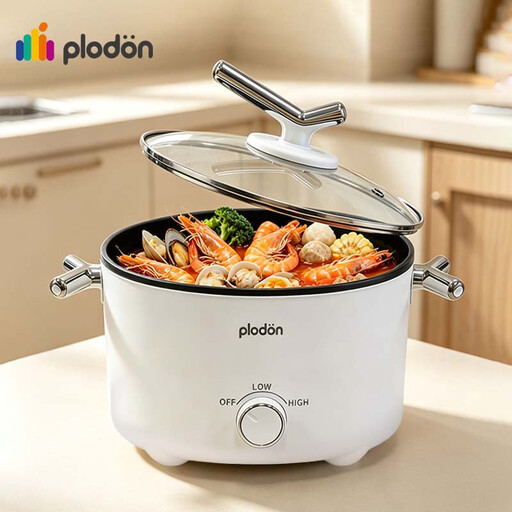 No image available
A compact slow-cook option, provided the stated capacity suits your recipe.
2.0 l capacity; LOW and HIGH settings according to the product description.
 No image available
For a recipe quantity that suits the stated capacity and the pot layout.
Described as a 4.1 l electric slow cooker; the product details list one main ceramic pot and four smaller inner pots. Don’t put the ceramic pot directly over an open flame, and take care of steam when opening it.
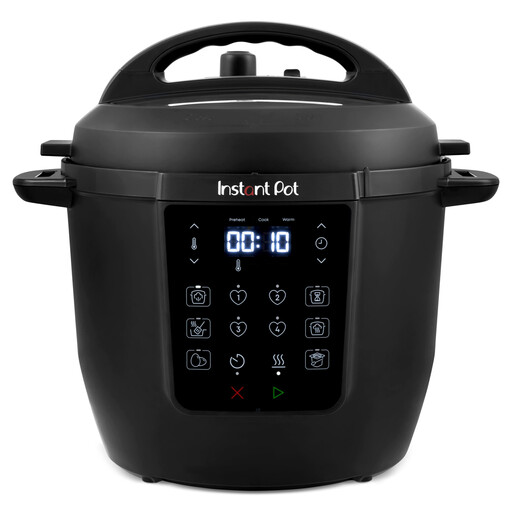 No image available
An option if you need cooking methods other than slow cooking in one appliance.
5.7 l capacity; listed functions include slow cooking, steaming and searing.
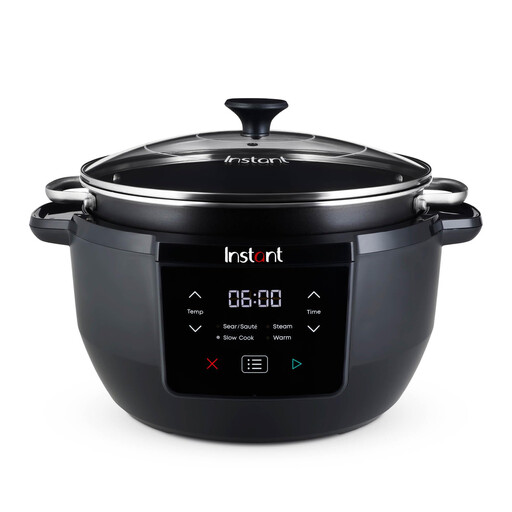 No image available
For larger recipes, provided its capacity and dimensions suit your temporary cooking space.
7 l capacity; according to the description, features include slow cooking, steaming, searing and keeping food warm. The inner pot isn’t suitable for use on hobs or induction hobs.
No. The USDA Food Safety and Inspection Service recommends thawing meat and poultry completely before putting them in a slow cooker, and keeping perishable ingredients chilled until you’re ready to cook.
The BfR recommends heating food to at least 70 °C throughout for two minutes. Check the chicken’s centre temperature: setting a cooking time alone doesn’t confirm it has reached this temperature.
The BfR recommends keeping hot food at a minimum of 60 °C throughout. A keep-warm button alone doesn’t prove this temperature has been reached across the whole dish. Chill any leftovers you plan to keep promptly.
Follow the instructions for your specific appliance. For example, the Russell Hobbs MaxiCook 22750-56 instructions require at least 50 mm of clearance on all sides; this guidance doesn’t apply to every model.
A multicooker could be a good choice if you’ll actually use cooking methods other than slow cooking in your temporary kitchen. If you only want to slow cook, also compare capacity, footprint and the instructions for the specific version instead of choosing based solely on the number of programmes.