Families making one batch of stock
If you’re making stock for a family meal, compare the recipe quantity with the usable capacity. A published recipe from Küchenlatein makes 2 litres of finished stock in a 3.5-litre pot.


For a single family meal, check the recipe quantity against the usable capacity of the appliance you have in mind. For example, a published recipe from Küchenlatein makes 2 litres of stock in a 3.5-litre slow cooker. For larger batches, extra capacity and a timer can make cooking easier to plan. However, a keep-warm function is no substitute for checking the temperature or cooling leftovers promptly.
If you’re making stock for a family meal, compare the recipe quantity with the usable capacity. A published recipe from Küchenlatein makes 2 litres of finished stock in a 3.5-litre pot.
If you’re making more stock than you need for one meal, remember to portion and cool the leftovers promptly. The German Federal Institute for Risk Assessment (BfR) recommends cooling hot food quickly to below 7 °C for longer-term storage.
If you’d also like to use the appliance for other types of cooking, check how long its slow-cook function runs for. Ariete specifies up to 5 hours of slow cooking for model 2904/03.
Start by checking the recipe quantity and the model’s filling guidance. Then, depending on your needs, consider the timer, cooking time, other programmes and how easy it is to clean.
| What matters | What to check before buying | Who it matters most to |
|---|---|---|
| Getting the quantity right | Compare the recipe quantity and the model’s filling guidance, and allow room for straining. | If I want to make stock for a family meal without cooking far more than I need, I choose a pot size to suit my recipe; around 40% of consumers put getting the batch size right first. |
| Making a batch to store and planning the cooking time | Check the usable capacity, as well as the Low/High settings and timer on the specific model. | If I’m also making stock to use later, more usable capacity and a predictable cooking schedule matter to me; around 30% of consumers prioritise batch size and planning. |
| Versatility and cleaning | Check the slow-cook time and which parts are specifically stated to be dishwasher-safe for each model. | If I want to use the appliance for other dishes and clean the insert easily afterwards, I look for different programmes and removable parts; around 30% of consumers put versatility and cleaning first. |
Vegetables and liquid also take up space. A published recipe from Küchenlatein makes 2 litres of finished stock in a 3.5-litre pot; this is an example, not a general filling limit for other recipes.
Before choosing a size, compare the quantity of ingredients, the amount of finished stock you want and the filling guidance for your chosen model.
A function on the appliance doesn’t prove that the contents have reached the recommended hot-holding temperature throughout. The BfR recommends keeping food at a minimum of 60 °C in all areas while hot-holding.
If you need to keep the stock hot until mealtime, check its temperature rather than relying on the function’s name alone.
Ariete specifies up to 5 hours in slow-cook mode for the 2904/03, while the published vegetable stock recipe from Küchenlatein cooks for around 8 hours on Low.
Check that the recipe’s cooking time is compatible with the run time and instructions for the specific appliance.
For hot food that will be stored for longer, the BfR recommends cooling it quickly to below 7 °C.
Divide larger quantities between smaller, suitable containers to cool, and chill the leftovers promptly.
The TimeSelect CSC066X is a 5.6-litre slow cooker for larger batches and scheduled cooking.
The Cook@Home 22740-56 is a 3.5-litre slow cooker, while the Good to Go 28270-56 is a 6.5-litre multicooker with slow-cook and boil functions.
The VS-3915 is a 3.5-litre slow cooker with a removable ceramic pot, suited to smaller batches.
The Vintage 2904/03 combines a rice cooker with slow-cook, steam and sear functions.
These options are for households looking to slow-cook vegetable stock and use other cooking functions as needed.
 No image available
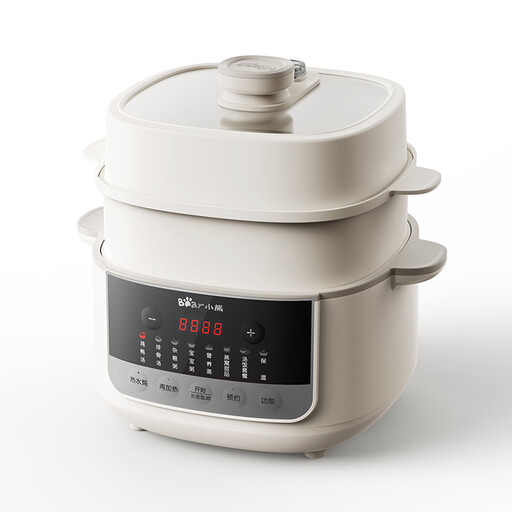
An option for smaller family batches when you want to slow-cook and make soup.
The product title specifies 2.6 L, two manual heat settings, a steaming insert and a non-stick coating.
 No image available
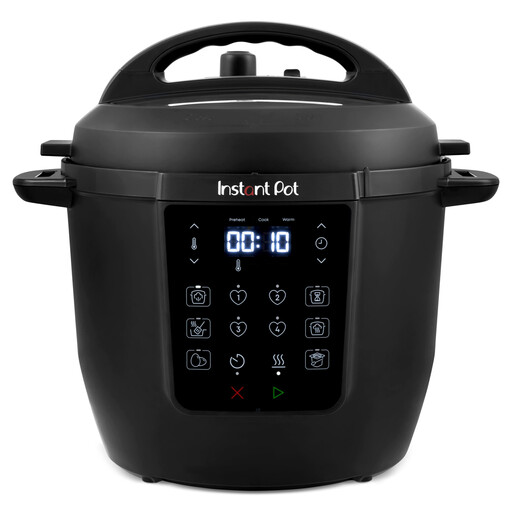
For stock and other dishes, when you want to use a main pot alongside several smaller inner pots.
The product details specify a total capacity of 4.1 L, a 2.5-litre main ceramic pot and four 0.4-litre inner pots. Küchenlatein’s published recipe makes 2 litres of stock in a 3.5-litre pot, so check your ingredient quantity against the main pot’s capacity.
 No image available
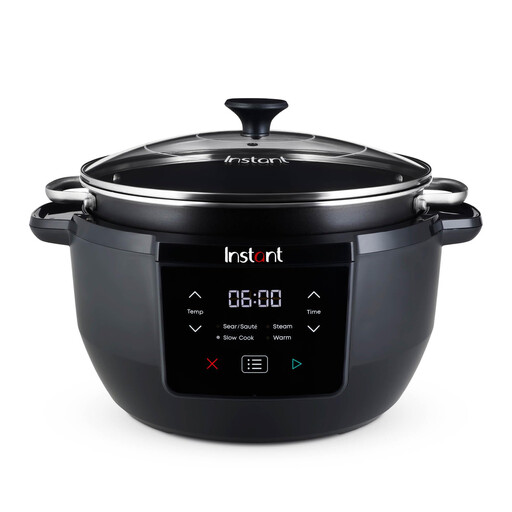
An option if you want other cooking functions for family meals as well as slow cooking.
The product details list slow cooking, steaming and keeping warm, and say the capacity is suitable for meals for up to six people. Check the keep-warm claims against the actual temperature of the contents.
 No image available
For larger family meals, if you’re looking for a slow cooker with adjustable cooking time and temperature.
The title specifies 7 L, while the product description gives a capacity of 7.1 L. It also states that the cooker serves up to 10 portions and has dishwasher-safe parts. According to the description, the inner pot is not suitable for use in an oven, on a hob or on an induction hob.
It depends on the recipe and the appliance’s filling guidance. A published recipe from Küchenlatein makes 2 litres of finished stock in a 3.5-litre slow cooker; this is an example from one recipe, not a general filling limit.
Don’t rely on the name of the function alone. The BfR recommends a minimum temperature of 60 °C throughout when hot-holding food. Check the temperature of the contents if you need to keep the stock hot until mealtime.
For longer-term storage, the BfR recommends cooling hot food quickly to below 7 °C. Divide a larger quantity between smaller, suitable containers and chill it promptly.
Products must carry a CE mark where the relevant harmonised EU rules require it, as explained by Your Europe, the European Union’s information portal. The Verbraucherzentrale distinguishes between statutory rights for faulty goods and a voluntary guarantee. Online purchases generally come with a 14-day right to cancel, starting from the date the contract is made or the goods are received; the terms of the specific purchase apply.