Hosts planning a specific quantity of stock
You want to cook the vegetables and liquid in one batch for a shared meal, so you need to check the recipe quantity against the maximum permitted fill level.


Choose a slow cooker for vegetable stock based on the combined amount of vegetables and liquid, and check it against the filling guidance for the specific appliance. The stated capacity is not the same as the amount of finished, strained stock. A cooking timer can help you plan for mealtime, while a removable pot makes transferring and cleaning easier. When keeping food hot, the German Federal Institute for Risk Assessment recommends a temperature of at least 60 °C throughout. A keep-warm function alone does not confirm that your stock reaches this temperature.
You want to cook the vegetables and liquid in one batch for a shared meal, so you need to check the recipe quantity against the maximum permitted fill level.
You’re making the stock before your guests arrive and want to plan when it will be ready, without confusing keeping it warm with proven food safety.
You want to strain the stock after cooking or store any leftovers, so you’re looking for an easy-to-handle pot and a quick way to cool the stock.
Suitable if: You’re planning a smaller batch and don’t need a cooking timer.
Trade-off: The manufacturer lists two cooking settings and a keep-warm function for the Tristar VS-3915, but no timer.
Suitable if: You’re making a medium-sized batch and want to plan when it will be ready for your meal.
Trade-off: The countdown timer and removable ceramic pot on the Crock-Pot SCCPRC507B make planning and cleaning easier. You’ll still need to check the instructions for the usable fill level.
Suitable if: You’re planning to make a much larger quantity of stock or want additional cooking methods.
Trade-off: A larger stated capacity or more programmes are only useful if they suit your recipe quantity, available worktop space and the way you’ll use the appliance.
| Priority | What to check when buying | Who is this important to? |
|---|---|---|
| Usable capacity | Check the recipe quantity, stated capacity, and minimum and maximum fill levels in the instructions for the specific model. | If I want to cook the vegetables and liquid in one batch for a shared meal, the permitted fill level matters more than the number of litres on the box. That’s why around 36% of consumers put getting the right capacity first. |
| Cooking time that suits your plans | Check whether the timer controls the cooking time and what happens when it ends. | If I want to start the stock before my guests arrive, being able to plan when it will be ready helps me organise my time. Around 29% of consumers particularly value having the stock ready at mealtime. |
| Straining and cleaning | Check the pot’s material, weight and handles, and confirm whether it is dishwasher-safe for the specific model. | If I need to transfer hot stock and clean the pot afterwards, an easy-to-handle design is essential. Around 21% of consumers put ease of use first. |
| Serving and storing safely | When keeping stock hot, check the temperature throughout; cool leftovers promptly and store them chilled. | If the stock will be served later or kept for another day, I want to plan both keeping it hot and cooling it safely. Around 14% of consumers prioritise how stock and leftovers are handled. |
The manufacturer’s stated pot capacity doesn’t tell you how much strained vegetable stock you’ll have at the end.
Decide on the recipe quantity first, then check the vegetables and liquid against the filling guidance in the instructions for the specific model.
If your batch exceeds the permitted fill level, you may need to cook it in another batch or use an additional appliance.
For heated food kept hot, the German Federal Institute for Risk Assessment recommends a temperature of at least 60 °C throughout. A keep-warm function doesn’t confirm that your stock reaches this temperature.
If the stock needs to stay warm until your guests arrive, check its temperature rather than relying solely on a display or function label.
A larger stated capacity or extra cooking methods will only solve your batch-size needs if they suit your recipe and how you plan to use the appliance.
First compare the quantity of stock you need to make, the space available and how easy the appliance is to handle. Consider additional programmes after that.
A larger appliance may take up more worktop space and come with extra parts to clean.
The range includes slow cookers in several sizes. Crock-Pot Germany describes the SCCPRC507B as a 4.7-litre digital model.
According to the manufacturer, the VS-3915 is a straightforward slow cooker with a 3.5-litre capacity.
According to Russell Hobbs Germany, the MaxiCook 22750-56 comes with a six-litre pot.
The Superior range combines slow cooking with other cooking methods.
The Joybuy picks below include compact slow cookers and larger appliances with a slow-cooking function. Check your batch against the fill guidance for the specific model, and review the information on electrical safety and food-contact parts before buying.
 No image available
A compact option for a smaller batch of stock, if two manual heat settings are enough for you.
The pot holds 2.6 l and, according to the product description, should be filled no more than two-thirds full when making soup or stock.
The description lists a 500 W power rating and a detachable power cord.
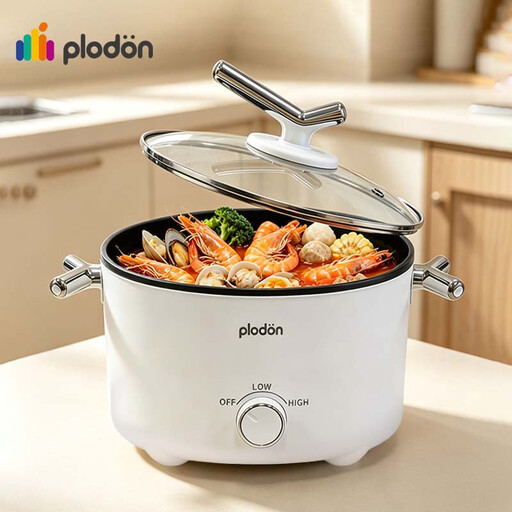 No image available
This smaller pot could suit a small batch of stock if you want to use the LOW and HIGH settings.
The product description lists a 2.0 l capacity and two heat settings. For water or soup base, it recommends filling the pot no more than two-thirds full.
A glass lid and detachable cable are also listed.
 No image available
This appliance combines slow cooking with steaming and soup functions, making it an option if you want to prepare more than just stock.
The description lists a 2.5-litre main pot and four separate 0.4-litre inner pots, so the additional capacity is divided between these smaller pots.
Hot steam may escape during use and when opening the appliance. Wait a few minutes after cooking before opening it.
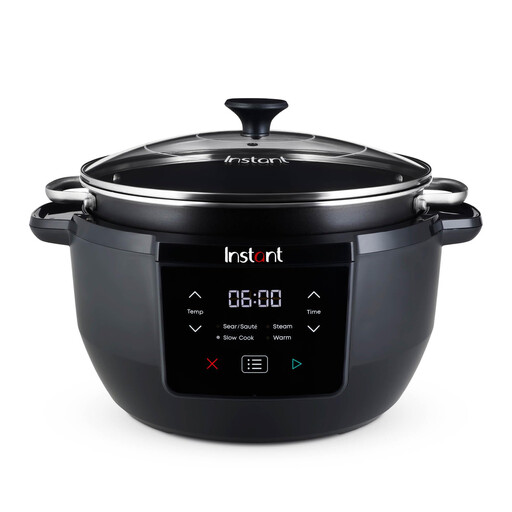 No image available
A larger slow-cooking option if you’re planning a bigger batch and have space for an appliance of this size in your kitchen.
The product details list a 7 l capacity, adjustable cooking time and temperature, and a keep-warm function.
According to the description, the inner pot must not be used in an oven or on a hob. The keep-warm function doesn’t confirm a temperature of at least 60 °C throughout; this is the temperature recommended by the German Federal Institute for Risk Assessment for food kept hot.
 No image available
This multi-cooker could be a good fit if you want a slow-cooking function and other cooking programmes for a larger batch.
The product description lists an 8 l capacity, a soup programme and a 24-hour delay timer.
Automatic keep-warm doesn’t confirm that the stock reaches a temperature of at least 60 °C throughout.
Compare the combined amount of vegetables and water with the fill guidance in the instructions for the specific appliance. Stated capacities of 3.5, 4.7 or 6 litres don’t automatically correspond to the same quantity of finished, strained stock.
When keeping heated food hot, the German Federal Institute for Risk Assessment recommends a temperature of at least 60 °C throughout. The keep-warm function alone doesn’t confirm that your batch reaches this temperature. Check it if you plan to keep the stock warm this way.
For longer storage, the German Federal Institute for Risk Assessment recommends cooling hot food promptly to below 7 °C and keeping it chilled. If you have a large quantity, transfer it to smaller, suitable containers rather than leaving it in the full slow-cooker pot.
Mains-powered household appliances covered by the relevant EU regulations must meet electrical safety requirements. Parts that come into contact with food are subject to EU rules on food-contact materials. CE marking alone is not independent test evidence for a specific item you’re buying.
No. According to the consumer advice centre, statutory rights should generally be asserted against the seller. A manufacturer’s warranty is an additional, voluntary service provided under its own terms and conditions.