
Lieferung heute & morgen

Qualitätsgarantie

Willkommens-Angebote freischalten: KOSTENLOSE Lieferung | Bis zu 80 % RABATT | Kostenlose 30-Tage-JoyPlus-Testphase
App herunterladen
Deciding to buy your own juicer is often the first step toward a more health-conscious diet. Fresh, homemade juices are a great addition to any home. But the market is crowded, and many product claims turn out to be a disappointment after the purchase. As your Joybuy Product Recommendation Officer, I'll help you recognise the typical pitfalls and find a model that truly fits your needs.
Many buyers regret their decision because the appliance is impractical for daily use. This is often due to three common misconceptions fueled by clever marketing:
To avoid buyer's remorse, you should focus on objective, technical features rather than advertising promises. Three aspects are particularly important.
The technology is the heart of any juicer.
The size of the feed chute determines how much you have to chop before juicing. A small chute means that apples, carrots, and other vegetables must be laboriously cut into small pieces. For daily use, this can quickly become demotivating. A juicer with a wide feed chute (often 80 mm or more) can accommodate whole fruits or large pieces and significantly reduces prep time.
A juicer will only be used regularly if cleaning is straightforward. Pay attention to the following points:
Instead of making a one-size-fits-all recommendation, we have identified models that specifically meet the needs of different user profiles.
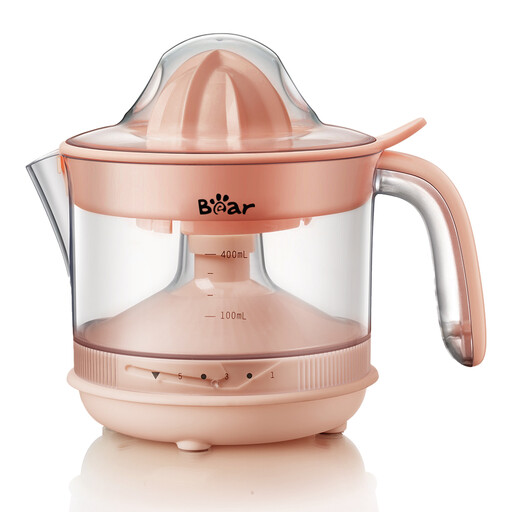
Why This Fits Their Persona: Ideal for users who primarily want fresh orange or lemon juice without a lot of effort. This electric citrus press specialises in one task and does it efficiently and quickly—perfect for a morning glass of juice.
This device bypasses the "all-in-one" trap by focusing on citrus fruits. The simple design with few removable parts makes cleaning uncomplicated, avoiding the frustration of complex slow juicer mechanisms.
Adjustable pulp control: 5 levels for customisation. Safe handling: Bladeless design, ideal for families. Compact design: Requires little space in the kitchen.
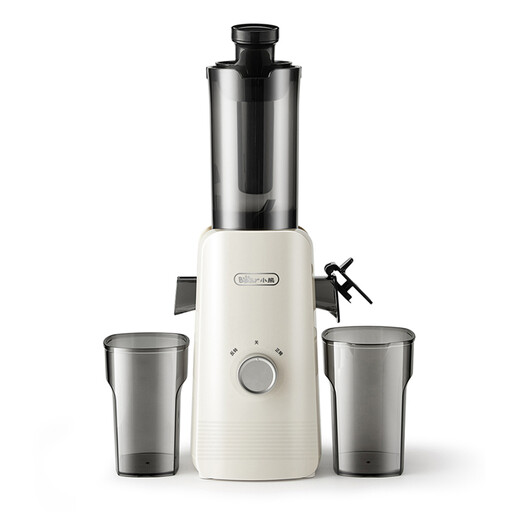
Why This Fits Their Persona: For health-conscious users who want to make a variety of fruit and vegetable juices daily. This slow juicer offers a good balance of performance, juice quality, and user-friendliness for regular use.
The 80mm wide feed chute significantly reduces prep time. Its design with only three main components directly addresses the pain point of complicated cleaning, making the appliance practical for daily use.
High juice yield: The patented spiral structure achieves a juice rate of over 90%, according to the manufacturer. Compact size: Space-saving and portable despite its power. Easy assembly: Quick to set up and take down.
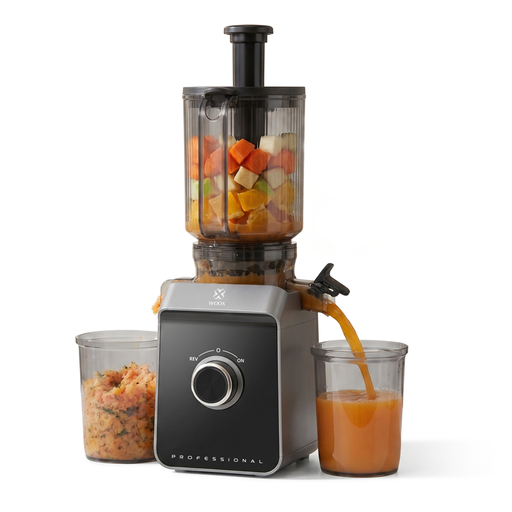
Why This Fits Their Persona: Perfect for users who want maximum convenience and minimal prep and cleaning time. If you don't want to chop and are looking for a device for quick, uncomplicated juicing, this is the one for you.
With an extremely large 130 mm feed chute, whole apples or oranges can be processed, eliminating the biggest time-waster. The dishwasher-safe parts make post-use cleanup especially easy.
Extra-large feed chute (?130mm): Reduces prep time to a minimum. Quiet operation: Pleasantly quiet at <72dB. Easy to clean: All removable parts are dishwasher-safe.
We've compiled a complete, up-to-date list of products that fully meet these strict selection criteria and safety standards.
The main difference lies in the method of juice extraction. A slow juicer (cold press juicer) crushes and presses ingredients slowly with an auger, which minimises heat generation and often results in a higher yield of juice and nutrients. A centrifugal juicer shreds ingredients at high speed and spins the juice out, which is faster but can potentially destroy nutrients through heat and oxidation.
The effort varies greatly by model. Modern devices are designed to be easy to clean. Look for models with few, dishwasher-safe parts and a simple strainer design. Many can be cleaned in under two minutes under running water. An included cleaning brush is also a useful accessory.
Yes, most high-quality slow juicers are very well-suited for hard vegetables like carrots, beets, or ginger. Their powerful, slow pressing mechanism can effectively break down the cell walls of hard produce to achieve a high juice yield. For very fibrous vegetables like celery stalks or kale, it is recommended to cut them into smaller pieces to prevent the machine from clogging.