
Lieferung heute & morgen

Qualitätsgarantie

Willkommens-Angebote freischalten: KOSTENLOSE Lieferung | Bis zu 80 % RABATT | Kostenlose 30-Tage-JoyPlus-Testphase
App herunterladen
By a Joybuy Product Recommendation Officer, July 28, 2026
Choosing a slow juicer is often the first step toward a more health-conscious diet. The idea of making fresh, nutrient-rich juices at home is appealing. Yet, the reality is often different: many well-intentioned purchases end up as dust collectors in a kitchen cupboard. The reason is frequently design flaws and exaggerated marketing promises that severely limit their practical, everyday use.
Before you make a purchase, it's crucial to understand the typical pitfalls that can quickly turn a useful kitchen gadget into a source of frustration.
To avoid a bad purchase, you should focus on a few crucial technical features. These determine whether the appliance will be an asset to your daily routine or a burden.
A juicer with a large feed chute isn't a luxury; it's a necessity for practical use. An opening with a diameter of over 80 mm allows you to process many fruits and vegetables—like small to medium-sized apples, peeled oranges, or whole carrots—with little to no chopping. This significantly reduces preparation time. Models advertised as a whole fruit juicer should have an opening of at least 75 mm to live up to this promise.
The most time-consuming task in juicing is cleaning the filter. Modern appliances, therefore, rely on a filter-free juicer design. Instead of a fine-mesh metal sieve, they use smooth, easily disassembled plastic or ceramic components. This construction prevents fibres from getting stuck and allows for quick cleaning under running water. An easy-to-clean juicer is the key to long-term, regular use.
A slow juicer, also called a cold press juicer, operates at a low speed (typically 40–80 RPM). This gentle method generates less heat, which can help preserve vitamins and enzymes. For a high juice yield, especially with hard vegetables and leafy greens, a high-torque motor is essential. Look for models with a robust motor that delivers consistent power even with tougher ingredients. Some devices also offer the ability to process frozen fruit, functioning as a juicer for frozen desserts and increasing their versatility.
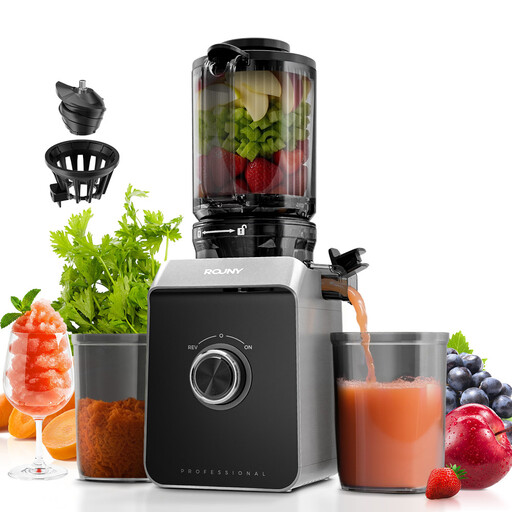
Why This Fits Their Persona: Ideal for health-conscious families and individuals looking for a time-saving solution for daily use. The ability to process whole fruits and make frozen desserts makes it a versatile kitchen assistant.
The 130 mm feed chute eliminates tedious prep work. The filter-free design solves the cleaning problem, as the parts can be simply rinsed. The added function for frozen desserts makes it more versatile than conventional models.
Extra-large feed chute for whole fruits and a filter-free system for quick, hassle-free cleaning. The pure copper motor ensures stable performance when juicing fruits and vegetables.
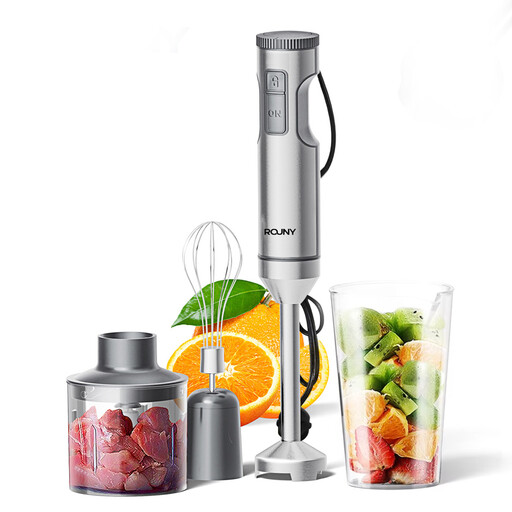
Why This Fits Their Persona: Perfect for those who want to start a healthier diet with smoothies, soups, and sauces but aren't ready to invest in a specialized device. A versatile tool to get started.
Bypasses the high initial cost of a dedicated juicer. Instead of only making juice, this set offers functions for blending, puréeing, chopping, and whisking, making it a multifunctional kitchen helper.
The 4-in-1 set with a beaker, chopper, and whisk offers a wide range of applications. The stepless speed control allows for precise control over consistency.

Why This Fits Their Persona: For home cooks who prepare other healthy dishes besides juices and need a tool for quick, separate processing of ingredients like herbs, nuts, or vegetables for dips and salads.
Prevents flavour mixing (e.g., garlic and fruit) by providing two separate bowls and blade sets. Solves the problem of inefficient, manual chopping for complex recipes.
Two glass bowls (2L and 0.6L) with separate blades allow for parallel or separate processing. Two speed settings provide control for both soft and hard ingredients.
A slow juicer is just one part of a well-equipped kitchen. Discover other appliances that can help you achieve your nutritional goals and simplify meal prep.
1. What's the fastest way to clean a slow juicer? With a model featuring a filter-free design, cleaning is straightforward. After juicing, disassemble the few parts of the auger assembly. Rinse them immediately under running water to prevent fruit residue from drying. Most parts are clean in less than a minute. Avoid cleaning in the dishwasher unless explicitly stated by the manufacturer to protect the materials.
2. Can you process frozen fruit in a slow juicer? Yes, some slow juicers are designed to make frozen desserts or sorbet from frozen fruit. This often requires a special blank strainer without a sieve. It's important to cut the fruit into small pieces before freezing and let them thaw for about 5–10 minutes before processing. Feed the frozen pieces into the machine slowly to avoid overloading the motor. Always check the manufacturer's instructions to see if your model is suitable for this function.