
Lieferung heute & morgen

Qualitätsgarantie

Willkommens-Angebote freischalten: KOSTENLOSE Lieferung | Bis zu 80 % RABATT | Kostenlose 30-Tage-JoyPlus-Testphase
App herunterladen
Purchasing a slow juicer is an investment in your health. But the market is flooded with appliances making lofty promises that quickly prove impractical in daily life. Many users find, to their frustration, that their expensive device is gathering dust in a cupboard after just a few weeks. This is often due to design flaws that make daily use a chore. As your Joybuy Product Recommendation Officer, I'm here to help you recognise these pitfalls and find a model that truly fits your needs.
Before you decide on a model, you should be aware of the three most common problems that can quickly turn a potential kitchen assistant into a dust collector.
To avoid a bad purchase, focus on the technical features that determine practical, everyday usability.
A slow juicer, also known as a cold press juicer, works with an auger that rotates slowly (typically 50–80 RPM). Unlike centrifugal juicers, which operate at thousands of revolutions per minute and generate heat in the process, a slow juicer gently presses the juice from the cells of fruits and vegetables. This has two crucial advantages:
User-friendliness largely depends on two design details:
Ensure that all parts that come into contact with food are made from BPA-free material. Some high-end models also offer additional features that go beyond simple juicing. For example, a slow juicer that can also make ice cream uses a special attachment to process frozen fruits into a healthy sorbet. This turns the appliance into a versatile tool for a healthy lifestyle.
Here are some product recommendations tailored to different needs and usage scenarios.
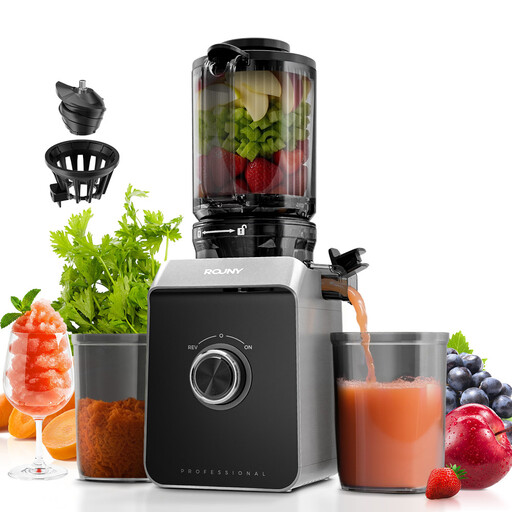
Why This Fits Their Persona: Ideal for health-conscious individuals and busy families. This model combines a high juice yield with maximum user-friendliness for daily use.
The filter-free design eliminates the tedious cleaning of a metal sieve. The parts can be easily rinsed under running water. The 130 mm feed chute bypasses the trap of time-consuming prep.
Can process frozen fruits into sorbet. The pure copper motor ensures stable and quiet operation. High juice yield from both fruits and vegetables.
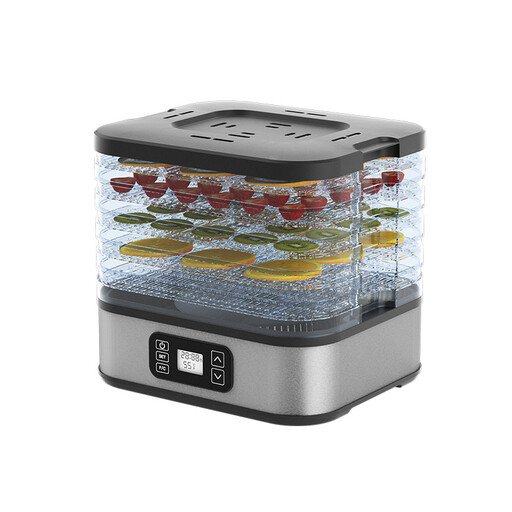
Why This Fits Their Persona: Perfect for users who want to minimise food waste. This device transforms the nutrient-rich pulp from the slow juicer into healthy crackers, granola bars, or fruit leather.
It solves the problem of leftover pulp, which often ends up in the bin. Instead of creating waste, it adds value and makes the investment in fresh ingredients even more worthwhile.
Precise temperature control (35–75°C) and a 360° air circulation system ensure even drying. The 72-hour timer allows for flexible planning.
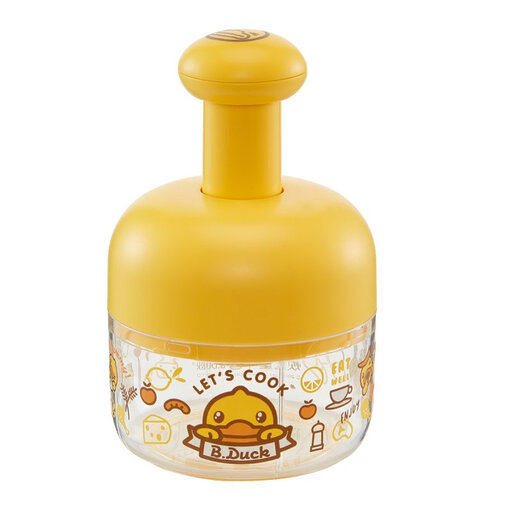
Why This Fits Their Persona: A handy accessory for anyone who likes to enhance their juices with ginger, herbs, or nuts without wanting to dirty a large appliance.
It avoids the "overkill" of using a large, electric appliance for small quantities. The manual pull-cord mechanism is simple, effective, and cleaning is done in seconds.
Compact, portable, and power-free. Ideal for quickly chopping small amounts of vegetables, ginger, fruit, or nuts. The perfect complement to a slow juicer.
The right juicer is just the beginning. Explore our range of fresh fruits and vegetables to start juicing right away.
A slow juicer typically achieves a 15–30% higher juice yield than a conventional centrifugal juicer. The slow, powerful pressing action extracts liquid more efficiently from the plant fibres. The result is not only more juice but also noticeably drier pulp.
Yes, some models, like the featured ROUNY Slow Juicer, come with a special attachment for frozen fruit. You simply swap the juicing strainer for this attachment, add slightly thawed frozen fruit pieces (e.g., bananas, berries, mangoes) into the feed chute, and the appliance presses them into a smooth, creamy mass with a consistency similar to sorbet or soft-serve ice cream.
On models with a filter-free design, cleaning is significantly easier than on devices with traditional metal sieves. The few removable parts (auger, container, feed chute) have smooth surfaces and can usually be rinsed clean under running water. The entire process often takes no more than two to three minutes, making daily use much more practical.