
Lieferung heute & morgen

Qualitätsgarantie

Willkommens-Angebote freischalten: KOSTENLOSE Lieferung | Bis zu 80 % RABATT | Kostenlose 30-Tage-JoyPlus-Testphase
App herunterladen
Investing in a slow juicer is often the first step toward a more health-conscious diet. The goal of making fresh, nutrient-rich juices right in your own kitchen is an attractive one. However, the market is flooded with appliances whose marketing promises often fall short in practice. Many well-intentioned purchases end up as dust collectors in the cupboard because they are too complicated to operate, too laborious to clean, or the results are disappointing.
This guide is designed to help you navigate the options. We'll highlight the three most common pitfalls when buying a juicer and explain which technical features truly matter to find a device that simplifies your daily routine, rather than complicating it.
Before diving into models and brands, it's wise to understand the typical weaknesses that make an appliance impractical.
To avoid the pitfalls mentioned above, you should check three core technical parameters. These largely determine the quality, durability, and user-friendliness of your appliance.
The term Slow Juicer refers to its operating principle. Unlike centrifugal juicers, which operate at high speeds (often over 10,000 RPM), a cold press juicer uses a slowly rotating auger.
The construction of the appliance has a direct impact on daily use.
The internal components of a slow juicer are crucial for long-term, trouble-free use.
Here are some product recommendations tailored to different needs and kitchen requirements.
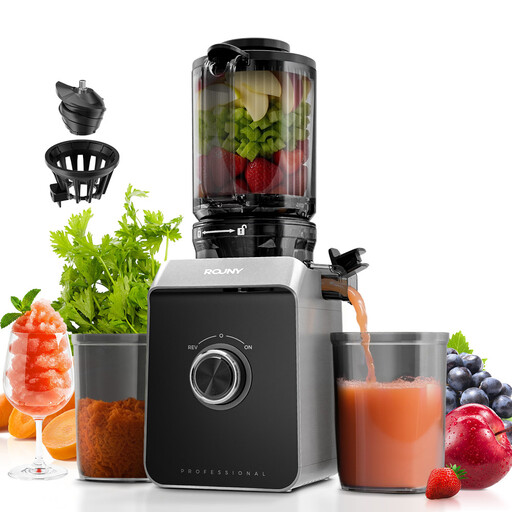
Why This Fits Their Persona: Ideal for families and health-conscious individuals who value minimal prep and cleaning time. The large chute and easy-clean system make daily juicing practical.
The 130mm large feed chute completely bypasses the "prep trap." The filter-free design solves the "cleaning trap," as the parts can be quickly rinsed under water.
Can be used as a sorbet maker with frozen fruits. The pure copper motor ensures high juice yield and durability.
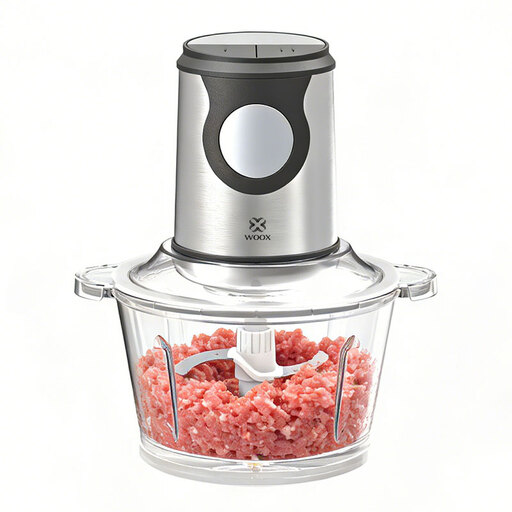
Why This Fits Their Persona: For those who, in addition to juicing, also process other fresh foods, from vegetables for soups to baby food or pesto. A multifunctional device that eliminates the need to buy multiple separate appliances.
This device bypasses the trap of unused specialty gadgets. It's a versatile chopper that simplifies preparing ingredients for juices, meals, and more.
The 1.5L glass bowl is hygienic, doesn't absorb odours, and is easy to clean. Stainless steel blades ensure efficient chopping.
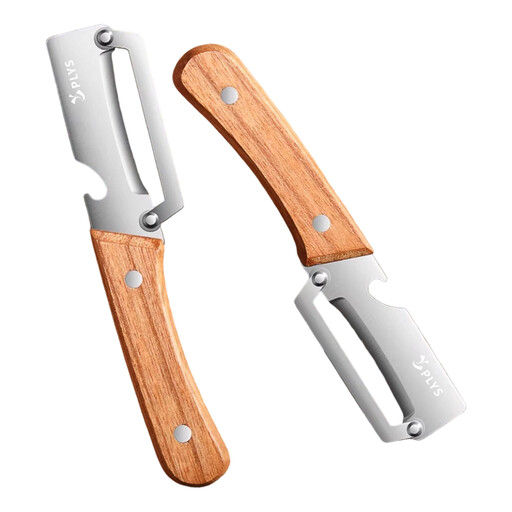
Why This Fits Their Persona: An indispensable tool for any kitchen. Before fruits and vegetables go into the juicer or pot, they often need to be peeled. This set offers a reliable and durable solution for daily prep.
It prevents the frustration of dull or clumsy peelers that create more waste than necessary and needlessly extend prep time.
Sharp, food-grade stainless steel blades for minimal waste. Ergonomic wooden handles provide a secure and comfortable grip.
We've curated a complete, up-to-date list of products that fully meet these strict selection criteria and safety standards.
1. What's the easiest way to clean a slow juicer? Ideally, cleaning should be done immediately after use before fruit residue dries. For models with a filter-free design, simply rinsing the removable parts under running water is often sufficient. For devices with sieves, use the included brush to remove fibre remnants. Check the manufacturer's instructions to see if individual parts are dishwasher-safe.
2. Can a slow juicer also process hard vegetables like carrots or beetroot? Yes, a high-quality slow juicer for fruits and vegetables is designed for this. Models with a robust motor and a sturdy auger can easily process hard produce. However, it may still be advisable to cut very hard or fibrous ingredients into smaller pieces to protect the appliance and ensure smooth operation.
3. What is the difference between a slow juicer and a centrifugal juicer? A Slow Juicer, also known as a cold press juicer, slowly crushes and presses fruits and vegetables with an auger. This method generates little heat and ensures a high juice yield. A centrifugal juicer shreds ingredients with a fast-spinning cutting disc and flings the juice outwards through a sieve. The high speed can lead to more oxidation and heat generation.