
Lieferung heute & morgen

Qualitätsgarantie

Willkommens-Angebote freischalten: KOSTENLOSE Lieferung | Bis zu 80 % RABATT | Kostenlose 30-Tage-JoyPlus-Testphase
App herunterladen
Purchasing a slow juicer is an investment in your health. However, the market is saturated with appliances whose marketing promises often fall short in practice. Before you make a decision, it's crucial to understand the most common pitfalls that can make daily use a chore rather than a joy.
Many buyers regret their choice for three main reasons:
To avoid buyer's remorse, you should focus on objective, technical features that directly impact user convenience.
A true slow juicer operates at a low speed, typically between 40 and 80 revolutions per minute (RPM). This slow, chewing motion of the auger minimises heat buildup and oxidation. The result is a juice that can retain more nutrients and enzymes than juice from a high-speed centrifugal juicer (often over 10,000 RPM). Look for models with a durable auger made from BPA-free material to ensure long-lasting and safe use.
This feature is a critical factor for daily convenience. Standard models often have an opening of only 4 to 5 cm in diameter. A juicer with a large feed chute (e.g., 8 cm or more) allows you to process many ingredients with minimal prep work. A slow juicer for whole apples saves valuable preparation time and makes the entire process significantly more efficient.
Cleaning is where the best models truly shine. A juicer that is easy to clean is characterised by having few, easy-to-disassemble parts and smooth surfaces. Modern, filter-free designs replace traditional, hard-to-clean metal strainers with plastic or ceramic inserts that can be rinsed under running water in seconds. This is a major advantage for anyone who wants to use their juicer daily.
Based on these objective criteria, we have selected products suitable for different user profiles and their specific needs for preparing fruits and vegetables.
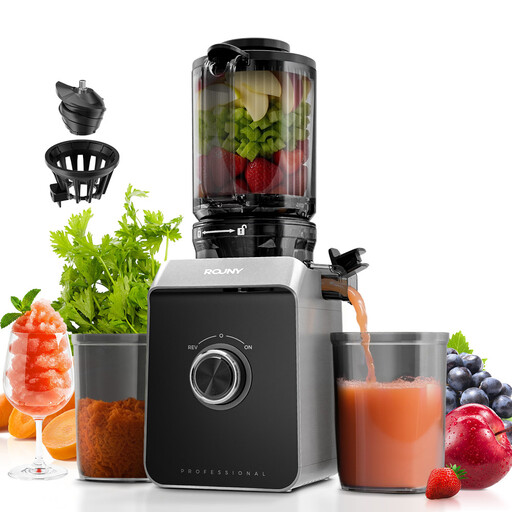
Why This Fits Their Persona: Ideal for individuals and families with limited time who don't want to compromise on fresh juice. The large chute and easy cleaning integrate seamlessly into a busy lifestyle.
The 130 mm feed chute significantly reduces prep time. The filter-free design bypasses the trap of cleaning cumbersome traditional strainers.
Can process whole fruits and, thanks to its sorbet function, can also make fruit sorbet from frozen ingredients.
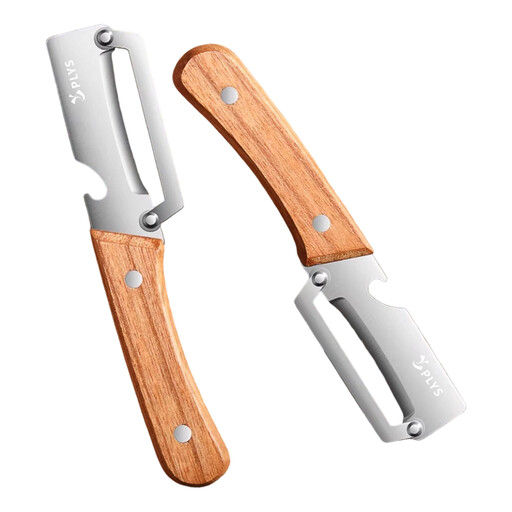
Why This Fits Their Persona: For users who juice hard-skinned fruits or root vegetables like carrots and ginger. A good peeling tool is fundamental for smooth preparation and belongs in every well-equipped kitchen.
A dull or awkward knife makes preparation tedious. This tool solves that problem with a sharp blade and an ergonomic handle, making the job easier.
The stainless steel blade is durable and easy to clean. The genuine wood handle ensures a secure and comfortable grip during preparation.
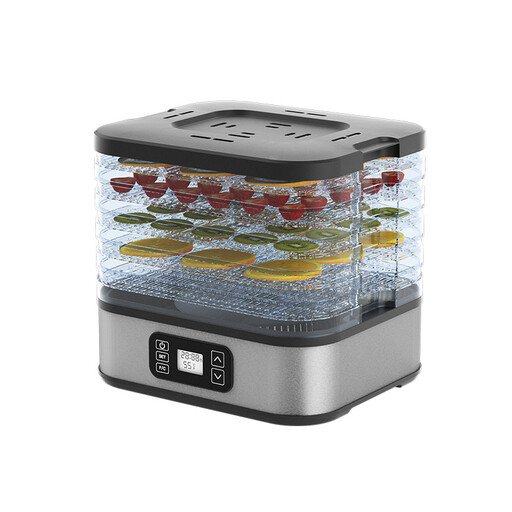
Why This Fits Their Persona: For those who take a holistic approach to healthy eating. This appliance is a logical companion to a slow juicer for reducing food waste (e.g., by drying the pulp) and preserving nutrients.
Many dehydrators dry unevenly. This model counters that with a 360° air circulation system that ensures consistent results on all trays.
The precise temperature control (35°C–75°C) and timer allow for the gentle drying of a wide variety of foods, from fruit crisps to herbs.
The quality of your juice starts with the freshness of your ingredients. Explore our range of fruits and vegetables to find the perfect foundation for your healthy creations.
The fastest method is to clean it immediately after use, before any fruit residue dries. Disassemble the removable parts and rinse them under warm running water. Use the included brush for more stubborn fibres. Models with a filter-free design have a clear advantage here, as cleaning can often be done in under a minute.
Yes, some models come with a sorbet function. For this, frozen fruits (like banana chunks, mango pieces, or berries) are fed into the machine instead of fresh fruit. The auger processes the frozen ingredients into a smooth, sorbet-like consistency. Check the product description beforehand to see if your desired model is designed for this function.
The rotation speed is a crucial quality indicator. A cold-press juicer (slow juicer) operates at low speeds (approx. 40-80 RPM) to slowly and gently "chew" the ingredients. This minimises heat and oxygen exposure, which can help preserve vitamins and enzymes. Centrifugal juicers, in contrast, shred ingredients at very high speeds (over 10,000 RPM), which can lead to more heat and oxidation.