
Lieferung heute & morgen

Qualitätsgarantie

Willkommens-Angebote freischalten: KOSTENLOSE Lieferung | Bis zu 80 % RABATT | Kostenlose 30-Tage-JoyPlus-Testphase
App herunterladen
Buying a slow juicer is an investment in your nutrition. But the market is flooded with appliances whose marketing promises often suggest more than the technology can deliver. Many well-intentioned purchases end up as unused dust collectors in the kitchen cabinet. This is often due to design flaws that make daily use impractical. Before you make a decision, you should know the typical pitfalls to find a device that truly fits your needs.
The 2 Most Common Annoyances with Juicers:
To avoid a bad purchase, you should focus on objective technical features rather than advertising claims. Two factors are particularly crucial for the quality of the juice and the ease of use.
A slow juicer, also called a cold press juicer, works with a fundamentally different technology than conventional centrifugal juicers. Instead of shredding ingredients at high speed, a slowly rotating auger gently presses fruits and vegetables against a sieve.
Easy cleaning is not a subjective feeling but depends on the device's construction. Pay attention to the following features:
Instead of making a one-size-fits-all recommendation, we have identified models that meet specific user requirements and purposefully avoid the pitfalls mentioned above.
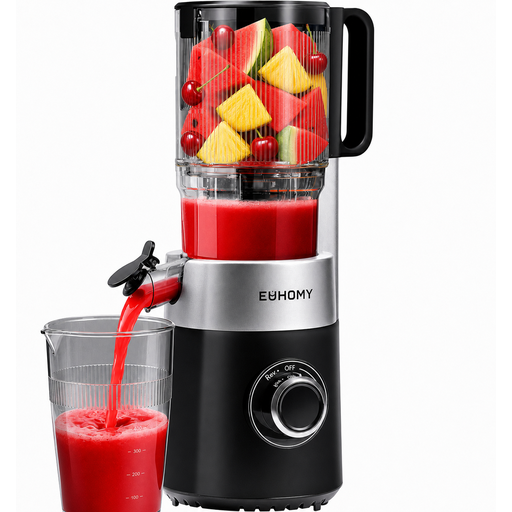
Why This Fits Their Persona: Ideal for users who want fresh juice daily without extensive prep work. The large opening and powerful motor process whole fruits and vegetables, significantly speeding up the process.
The 135 mm feed chute makes chopping ingredients like apples or oranges unnecessary, solving the problem of high preparation effort. The design is engineered for simple, three-step assembly, which lowers the barrier to cleaning.
7-stage pressing process for a high juice yield. The 220W motor operates at a low speed (60 decibels according to the manufacturer), which makes for quiet operation.
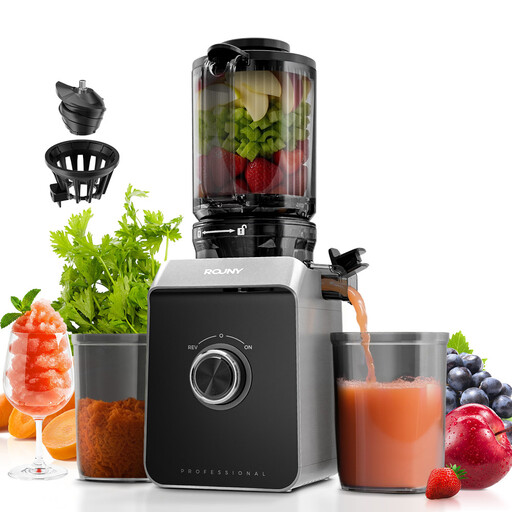
Why This Fits Their Persona: Perfect for beginners and anyone who sees cleaning as the biggest hurdle. This device isn't just a juicer for fruits and vegetables; according to the manufacturer, it can also process frozen fruits into sorbet.
The filter-free design is the direct answer to the problem of clogged and hard-to-clean sieves. According to the manufacturer, the components can be easily rinsed under water. The 130 mm feed chute also reduces preparation time.
Extremely simple cleaning by eliminating a traditional sieve. The additional function for making sorbet from frozen fruits expands its range of applications.
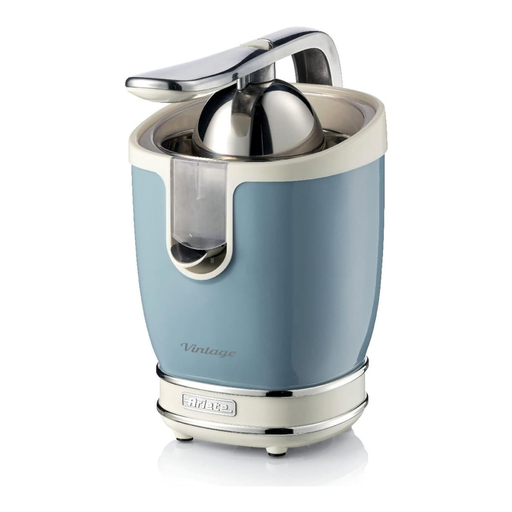
Why This Fits Their Persona: For lovers of fresh orange or lemon juice who want a specialised, easy-to-use, and visually appealing appliance. This is not an all-purpose juicer, but a focused solution for citrus fruits.
As a specialised citrus press, it bypasses the complexity of slow juicers. Cleaning is straightforward, as only a few parts (cone, sieve, juice collector) need to be cleaned. The lever operation is intuitive and requires no preparation of the fruit other than halving it.
Quiet 85W motor and two cones for large and small fruits. The drip-free spout ensures clean handling. The retro design makes the appliance an eye-catcher in the kitchen.
We've compiled a complete, up-to-date list of products that fully meet these strict selection criteria and safety standards.
The main difference lies in the technology. A centrifugal juicer shreds fruits and vegetables with a fast-spinning blade (several thousand RPM) and flings the juice outwards through a sieve. A slow juicer (cold press juicer), on the other hand, slowly crushes and presses the ingredients with an auger (approx. 50–80 RPM). This gentle process generates less heat and oxidation, which, according to many studies, can lead to higher nutrient density and better juice quality. Additionally, slow juicers are significantly quieter during operation.
The lifespan of a slow juicer depends heavily on the motor quality, the materials used, and its maintenance. Models with motors made of pure copper are considered more durable and stable in operation. Augers and sieves made of high-quality, BPA-free plastic or stainless steel are also an indicator of longer durability. With regular, proper cleaning and use according to the manufacturer's instructions, a quality device can remain functional for many years.
Yes, slow juicers are generally very well-suited for fibrous vegetables like celery, kale, or ginger. Their slow, powerful pressing technique can effectively break down the fibres and achieve a high juice yield. For very fibrous ingredients, it is advisable to cut them into smaller pieces and feed them into the machine alternately with more watery ingredients (e.g., cucumber or apple) to prevent clogging. A reverse function is particularly useful here.