
Lieferung heute & morgen

Qualitätsgarantie

Willkommens-Angebote freischalten: KOSTENLOSE Lieferung | Bis zu 80 % RABATT | Kostenlose 30-Tage-JoyPlus-Testphase
App herunterladen
Buying a slow juicer is an investment in your health. But the market is flooded with appliances whose marketing promises often suggest more than the technology can deliver. Many well-intentioned purchases end up gathering dust in a kitchen cupboard. As your Joybuy Product Recommendation Officer, I'll help you identify the key features and avoid the typical pitfalls, ensuring you find a juicer that truly fits your daily routine.
Before we dive into the technical details, let's look at the three most common reasons why users are unhappy with their purchase. Knowing these is the first step toward making a better decision.
To avoid these pitfalls, you should focus on three objective criteria. These are crucial in determining the everyday practicality and efficiency of your future appliance.
The size of the feed chute isn't a luxury feature; it's a critical factor for user-friendliness. A juicer with a large feed chute (typically over 80 mm in diameter) allows you to process whole apples, peeled oranges, or larger chunks of vegetables directly.
Truly easy cleaning depends on the design. Modern appliances increasingly rely on innovative solutions that minimise the effort involved.
The quality of the pressing process determines how much juice is extracted from your fruits and vegetables. A slow juicer works with a slowly rotating auger that gently crushes the ingredients instead of shredding them at high speed.
Based on these objective criteria, we have identified some models that offer a suitable solution for different user profiles.
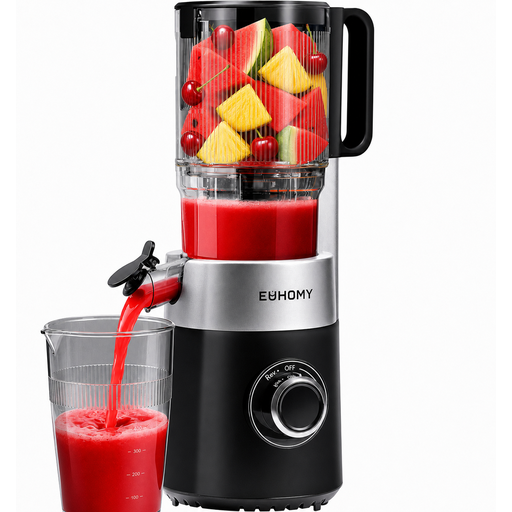
Why This Fits Their Persona: Ideal for families or individuals who want to make large quantities of juice daily without much prep time. The combination of a huge feed chute and large capacity maximises efficiency.
The 135 mm feed chute completely bypasses the trap of constant pre-cutting. The simple, three-step assembly system also addresses the pain point of complicated handling.
Very high juice yield of up to 99% (according to the manufacturer) thanks to a 7-stage pressing process. Large 1.8-litre capacity for the whole family.
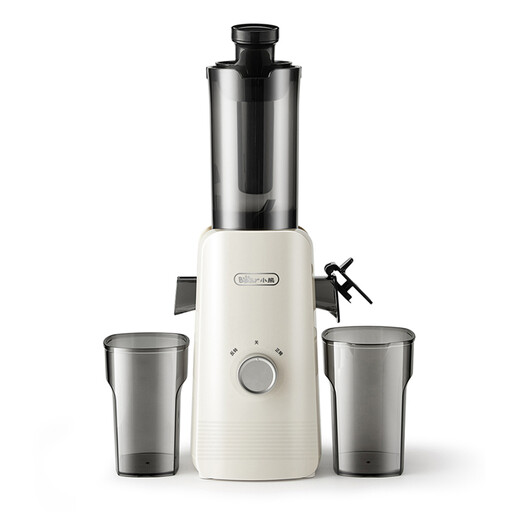
Why This Fits Their Persona: Perfect for individuals or couples with limited kitchen space. The appliance focuses on the essentials: good juice quality in a space-saving and easy-to-handle design.
According to the manufacturer, it consists of only three main components, which directly addresses the "Easy to Clean" trap. The 80 mm feed chute is a good compromise between compactness and convenience.
Compact size saves valuable counter space. High juice rate of over 90% (according to the manufacturer) due to a patented spiral structure.
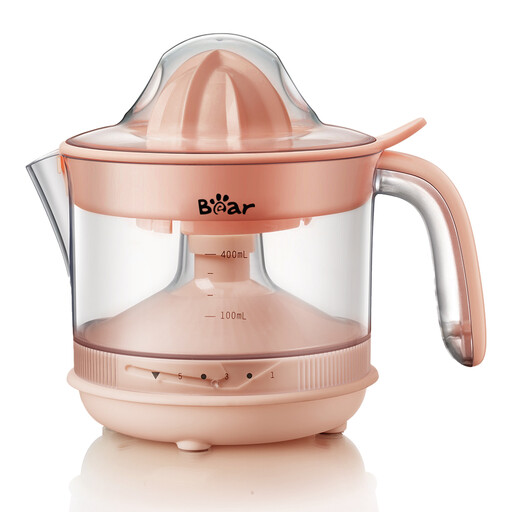
Why This Fits Their Persona: For users who primarily juice oranges, lemons, or grapefruits. This specialised device is often more practical and faster for this purpose than a universal slow juicer.
As a specialised appliance, cleaning is extremely simple, as it doesn't require complex sieves for fibrous vegetables. The bladeless design increases safety, especially in households with children.
5 adjustable pulp levels for customised juice texture. The dual-sided reamer ensures a high juice yield from citrus fruits. The material is BPA-free.
We have compiled a complete, up-to-date list of products that fully meet these strict selection criteria and safety standards.
The lifespan of a slow juicer heavily depends on the quality of the motor and the materials used. Models with a pure copper motor generally offer more stable performance and greater longevity than cheaper alternatives. The robustness of the auger and the housing (e.g., made from BPA-free plastic or stainless steel parts) also plays a role. With regular, proper use and cleaning, a high-quality appliance can be a reliable companion for many years.
This was often a valid criticism in the past. However, modern appliances have recognised this problem and now offer solutions. Look for features like filter-free designs, a small number of removable parts, and dishwasher-safe components (always check the manufacturer's instructions for this). Many models also come with a dedicated cleaning brush, which makes clearing sieve residue much easier.
Yes, especially if the juicer is intended to be part of a morning routine. A quiet juicer with a noise level below 65 dB (comparable to a normal conversation) allows you to prepare fresh juice without disturbing other members of the household. This increases the likelihood that the appliance will be used regularly and willingly.