
Lieferung heute & morgen

Qualitätsgarantie

Willkommens-Angebote freischalten: KOSTENLOSE Lieferung | Bis zu 80 % RABATT | Kostenlose 30-Tage-JoyPlus-Testphase
App herunterladen
A slow juicer processes fruit and vegetables at a low speed. Unlike a traditional centrifugal juicer, it slowly crushes and presses the ingredients. This can affect the texture of the juice and is often associated with gentler juicing. But when choosing a juicer, don’t focus on marketing claims alone. The design, ease of cleaning, container size and suitability for your everyday needs matter most.
A juicer with a large feeding chute can take apples, pears and smaller pieces of vegetables without you having to chop everything into tiny pieces. However, check the usable size of the chute carefully. Terms such as ‘XXL’ or ‘for whole fruit’ can mean different things depending on the supplier. You’ll still need to remove hard stones, stalks and unsuitable peel.
An electric slow juicer doesn’t necessarily need a particularly powerful motor. The auger, filter design, maximum operating time and how the appliance handles fibrous ingredients are more important. Depending on its design, a 130–220-watt appliance may be perfectly adequate for home use. Check that the model suits the way you plan to use it, and whether the motor needs a break during longer sessions.
An easy-to-clean juicer ideally has only a few removable parts. Look out for narrow channels and filter openings, and check whether a cleaning brush is included. Some components are dishwasher-safe, while the motor unit should only ever be cleaned with a damp cloth. Taking the appliance apart straight after each use helps prevent fruit and vegetable residue from drying on.
A juicer with a large feeding chute can save time if you’re making juice for the family or preparing several portions regularly. Product specifications may list chute widths of 80 mm, 130 mm or 135 mm, for example. A wider chute means less chopping, but you should still follow the instructions in the manual. Cut fibrous ingredients such as celery into smaller pieces to reduce the risk of the auger getting blocked.
A juicer with a juice container should suit the portions you usually make. Models with a capacity of around 600–700 ml are suitable for one person or smaller quantities. For several people, containers or pulp collectors holding around 1–1.8 litres are more practical. Also check whether the juice and pulp are collected separately, and how easily the containers fit beneath the spouts.
Noise levels are measured in decibels. A model advertised as a quiet juicer should come with a specific measurement or manufacturer’s figure; WOOX, for example, lists a noise level of less than 72 dB. The noise also depends on the ingredients, the surface it’s placed on and how it’s assembled.
The maximum operating time matters too. According to the product information, the Bear AD 4130 is typically specified for 15–20 minutes of continuous operation. The WOOX MX0289 is designed to run for a maximum of ten minutes at a time, followed by a cooling break. These figures are worth considering if you’re planning to make larger quantities for the family.
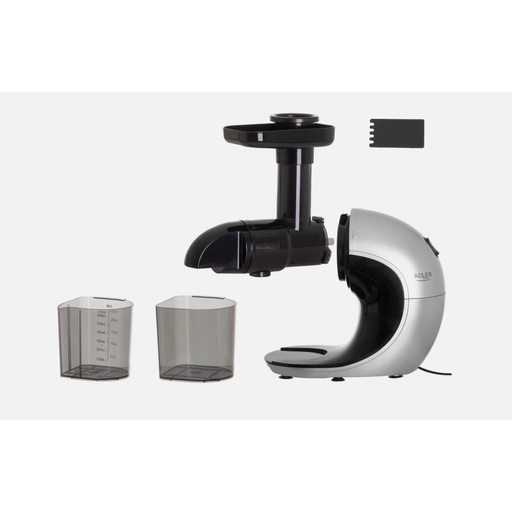
Why it suits this profile: Its horizontal design, 150-watt motor and 650 ml capacity make it a good choice for smaller amounts of juice each day.
The product specifications give clear figures for motor power and container capacity, making it easier to assess whether the juicer is right for you than a vague marketing claim would.
150-watt power, 650 ml capacity and separate juice and pulp outlets.
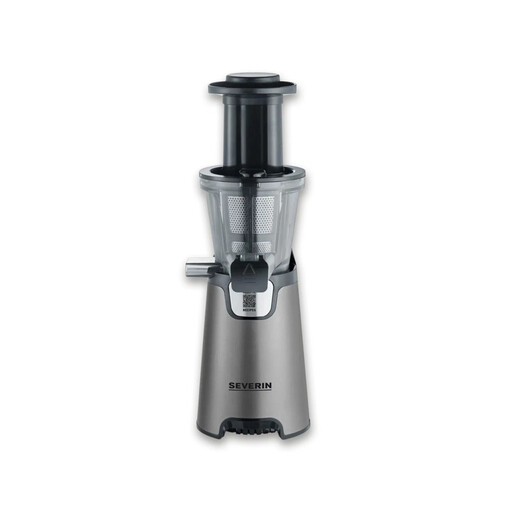
Why it suits this profile: Two filter inserts, a 1-litre juice container and extra functions make it a good choice if you want to prepare sorbet, jam or passata as well as juice.
The Easy-Clean design, included cleaning brush and dishwasher-safe parts (on some components) give you a clearer idea of the cleaning involved.
150 watts, 1-litre juice container, two filter inserts and an attachment for frozen fruit.
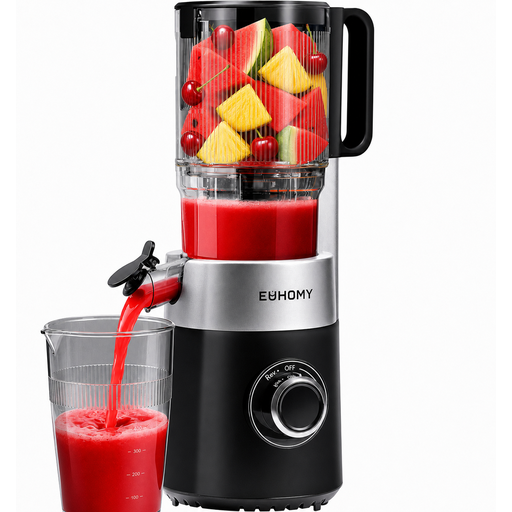
Why it suits this profile: The wide feeding chute and 1.8-litre container are designed for larger quantities and juicing a variety of fruit and vegetables.
The 135 mm feeding chute and container capacity are clearly specified, making it easier to compare with smaller models for home use.
220-watt motor, 1.8-litre capacity, 135 mm feeding chute and three-stage filter system, according to the product description.
We’ve put together a complete, regularly updated list of products that meet these strict selection criteria and the safety regulations in force in the EU.
No. You can juice soft and hard fruit, as well as many vegetables, provided they’re listed as suitable in the manual. Ice cubes, sugar cane and very hard stones aren’t suitable for many juicers. Depending on the model, frozen fruit may need a special attachment or should be allowed to thaw slightly first.
Its lifespan depends on the quality of the materials, how well it’s maintained, how long it’s used for and the ingredients you put through it. Regular cleaning, correct assembly and following the recommended breaks help reduce strain on the motor. Replace the filter and auger if they become worn or damaged, provided spare parts are available.
The models mentioned have a power rating of between 130 and 220 watts. Actual energy use depends on how long the juicer runs. As a juicing session usually takes only a few minutes, the time you spend using it matters more to your electricity costs than the wattage alone.