
Lieferung heute & morgen

Qualitätsgarantie

Willkommens-Angebote freischalten: KOSTENLOSE Lieferung | Bis zu 80 % RABATT | Kostenlose 30-Tage-JoyPlus-Testphase
App herunterladen
A slow juicer promises freshly pressed juice from fruit and vegetables, convenient operation and often particularly high juice yields. In practice, however, wattage and advertising claims are not the only factors that determine whether a machine is suitable for everyday use in your kitchen over the long term. A cold-press juicer can become impractical if the feed chute, cleaning requirements or operating time do not suit the way you use it.
Before buying, you should therefore watch out for three common pitfalls:
A juicer with a large feed chute reduces the amount of chopping required. Models with a 130 to 135 mm opening can take larger pieces or, depending on the type of fruit, whole fruit. However, this does not mean that every fruit and vegetable can be added whole.
Stones from peaches, plums and lychees must be removed. Citrus fruit and melons should generally be peeled. Fibrous ingredients such as celery and parsley are easier to process when cut into pieces around 3 to 4 cm long. The operating instructions for the individual machine always take precedence.
An electric juicer with a higher wattage is not automatically more suitable for every application. Slow juicers typically operate at a low speed and use a pressing auger to crush and press the ingredients. Motor control, overheating protection and the permitted operating time are therefore also important when choosing a model.
For example, the WOOX MX0289 is specified as having 150 W, overheating protection and a maximum continuous operating time of ten minutes. The machine should then be allowed to cool down. The Bear YZJ-F01D6 specifies a maximum operating time of 15 minutes per use. If you prepare large quantities for a family every day, you should compare these specifications with the amount of juice you plan to make.
An easy-to-clean juicer saves time, especially when used regularly. Look for removable parts, a cleaning brush, accessible filter surfaces and clear information on whether the parts are dishwasher-safe. The motor base must not be immersed in water.
Capacity is also relevant. A 1.8-litre container provides plenty of room for several portions, while a compact 0.8- or 1-litre juicer takes up less space and may be suitable for individuals. However, a larger capacity also means more parts to clean after use.
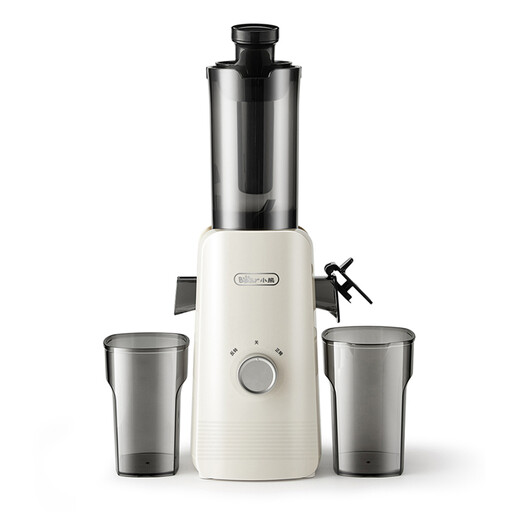
Why this product suits this profile: With its compact design and 1-litre capacity, this model is suitable for smaller households and users who want to prepare fresh juice in manageable quantities.
The 80 mm feed chute reduces preparation time without requiring a particularly large amount of worktop space. The stated maximum operating time of 15 minutes should be observed.
130 W motor, three removable main components, plus juice and pulp containers with a cleaning brush.
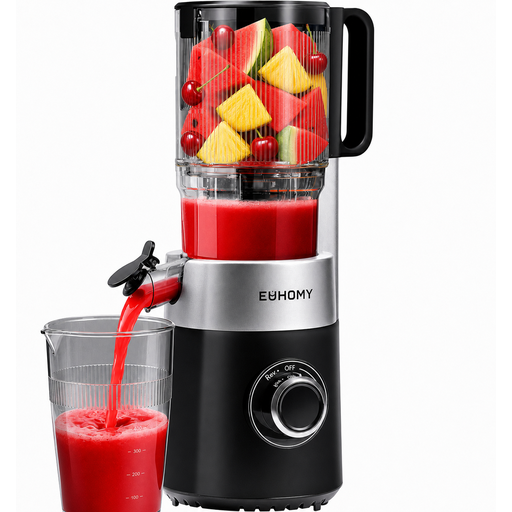
Why this product suits this profile: The large opening and 1.8-litre capacity are designed for regular juice preparation for several people.
The manufacturer’s claim of up to 99 per cent juice yield should be understood as a model-specific figure, not a general guarantee. The low speed of 60 rpm is clearly specified.
135 mm feed chute, 1.8-litre capacity, three-stage filter system and two included glasses.
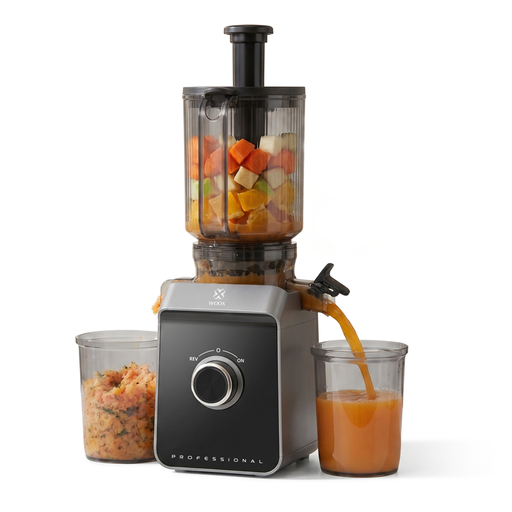
Why this product suits this profile: The 1.8-litre container, 130 mm feed chute and overheating protection make it appealing to users who regularly process larger quantities.
The stated noise level of under 72 dB makes the specification more verifiable than a description such as “whisper-quiet”. The maximum operating time of ten minutes limits longer batches.
150 W copper motor, 600 ml juice cup, 836 ml pulp container and removable parts for cleaning with warm water.
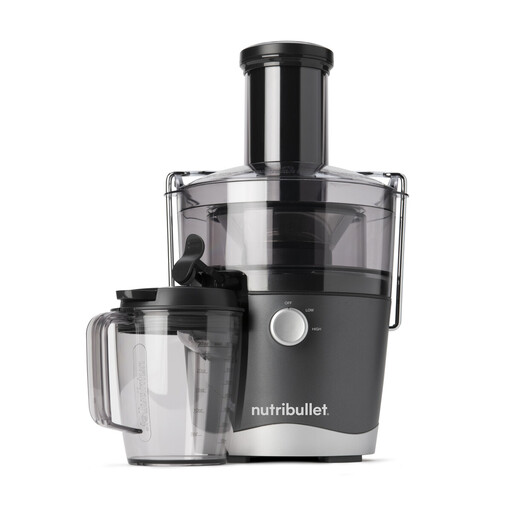
Why this product suits this profile: The 3-inch feed chute, two speed settings and 1.5-litre container support flexible preparation in a family household.
The speed settings allow you to adapt the machine to different ingredients. The manufacturer states that the pulp container is dishwasher-safe; the other parts should be cleaned according to the instructions.
800 W motor, 1.5-litre pulp container, two speeds and sealable 800 ml glass.
We have put together a complete, regularly updated list of products that fully meet these strict selection criteria and the safety regulations applicable in the EU.
Its lifespan depends on the build quality, ingredients, cleaning and frequency of use. Hard stones, ice cubes and unsuitable foods can put strain on the pressing auger and motor. Clean the filter and auger immediately after use and observe the specified operating time. Without knowing the individual conditions of use, it is not possible to provide a reliable lifespan.
Power consumption depends on the motor power, operating time and electricity tariff. A machine with a lower wattage may use a similar amount of energy over a longer operating period to a more powerful model running for less time. For a realistic estimate, you can calculate: wattage divided by 1,000, multiplied by the operating time in hours and your electricity price per kilowatt-hour.
Avoid ice cubes, frozen ingredients, sugar cane, coconut and very hard ingredients or components that are unsuitable for cold pressing. Fruit stones must be removed. Fibrous vegetables should be cut into smaller pieces to reduce the risk of the pressing chamber becoming blocked. The specific restrictions vary from model to model and are listed in the relevant operating instructions.