
Lieferung heute & morgen

Qualitätsgarantie

Willkommens-Angebote freischalten: KOSTENLOSE Lieferung | Bis zu 80 % RABATT | Kostenlose 30-Tage-JoyPlus-Testphase
App herunterladen
A slow juicer processes fruit and vegetables using a slowly rotating auger. Compared with traditional centrifugal juicers, the focus is generally on gentler processing with less foam. For everyday use, however, it is not just marketing claims about juice quality that matter. The right appliance must also suit the size of your household, the available worktop space and the amount of cleaning required.
A juicer with a large feed chute can reduce the need for chopping. However, the size of the chute alone does not tell you whether apples, carrots or fibrous vegetables will fit in whole. Depending on the food, hard stones, stalks and thick skins may still need to be removed. Check the exact diameter of the feed chute and the manufacturer’s instructions.
The available models range from around 130 to 220 watts; one NutriBullet model is listed as having 800 watts. Higher wattage does not guarantee greater juice yield or a longer service life. The pressing system, overheating protection, permitted operating time and suitability for fibrous ingredients are also important.
In everyday use, the noise level is affected by the motor, ingredients and the surface on which the appliance stands. Claims such as “quieter juicer” are therefore only useful when a specific figure is provided. For example, the WOOX MX0289 is specified as producing less than 72 dB, while EUHOMY lists 60 dB in its product information. These figures should be viewed as manufacturer specifications, not automatically as a comparison under identical conditions.
For families or households that regularly prepare juice, a wide feed chute is practical. Models with 80, 130 or 135 mm chutes can accommodate larger pieces, depending on the size of the fruit. Ingredients should still be washed, hard stones removed and particularly fibrous foods cut into smaller pieces.
A whole-fruit juicer is therefore only time-saving when the ingredients you use actually fit the feed chute. Citrus fruit should usually be peeled. Also bear in mind that not every appliance is designed for frozen fruit, ice cubes, sugar cane or very hard stones.
Check whether the stated capacity refers to the pressing chamber, juice container or pulp container. A slow juicer with a 1.8-litre capacity may be suitable for several portions, but the actual amount of juice depends on the water content of the ingredients.
A juicer with juice and pulp containers is practical when both containers stand securely and are easy to remove. For single-person households, 600 to 700 ml may be sufficient; families are more likely to benefit from larger containers and fewer interruptions.
An easy-to-clean juicer should have just a few removable parts, easily accessible pressing areas and a suitable cleaning brush. Dishwasher suitability only applies to the components specifically approved for this purpose. The motor unit must not be immersed in water.
Check the following before buying:
“Gentle juicing” generally describes the slow pressing method, but it is not a guarantee of a specific nutrient content or medical effect. Fresh juices are not a substitute for a balanced diet.
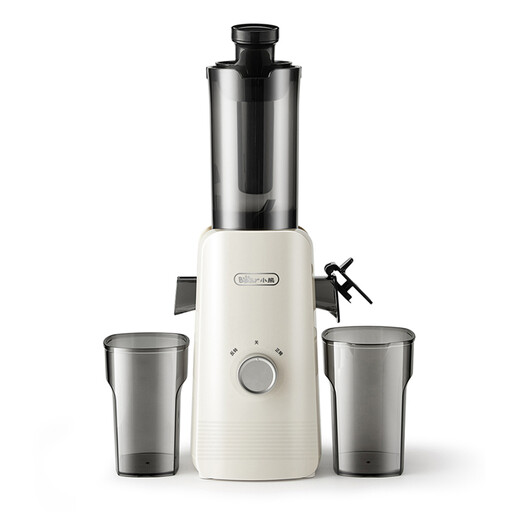
Why this product suits the profile: The 80 mm feed chute, compact design and stated 130-watt output make it suitable for smaller households and occasional servings of juice.
The manufacturer’s specifications list three removable components as well as juice and pulp containers. This reduces assembly and cleaning time.
80 mm feed chute, 0.8-litre juice container according to the description, and a cleaning brush included.
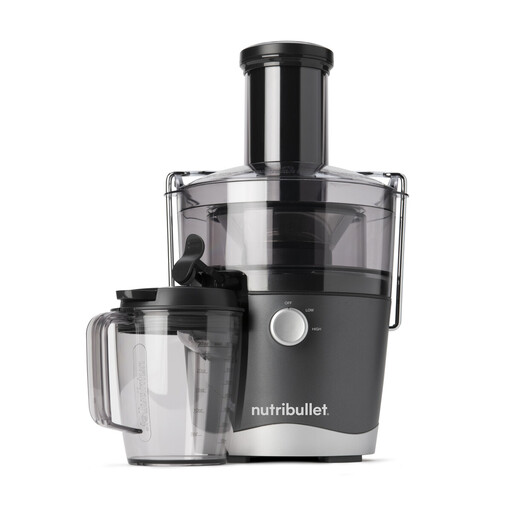
Why this product suits the profile: Two speed settings and a 3-inch feed chute offer flexibility when processing different types of fruit and vegetables.
The 1.5-litre pulp capacity and dishwasher-safe pulp container help minimise frequent interruptions and laborious cleaning.
800-watt motor according to the product specifications, 1.5-litre capacity and resealable 800 ml glass.
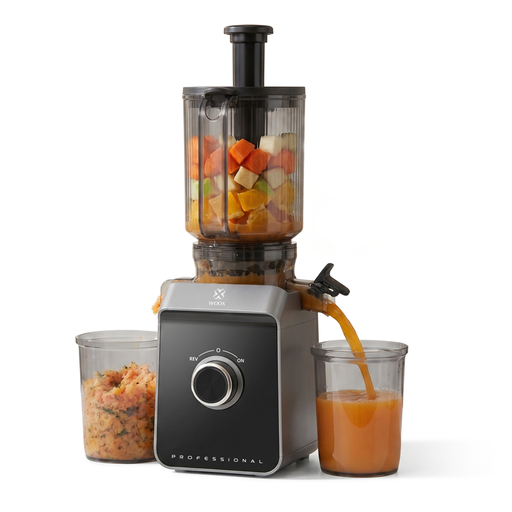
Why this product suits the profile: The 130 mm feed chute, 1.8-litre pressing chamber and overheating protection are designed for larger daily quantities.
The specific chute measurement avoids any ambiguity around the term “XXL”. The recommended maximum running time of ten minutes makes the operating limits clear.
1.8-litre chamber, 726 ml juice cup, 836 ml pulp container and stated noise level below 72 dB.
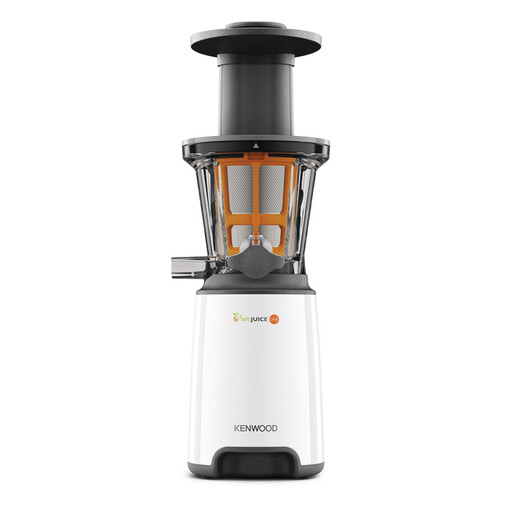
Why this product suits the profile: The slim 15 cm-wide design and rinsing function are ideal for kitchens where worktop space and easy care are important.
Cleaning is not merely promoted in general terms: the product specifications specifically mention a rinsing function and a brush for fibrous ingredients.
55 revolutions per minute according to the product description, 700 ml juice jug, 1.3-litre pulp container and drip stop.
We have put together a complete, regularly updated list of products that fully meet these strict selection criteria and the safety regulations applicable in the EU.
Switch off the appliance, unplug it and dismantle only the removable parts. Remove pulp as soon as possible after use with warm water and the supplied brush. Dishwasher-safe components may only be placed in the dishwasher in accordance with the instructions. Clean the motor unit with a damp cloth.
It is not possible to reliably determine a fixed service life from the wattage. Among other things, it depends on how often the appliance is used, the ingredients, cleaning and compliance with the maximum operating time. Overloading, hard stones and a permanently blocked pressing auger can put greater strain on the appliance. The manufacturer’s instructions regarding breaks and operating time should therefore be followed.
Power consumption depends on the wattage and operating time. A 150-watt appliance running for ten minutes uses approximately 0.025 kWh mathematically. In practice, the key factors are how long it is used each day and your individual electricity tariff. A large feed chute can also reduce preparation time, but it does not automatically change the appliance’s electrical power consumption.