
Lieferung heute & morgen

Qualitätsgarantie

Willkommens-Angebote freischalten: KOSTENLOSE Lieferung | Bis zu 80 % RABATT | Kostenlose 30-Tage-JoyPlus-Testphase
App herunterladen
A slow juicer processes fruit and vegetables slowly using an auger. This makes it very different from a classic centrifugal juicer. For households that want to make fresh juice regularly, it's not just about speed and motor power. An awkward feed chute, hard-to-reach parts or a juice jug that's too small can make daily use much more difficult.
A juicer with a large feed chute can cut down on preparation time. However, hard, very large or fibrous ingredients still need to be cut up, depending on the model. Even with an 80mm or 130mm feed chute, you should always follow the instruction manual. Whole apples or oranges might fit in, but particularly hard pieces should still be fed in slowly.
Motor power alone tells you very little about the actual result. The auger, sieve or filter design, rotation speed and the nature of the ingredients all work together. An electric juicer with 800 watts can behave very differently with hard vegetables compared to a slow juicer with 130 or 150 watts. So pay attention to the whole design principle, not just a single number.
What really matters is whether all the juice-carrying parts can be removed without tools, and whether fibres get stuck in hard-to-reach places. A juicer that's easy to clean should be rinsed straight after use. Dried-on fruit and vegetable residue makes cleaning harder, regardless of what the design claims.
A cold press juicer typically works with a slow-turning auger. Low speeds can make processing more controlled, but they do increase preparation time. Also check the maximum operating time. For the Bear YZJ-F01D6, the product information states a maximum of 15 minutes per session. For larger quantities, you'll need to factor in breaks.
The size of the feed chute affects how much preparation you need to do. The Bear YZJ-F01D6 has an 80mm opening. The ROUNY Slow Juicer has a 130mm one. That can be handy for apples and larger pieces of fruit, but it doesn't replace washing, removing unsuitable pips and cutting up where necessary.
For a juicer for fruit and vegetables, you should also be clear about which ingredients are suitable according to the manual. Very hard stones, ice cubes or unusually firm foods don't automatically belong in the feed chute.
For a single person, a small juice jug is often enough. Families are better off with a juicer with a 1.5 to 1.8 litre capacity, provided you have enough worktop space. The jug size should match your actual daily needs: bigger also means more storage space and potentially more cleaning.
Look for removable pressing and collecting parts, a cleaning brush and as clear a separation as possible between juice and pulp. Claims like "over 90 per cent juice yield" should be taken as the manufacturer's own figure, since the result depends on the ingredients, ripeness and processing.
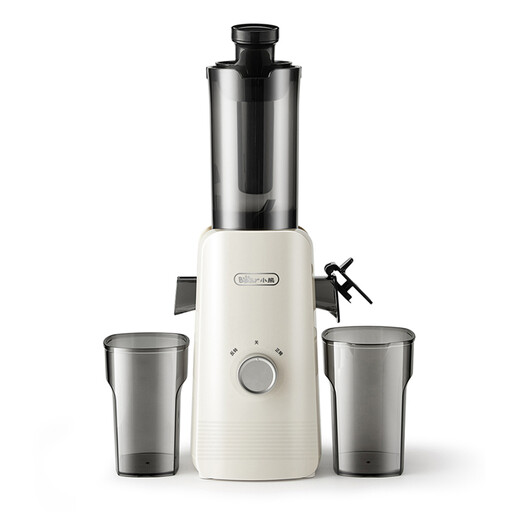
Why this product fits the profile: This compact appliance is designed for smaller households and occasional use. The 80mm feed chute can help reduce preparation time with suitable ingredients.
The product description mentions three main components plus juice and pulp containers. Before buying, you should check the capacity details, as the model name and detailed description give different volumes.
130 watts, compact design, cleaning brush and a stated operating time of up to 15 minutes per session.
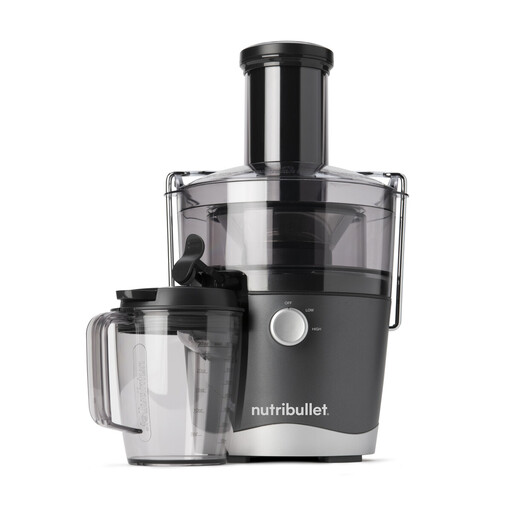
Why this product fits the profile: For users who care about jug size, speed settings and organised storage, this model offers clearly stated technical specifications.
The 3-inch feed chute can help speed up preparation. The removable pulp container is described as dishwasher-safe in the product description; you should confirm this in the instruction manual before cleaning.
800 watts, two speed settings, 1.5 litre capacity and a sealable 800ml glass jug.
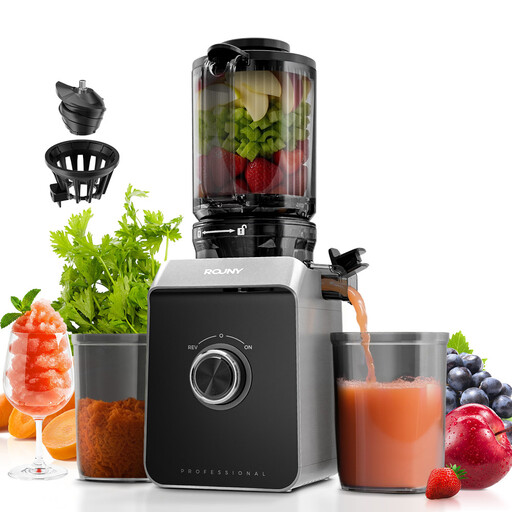
Why this product fits the profile: The 1.8 litre capacity is aimed at households that need larger quantities. In addition, the product description states that it can process frozen fruit into an ice-like consistency.
The filter-free design is intended to make rinsing easier and reduce blockages. With fibrous ingredients, immediate cleaning is still a good idea.
130mm feed chute, 1.8 litre capacity, reverse function, 150 watts and stated BPA-free materials.
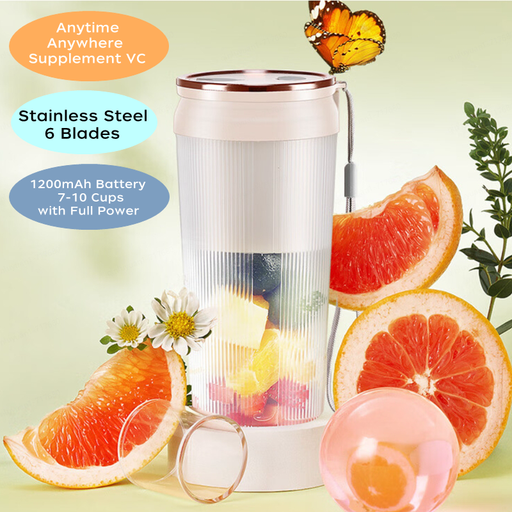
Why this product fits the profile: This portable battery-powered juicer is designed for small portions on the go, such as at the office or when travelling. It works with a 300ml cup and is not intended as a replacement for a household slow juicer with a large capacity.
The clear portion size prevents false expectations about family quantities. According to the description, soft ingredients should be cut into 1 to 1.5cm pieces and topped up with liquid to the mark.
1200mAh battery, 300ml cup, double-click start and washable cup unit according to the product description.
We've put together a complete, regularly updated list of products that fully meet these strict selection criteria and the safety regulations in force in the EU.
The lifespan depends on the motor, materials, how often you use it, the ingredients and how well you look after it. Don't exceed the stated operating time and remove fibres straight after juicing. A reverse function can help dislodge stuck ingredients on some models, but it doesn't replace regular cleaning.
You can estimate the electricity costs with this calculation: power in watts ÷ 1,000 × operating time in hours × electricity price. A 150-watt appliance running for ten minutes uses 0.025 kilowatt-hours in theory. On top of that, you have the cost of fruit, vegetables, water and possibly replacement parts.
No. Only appliances whose instructions explicitly mention this function should be used for it. The ROUNY model describes processing suitable frozen fruit pieces into an ice-like consistency. Ice cubes or hard stones should not go into the juicer unless the manufacturer says it's safe.