
Lieferung heute & morgen

Qualitätsgarantie

Willkommens-Angebote freischalten: KOSTENLOSE Lieferung | Bis zu 80 % RABATT | Kostenlose 30-Tage-JoyPlus-Testphase
App herunterladen
By Joybuy Product Recommendation Officer, August 30, 2026
Choosing a slow juicer is often the first step toward a more health-conscious diet. The idea of fresh, nutrient-rich juices made right in your own kitchen is tempting. However, the market is flooded with appliances whose marketing promises often suggest more than the technology can deliver. Before you make an investment, it's crucial to understand the typical pitfalls that lead to disappointment and an unused appliance collecting dust in a corner.
We'll show you the three most common misconceptions and what you should look for instead to find a device that truly fits your needs.
To avoid the pitfalls mentioned above, you should focus on a few core technical parameters. These objective features will help you realistically assess a device's performance.
The heart of a slow juicer is its pressing mechanism. Look for the following terms:
A quiet juicer is almost always a slow juicer, as the low speed considerably reduces noise levels.
A high juice yield is best identified by the consistency of the pulp (the dry fruit residue). The drier the pulp, the more efficiently the device has extracted the juice.
For easy cleaning, the following features are crucial:
A large feed chute (e.g., 75 mm or more) is practical for processing whole apples or carrots. This saves preparation time. However, the motor power (specified in watts) must be sufficient to handle the hard produce without jamming. For slow juicers, 150 to 250 watts is often perfectly adequate, as the power is transferred to the auger via a gearbox and is not designed for high speed.
Based on these objective criteria, we have identified a few models that suit different user profiles.
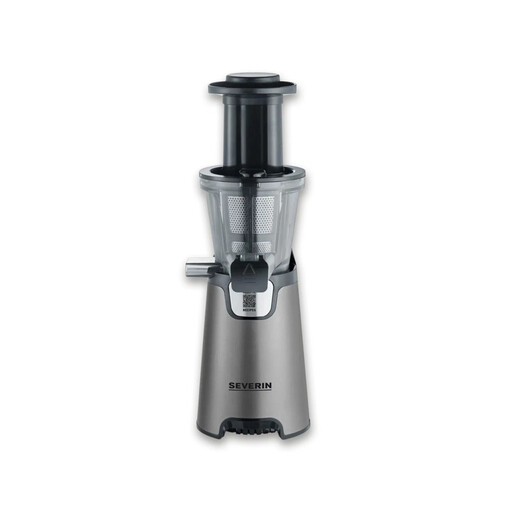
Why This Fits Their Persona: Ideal for users who want more than just juice. With the additional attachments, you can also prepare sorbets, ice cream, or jams, making the device a multifunctional kitchen helper.
The "Easy-Clean" concept with few, easy-to-rinse parts directly addresses the high cleaning effort of many competing models. The cold press technology ensures nutrient preservation.
Two sieve inserts (fine/coarse) and an additional frozen-fruit attachment for maximum versatility. A drip-stop closure keeps the work surface clean.
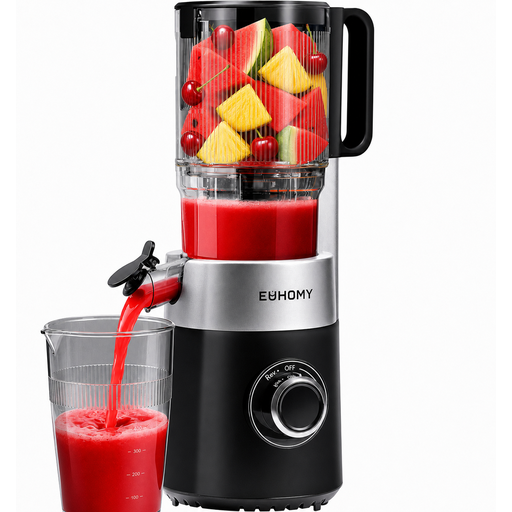
Why This Fits Their Persona: Perfect for families or individuals who regularly prepare large quantities of juice and want to save time. The extremely large feed chute makes pre-cutting fruits and vegetables largely unnecessary.
Solves the "whole fruits" trap with one of the largest feed chutes on the market (135 mm), combined with a 220W motor that delivers the necessary power for processing.
Huge time savings thanks to the XXL feed chute. According to the manufacturer, it has a juice yield of up to 99% through a 7-stage pressing process. Quiet operation at 60 decibels.

Why This Fits Their Persona: An option for beginners who want to try juicing without immediately investing in a more expensive slow juicer. The high speed allows for very quick preparation.
This is not a slow juicer. It avoids the trap of unclear communication by being clearly positioned as a centrifugal model. The user knows they are trading speed for potentially lower nutrient density.
Very fast juice preparation in seconds. The 600W motor and wide feed chute also process harder ingredients quickly. Lower purchase price compared to slow juicers.
We've compiled a complete, up-to-date list of products that fully meet these strict selection criteria and German safety regulations.
A slow juicer (cold press juicer) crushes and presses fruits and vegetables slowly with an auger, which generates little heat and preserves more nutrients in the juice. A centrifugal juicer shreds the ingredients at high speed and spins the juice out. This process is faster, but the resulting heat and oxidation can reduce the nutrient content. Slow juicers are also significantly quieter in operation.
The most effective method is to clean it immediately after use, before the fruit residues dry out. Rinse all removable parts under running water. Use the included brush to thoroughly clean the sieve of fibres. Many modern models have dishwasher-safe parts, which makes cleaning even easier. Check the product details for this before purchasing.
Yes, high-quality slow juicers are designed for this. Their powerful but slow pressing mechanism can easily process firm root vegetables. It is advisable to cut very hard ingredients into smaller pieces to protect the motor and achieve an optimal pressing result, even if the device has a large feed chute.