
Lieferung heute & morgen

Qualitätsgarantie

Willkommens-Angebote freischalten: KOSTENLOSE Lieferung | Bis zu 80 % RABATT | Kostenlose 30-Tage-JoyPlus-Testphase
App herunterladen
A slow juicer processes fruit and vegetables using a slowly rotating auger or a similar pressing system. Compared with a classic centrifugal juicer, the focus is generally on gentle processing with less foam. However, this alone does not automatically make a particular appliance suitable for every household.
Anyone looking to buy a juicer should avoid three common purchasing misconceptions in particular:
Cleaning is also often underestimated. A juicer with numerous individual parts can take more time to clean in everyday use than expected. It is therefore worth checking the number of removable components, whether a cleaning brush is included and the guidance on dishwasher use before buying.
A slow juicer with a large feed chute can make preparation considerably easier. Depending on the size of the fruit, models with diameters of 80, 130 or 135 millimetres can accommodate larger pieces or, in some cases, whole fruit. The manufacturer’s instructions still apply, however: plums, peaches and lychees, for example, must be stoned. Citrus fruit should generally be peeled.
A juicer for whole fruit is particularly interesting for families or people who regularly process apples, pears, cucumbers or carrots. With fibrous vegetables such as celery or parsley, it is often advisable to chop them into smaller pieces to help prevent blockages.
The container size determines how many portions can be prepared in one go. For one person, a juice container holding around 600 to 700 millilitres may be sufficient. Families are more likely to benefit from a pressing chamber or pulp container with a capacity of 1.5 to 1.8 litres.
The stated operating time is equally important. Some appliances are limited to around 10 to 15 minutes of use per cycle. The motor then requires a cooling-down period. If you regularly process larger quantities, this is a point you should not overlook.
A juicer that is easy to clean ideally has only a few parts that can be dismantled in a logical way. Dishwasher-safe components can make cleaning easier, but they should always be treated in accordance with the operating instructions. The motor unit must not be immersed in water.
When choosing materials, stainless-steel components in the strainer or pressing system are practical, while the housing and containers are often made of plastic. You should also look for:
A stated juice yield should be understood as the manufacturer’s figure. In practice, it depends on the variety, ripeness, temperature and preparation of the fruit and vegetables.
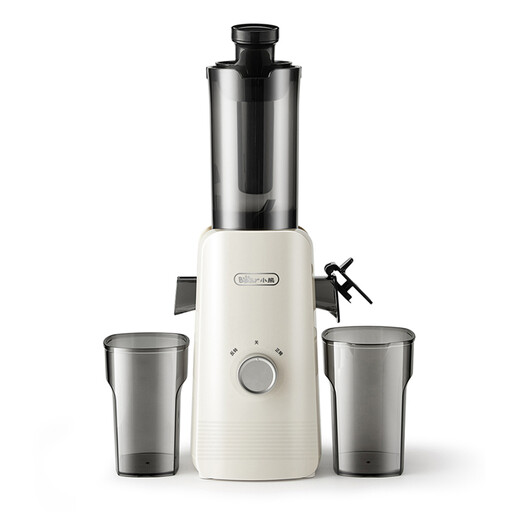
Why this product suits this profile: The 80mm feed chute, 0.8-litre capacity and 130 watts make it suitable for smaller households and regular single portions.
The specific feed chute size and operating-time limit make the appliance’s usage limits clear, rather than suggesting unlimited continuous performance.
Compact design, three main removable components according to the product information, and a cleaning brush.
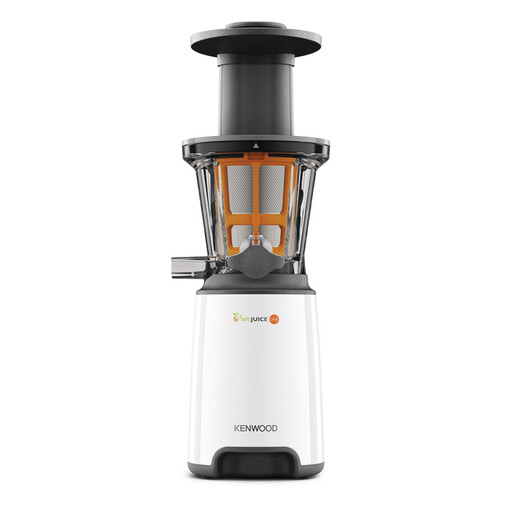
Why this product suits this profile: According to the manufacturer, this model operates at 55 revolutions per minute and offers a 700ml juice container plus a 1.3-litre pulp container.
The slim design and drip stop address two common everyday concerns: limited space and juice left on the worktop.
Rinsing function, cleaning brush and compact format measuring 150mm in width.
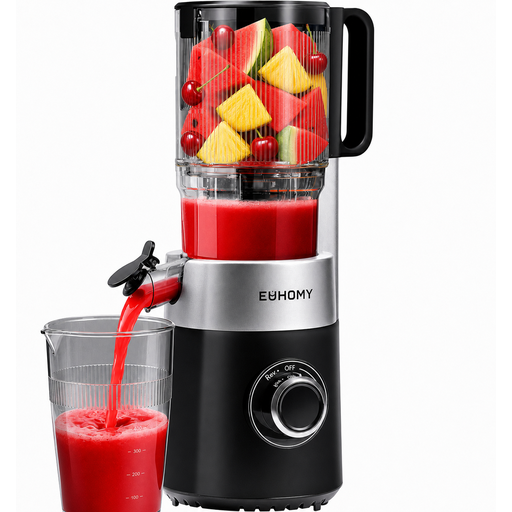
Why this product suits this profile: The 135mm feed chute and 1.8-litre capacity are designed for larger quantities for several people.
The technical details on the feed chute, capacity and cleaning design help put claims about saving time into a more realistic context.
220-watt motor according to the product information, two glasses included and a three-stage filtration system.
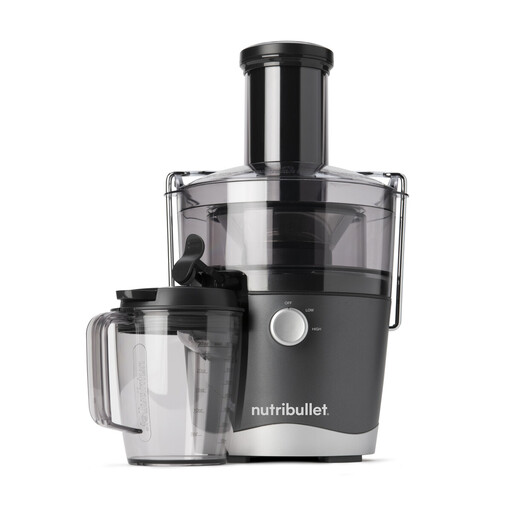
Why this product suits this profile: Two speed settings and a 1.5-litre pulp container support the processing of different types of fruit and vegetables at home.
The 3-inch feed chute reduces chopping for suitable ingredients, while the dishwasher-safe pulp container makes cleaning more predictable.
800 watts according to the product description, 800ml glass with lid and juice outlet with drip stop.
We have put together a complete, regularly updated list of products that fully meet these strict selection criteria and the safety regulations applicable in the EU.
For a juicer for fruit and vegetables, ingredients should be washed and cut into suitable pieces before being added. Hard stones, stalks and unsuitable skins should not be put into the pressing chamber. Frozen fruit, ice cubes and very hard ingredients such as sugar cane are not suitable for many slow juicers.
Pulp and fruit fibres should be removed promptly after each cycle. Dried-on residue makes cleaning more difficult and can put strain on the strainer or auger. Use the supplied pusher, and never use your fingers or cutlery. If a blockage occurs, the reverse function may help, provided the model has this feature.
A slowly operating pressing system may feel more pleasant because it works at lower speeds. However, the actual noise level depends on the motor, the surface it stands on and the ingredients. A quiet juicer should therefore ideally be described with a specific decibel rating rather than just a marketing claim.
Its service life depends on how often it is used, cleaning, correct ingredient preparation and compliance with the operating and cooling times. Regular overloading, unsuitable ingredients or cleaning the motor unit under water can damage the appliance. Wear parts such as strainers or augers should be replaced when necessary in accordance with the manufacturer’s instructions.
The ongoing electricity costs of an electric juicer are generally manageable. They depend on the power rating, operating time and electricity tariff. An appliance rated at 150 watts and running for ten minutes uses approximately 0.025 kilowatt-hours. The cost of fruit, vegetables and any replacement parts must also be taken into account. The value for money therefore depends not only on the purchase price, but also on how regularly the appliance is actually used.