
Lieferung heute & morgen

Qualitätsgarantie

Willkommens-Angebote freischalten: KOSTENLOSE Lieferung | Bis zu 80 % RABATT | Kostenlose 30-Tage-JoyPlus-Testphase
App herunterladen
A slow juicer processes fruit and vegetables at a low speed using a pressing auger. Compared with fast-spinning juicers, this often produces less foam and heat. For households that want to prepare fresh juices regularly, this design can be an appealing option. However, the deciding factor is not simply whether a product is called a “slow juicer”, but the specific features it offers.
A slow juicer with a large feed chute can save time. For example, a 130 or 135 mm opening can accommodate larger pieces of apple. Even so, hard pips, stalks and unsuitable skins must be removed. Depending on the model, fibrous ingredients such as celery should also be cut into smaller pieces.
If a product is promoted as a whole-fruit juicer, you should therefore check the instruction manual. “Whole fruit” does not automatically mean that every type of fruit can be processed without preparation.
Information about juice yield depends on factors including the variety, ripeness, water content, piece size and pressing method. A percentage quoted in a product description cannot therefore be transferred directly to everyday use.
More useful are clear, verifiable technical details: the pressing auger, speed, whether the design uses a sieve or is filter-free, container capacity and suitability for hard or soft ingredients. According to its product description, the EUHOMY Cold Press Juicer, for example, uses a 220-watt motor and operates at a low speed. Even so, the advertised juice yield should be regarded as the manufacturer’s stated figure, not a universally applicable value.
According to many product descriptions, appliances can be rinsed with water or have certain parts cleaned in the dishwasher. In practice, however, narrow sections, sieves and fibrous residue are what matter most. A traditional filter sieve can require more cleaning than a filter-free design.
You should therefore look out for:
A smaller juice container may be sufficient for individuals. Families are more likely to benefit from a chamber of around 1.8 litres and a separate pulp container. This often reduces interruptions during juicing.
A large opening is particularly practical for apples, pears or larger pieces of vegetables. Even so, ingredients should be fed in slowly. The pusher supplied is the intended tool; hands, cutlery and other objects must never be placed inside the feed chute.
Wattage alone does not describe the appliance’s overall processing capability. A 130-watt appliance may be sufficient for its intended household use, while a more powerful motor does not automatically mean that every ingredient can be processed.
The permitted operating time and cooling intervals are also important. According to the product information, the WOOX MX0289 is designed for a maximum of ten minutes of continuous operation, after which the motor should cool down for 20 minutes. The Bear YZJ-F01D6 is limited to up to 15 minutes per use according to its description. For families and frequent users, this information is more relevant than wattage alone.
A fruit and vegetable juicer is not automatically suitable for ice cubes, sugar cane or hard pips. Models vary considerably when it comes to frozen fruit:
A reverse function can help when fibrous ingredients become stuck. However, it does not replace careful feeding or cleaning. On the ROUNY model, the reverse function is specifically mentioned as a way of clearing blockages.
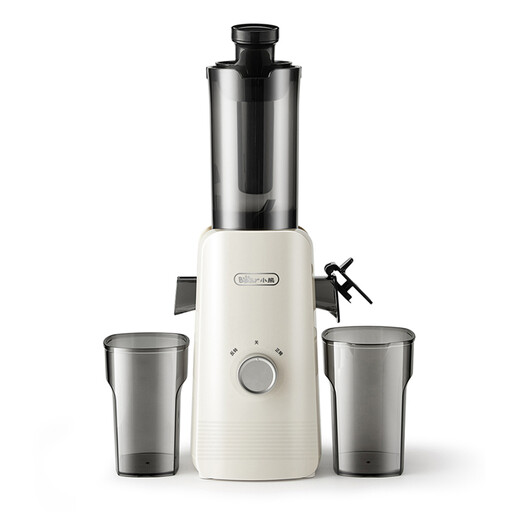
Why this product suits this profile: With 130 watts and a container capacity of 0.8 or 1 litre, this compact appliance is designed for smaller households and individual servings of juice.
The product description lists three main components and an 80 mm feed chute. This can help keep assembly and cleaning manageable.
Compact design, cleaning brush and a stated operating time of up to 15 minutes per use.
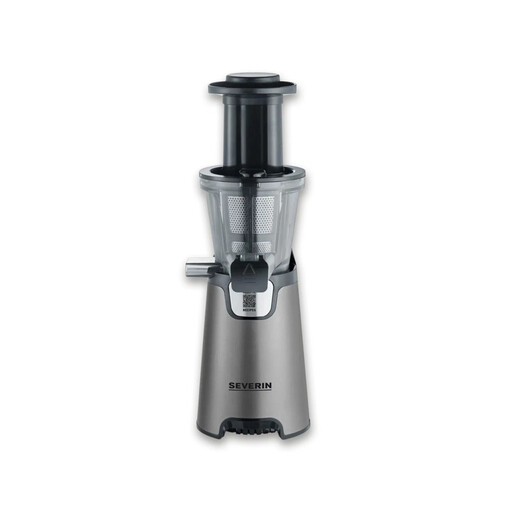
Why this product suits this profile: According to its product description, this model offers various sieves, an attachment for frozen fruit and an Easy-Clean design for regular use.
Its suitability for frozen fruit is described as being provided by a separate attachment. This reduces the risk of using a standard juicer for an unsuitable purpose.
150 watts, a 1-litre juice container, drip stop and accessories for juice, sorbet and other preparations according to the product information.
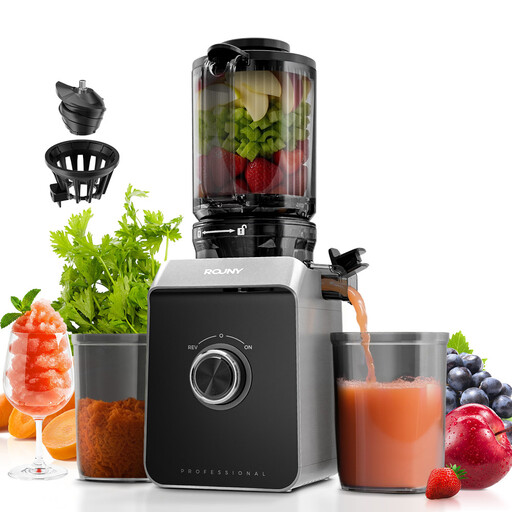
Why this product suits this profile: The 130 mm feed chute, 1.8-litre capacity and stated suitability for frozen fruit pieces make this model suitable for families and a wide range of uses.
According to the product description, the filter-free design makes rinsing easier. A reverse function is provided for ingredients that become stuck.
150 watts, 50 revolutions per minute according to the description, BPA-free materials according to the product data and use for frozen fruit preparations.
We have put together a complete, regularly updated list of products that fully meet these strict selection criteria and the safety regulations applicable in the EU.
The lifespan depends on the motor, material quality, operating time, cleaning and workload. Follow the manufacturer’s instructions, avoid overfilling and remove fibrous residue immediately after use. As a general rule, the motor unit must not be submerged in water.
Low power consumption cannot be determined from wattage alone. Operating time and frequency of use are also important. An appliance rated at 130 to 150 watts may use less energy during short applications than a more powerful model that runs for longer. For a fair comparison, power, operating time and container capacity should be considered together.
No. Check the product description and instruction manual. Some models require a special attachment, while others may only process frozen ingredients once they have been thawed. Ice cubes, hard pips and ingredients not approved by the manufacturer should not be put into any appliance.