
Lieferung heute & morgen

Qualitätsgarantie

Willkommens-Angebote freischalten: KOSTENLOSE Lieferung | Bis zu 80 % RABATT | Kostenlose 30-Tage-JoyPlus-Testphase
App herunterladen
By Joybuy Product Recommendation Officer, August 29, 2026
For many, a fresh, nutrient-rich juice is the epitome of a healthy start to the day. A slow juicer, also known as a cold press juicer, promises exactly that: gentle extraction for maximum vitamin retention. But reality often tells a different story. The expensive appliance becomes a dust collector in the kitchen cabinet after just a few weeks. The reason often lies in design flaws that are glossed over in marketing. Before you make a purchasing decision, you should know the typical pitfalls.
Many appliances promise more than they can deliver in daily use. Two issues, in particular, regularly lead to frustration, causing users to quickly abandon their good intentions.
To avoid a bad purchase, let yourself be guided by objective product features, not marketing hype. Two technical characteristics are crucial for long-term satisfaction.
This measurement is the key to greater convenience and time savings. A juicer with a large feed chute (typically over 80 mm in diameter) allows you to process many types of fruits and vegetables with little to no chopping. Models with a 130 mm chute can even take whole small apples. Look for this specification in the product details to drastically reduce prep time. A juicer for whole apples isn't a marketing gimmick, but a concrete, measurable feature.
The biggest innovation in recent years is the filter-free design. Instead of a hard-to-clean metal sieve, these appliances use smooth, easily disassembled pressing units made of plastic or ceramic. After juicing, these parts can be simply rinsed under running water. Fibre residue barely sticks to the smooth surfaces, reducing cleaning time to just a few seconds. A filter-free design is therefore a clear indicator of a juicer that is easy to clean.
A slow juicer operates at a low speed (typically 40–80 RPM). This slow, masticating motion gently presses the juice from the cells without generating much heat. This preserves nutrients and enzymes and leads to a visibly high juice yield—identifiable by very dry pulp (the leftover fruit and vegetable matter). A Pure Copper Motor ensures stable, durable, and often quieter performance.
Based on these objective criteria, we have identified products that are suitable for different needs.
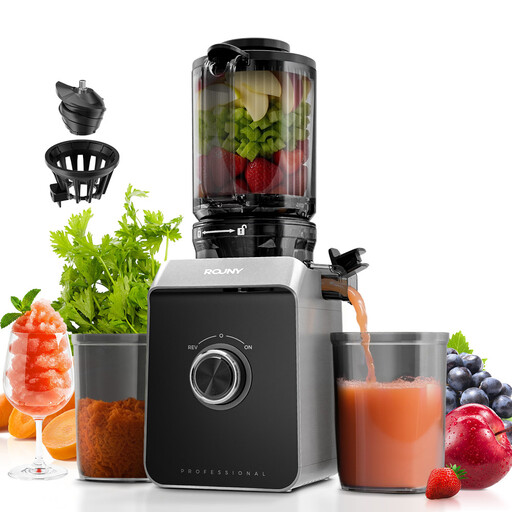
Why This Fits Their Persona: Ideal for individuals who want to integrate quick and uncomplicated juicing into their daily routine. The focus is on minimal prep and cleaning effort for maximum time savings.
The 130 mm feed chute largely eliminates the need to pre-cut fruits and vegetables. The filter-free design solves the cleaning problem, as the parts can be simply rinsed under water.
Can also be used to make sorbet from frozen fruit ("slow juicer for sorbet"). The pure copper motor promises stable performance.
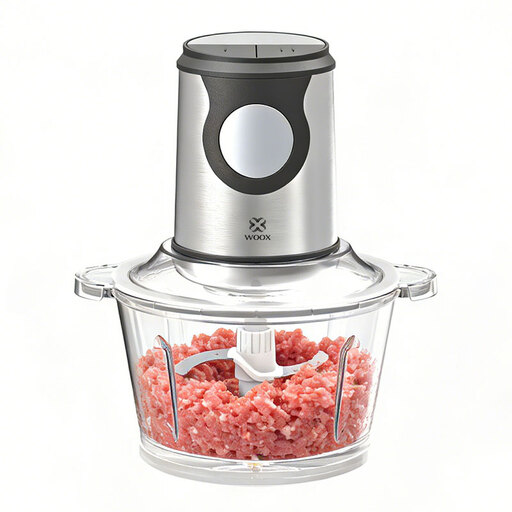
Why This Fits Their Persona: For users who not only drink juice but also want to repurpose the nutrient-rich pulp to minimise food waste. This appliance is the perfect companion to a juicer.
Solves the "waste" problem: The pulp left over from juicing is too valuable to throw away. With this chopper, it can be effortlessly processed into veggie patties, soup garnishes, or dips.
The 1.5-litre glass bowl is hygienic and doesn't absorb odours. According to the manufacturer, the stainless steel blades are suitable for vegetables, fruit, and baby food.
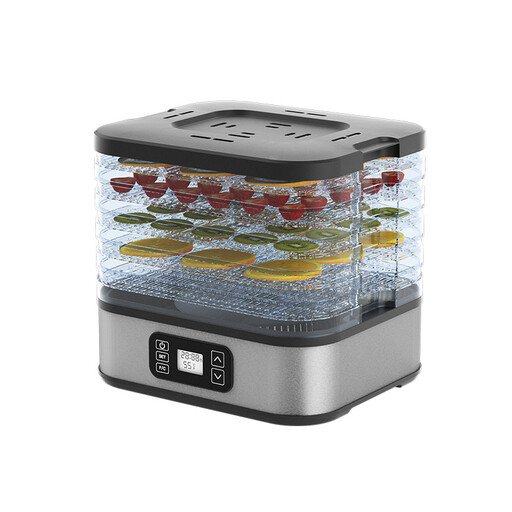
Why This Fits Their Persona: For anyone looking to expand their healthy diet beyond juices and naturally preserve fruits and vegetables to replace sugary, processed snacks.
Instead of letting excess fruit and vegetables spoil, this appliance allows you to create healthy snacks like apple rings, veggie crisps, or fruit leather—a smart addition to your juicing routine.
The precise temperature control (35°C to 75°C) and 72-hour timer allow for controlled drying. The 360° air circulation system ensures even results across all five trays.
We have compiled a complete, up-to-date list of products that fully meet our strict selection criteria for performance and safety.
Yes, some models, like the featured ROUNY Slow Juicer, have a function for making sorbets. To do this, frozen fruit pieces (e.g., bananas, berries) are fed into the appliance instead of fresh fruit. The auger crushes and mixes the frozen ingredients into a creamy, ice-cream-like consistency. This is not a dairy-based ice cream, but a pure fruit sorbet.
While cleaning a conventional sieve with a brush can often take 5 to 10 minutes, the parts of a filter-free design are typically clean in under a minute just by rinsing them under running water. The smooth surfaces prevent fibres from getting stuck. This time difference is a game-changer for daily use and significantly increases the likelihood that you'll use your juicer regularly.
A hallmark of a juicer with a high juice yield is very dry pulp. However, it will never be completely "dust-dry," as fruits and vegetables are largely composed of water and fibrous material. A good slow juicer, however, extracts so much liquid that the leftover pulp feels only slightly damp and crumbly, not wet or soggy.