
Lieferung heute & morgen

Qualitätsgarantie

Willkommens-Angebote freischalten: KOSTENLOSE Lieferung | Bis zu 80 % RABATT | Kostenlose 30-Tage-JoyPlus-Testphase
App herunterladen
A slow juicer uses a slowly rotating auger rather than a rapidly spinning centrifuge. This method is also often referred to as cold-press juicing and is suitable for many types of fruit and vegetables. For families, juice enthusiasts and households that regularly enjoy fresh juice, performance and design are not the only factors that matter.
When buying an electric juicer, you should pay particular attention to the feed chute, cleaning, operating time and container sizes. Some marketing claims may sound convincing, but on their own they reveal little about how practical a machine is for everyday use.
A slow juicer with a large feed chute can reduce preparation time. However, hard stones, stalks and unsuitable peels still need to be removed. Depending on the model, particularly fibrous ingredients may also need to be cut into smaller pieces. A 130 or 135 mm opening is therefore a practical advantage, but it does not mean you can feed every piece of fruit in whole.
Motor power alone does not prove that a machine will produce a particular amount of juice. The auger, sieve or filter design, speed and the texture of the ingredients also affect the result. When choosing a juicer with a high juice yield, you should therefore check the manufacturer’s specific information, suitable ingredients and recommended feeding speed.
Removable parts may need to be treated differently. Some components can go in the dishwasher, while others should only be cleaned with warm water and a soft brush. The motor base must never be immersed in water. A filter-free design can make rinsing easier, but it does not replace cleaning after every use.
For a juicer for whole fruit, the size of the opening is an important factor. Models with an 80 mm opening are suitable for smaller pieces, while openings of 130 mm or more can accommodate larger pieces of apple and other fruit. Very large ingredients may still need to be cut.
The containers must also suit your household:
The stated chamber capacity is not always the same as the maximum filling capacity of the juice container. These two figures should be considered separately.
A low speed can make processing slower, but it does not automatically reduce all foam or oxidation. The overall design is what matters. You should also check the maximum continuous operating time. According to the product specifications, the WOOX MX0289 is designed to run for no more than 10 minutes, after which the motor should cool down for 20 minutes. The Bear YZJ-F01D6 is stated in the product description to support use of up to 15 minutes per operation.
A quiet juicer is often described using a decibel rating. The WOOX MX0289 is specified at less than 72 dB, while the ROUNY FF Pro Max is rated at a maximum of 75 dB. Such figures are only meaningful when considered alongside the measurement conditions; hard or fibrous ingredients can change the operating noise.
A juicer with a reverse function can be helpful if ingredients block the auger. However, the function will not resolve blockages caused by incorrect preparation. According to the instructions, the reverse function on the WOOX MX0289 should be used for three to five seconds and repeated if necessary.
You should also look for:
With a juicer for juice and sorbet, you should check whether a special attachment is required. Frozen ingredients and ice cubes are not suitable for every model.
The following products have been matched to different everyday situations based on their stated features. Information about power, capacity and functions comes from the respective product descriptions.
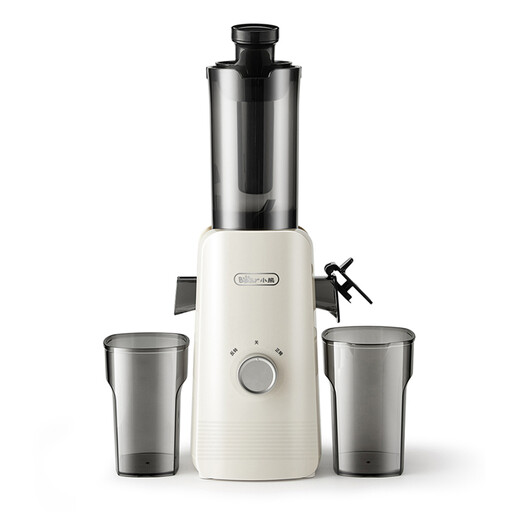
Why this product suits this profile: With its compact design, 130 W of power and 0.8 l capacity, this model is designed for individuals or smaller households.
The 80 mm opening and the three main components stated in the product information keep preparation and assembly manageable.
Compact design, 130 W motor and a stated operating time of up to 15 minutes per use.
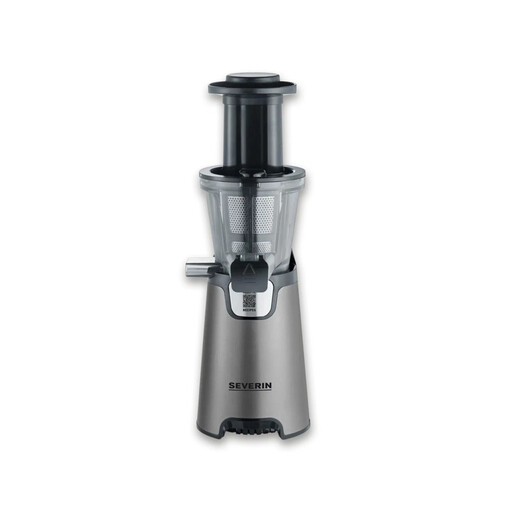
Why this product suits this profile: This model combines 150 W of power with several sieve inserts and additional functions for different preparations.
The Easy-Clean design, cleaning brush and dishwasher-safe parts stated in the product information address the frequent cleaning involved.
Two sieve inserts, a drip-stop feature and an attachment for frozen fruit; according to the product description, it is also designed for sorbet, jam and passata.
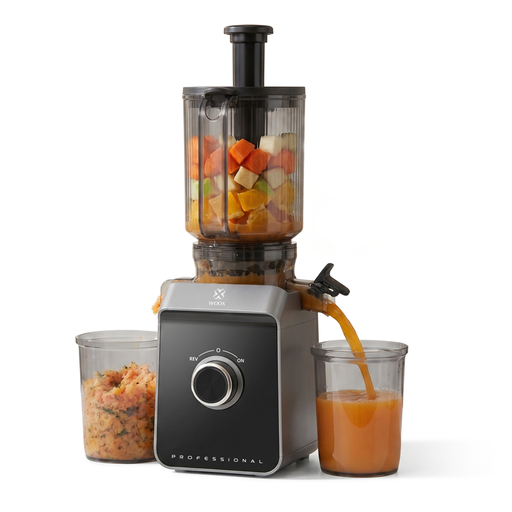
Why this product suits this profile: The 1.8 l chamber, 130 mm feed chute and separate containers are designed for larger households and multiple portions.
The instructions specify a maximum operating time of 10 minutes followed by a cooling break, making it easier to plan use realistically.
150 W DC motor with overheating protection, reverse function and, according to the product information, removable dishwasher-safe parts.
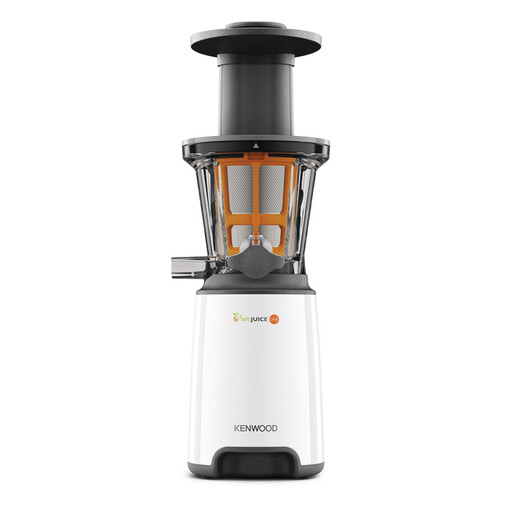
Why this product suits this profile: The slim 15 cm-wide design is ideal for kitchens where worktop space is limited.
The stated rinsing function and supplied brush help with cleaning between preparations.
55 rpm, 700 ml juice jug, 1.3 l pulp container and drip-stop feature according to the product information.
We have put together a complete, regularly updated list of products that fully meet these strict selection criteria and the safety regulations applicable in the EU.
Wash fruit and vegetables thoroughly before juicing. Hard stones, unsuitable peels and very hard ingredients are not suitable for every appliance. Depending on the instructions, fibrous foods such as celery should be cut into smaller pieces. Only use the supplied pusher and switch off the electric juicer before taking it apart.
For a longer service life, three habits are important:
That depends on the feed chute and the design. Models with a 130 mm opening can accommodate larger pieces. Stones, stalks and particularly hard parts must still be removed as instructed.
It is not possible to give a reliable general lifespan. It depends on how often the juicer is used, the ingredients, cleaning and compliance with the specified operating times. Overheating, overloading and incorrect accessories can accelerate wear.
The power consumption of the models featured ranges from 130 to 150 W, while the EUHOMY model is specified at 220 W. As a juicing cycle usually lasts only a few minutes, the actual usage time is the main factor affecting running costs. Your precise electricity cost depends on the power rating, operating time and your tariff.