What should you look for when buying?
Slow juicer
A good fit if: You regularly want to process leafy greens or fibrous ingredients, and the instructions for the specific model say they’re suitable.
The trade-off: Processing may take longer, and ingredients may need preparing depending on the model.
Centrifugal juicer
A good fit if: You mainly want to make several portions of fruit or firm vegetables quickly in the morning.
The trade-off: Check separately whether it’s suitable for leafy greens; the type of juicer alone doesn’t tell you how much juice you’ll get from your ingredients.
Use the order below to see how your ingredients, the quantity you need for the family and the cleaning afterwards fit with your morning routine.
| Buying priority |
What to look for |
Who is it most important to? |
| Leafy greens and fibrous ingredients |
Check which ingredients are suitable, whether they need chopping and what the instructions say about blockages. |
If I regularly want to juice leafy greens, checking that the ingredients are suitable matters more than a general claim about the type of juicer. Around 36% of consumers put suitability for leafy greens first. |
| Several portions for breakfast |
Compare the feed chute, juice jug and pulp container separately. |
When making several portions, I want to plan my morning routine without unnecessary interruptions. Around 29% of consumers prioritise the quantity and speed of preparation. |
| Cleaning after regular use |
Check how easy it is to reach the filter, which parts can be removed and which cleaning methods are specifically permitted for them. |
If the juicer is used often for breakfast, I want to know how to clean the filter and other parts afterwards. Around 21% of consumers make cleaning their top buying priority. |
| Noise in the morning |
Compare measurements for the specific model and the conditions under which they were taken; wattage is no substitute for comparing noise levels. |
If others are still asleep or we want to chat, I pay particular attention to the noise level. In its comparison of juicer types, ETM TESTMAGAZIN describes centrifugal juicers as tending to be louder, but doesn’t give a decibel rating for individual models. Around 14% of consumers put a quiet morning first. |
Joybuy product overview
This selection focuses on slow juicers for green juice and everyday family use.
 No image available
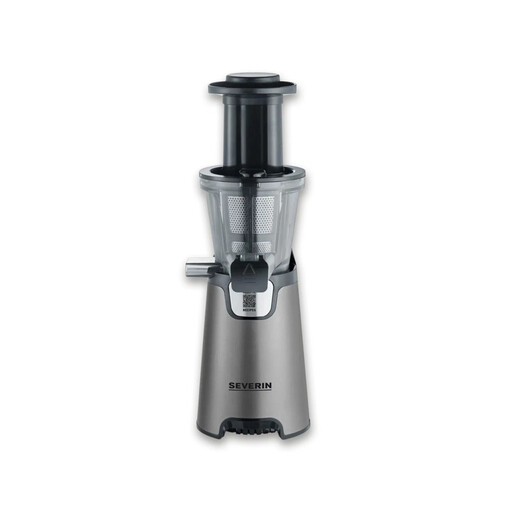
Severin ES 3571 Slow Juicer
This slow juicer is an option if you want to make green juice.
1-L juice container; 150 W. The product description mentions an Easy-Clean design and cleaning with a brush or in the dishwasher.
View at Joybuy
 No image available
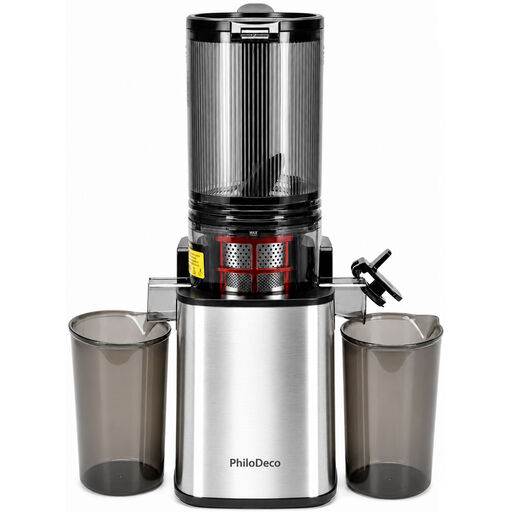
Cold Press Slow Juicer, 110 mm
A possible choice if you’re looking for a large feed opening to accommodate different ingredients.
The product title lists a 110-mm opening, 40 Nm, a dual filter and a reverse function. The description mentions an additional side opening for smaller ingredients and detachable parts for manual cleaning.
View at Joybuy
 No image available
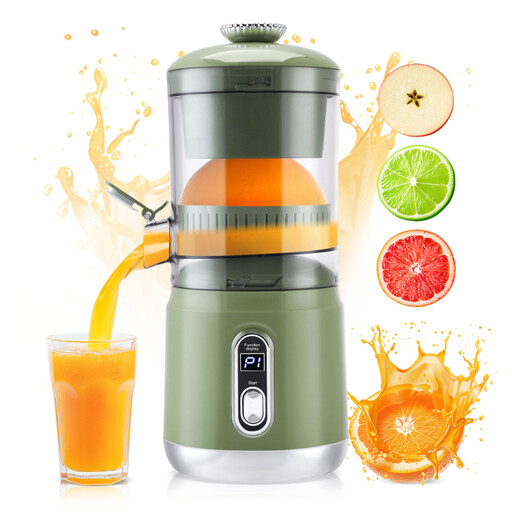
Slow juicer with three speed settings
An option if you want to use different speed settings for a range of ingredients.
The product description lists three settings for ingredients of different hardness. According to the description, the removable parts can be rinsed under running water.
View at Joybuy
 No image available
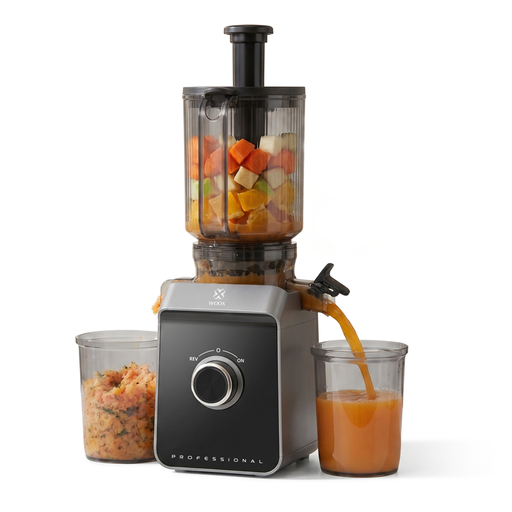
WOOX MX0289 Slow Juicer
The large feed opening may appeal to you if you want to add ingredients with less chopping.
150 W; 130-mm feed opening. The product description states that it can run for a maximum of 10 minutes, after which it needs a 20-minute break. Fibrous ingredients such as celery and parsley should be cut into 3–4 cm pieces; sugar cane, coconut, frozen fruit and ice cubes are not suitable.
View at Joybuy
 No image available
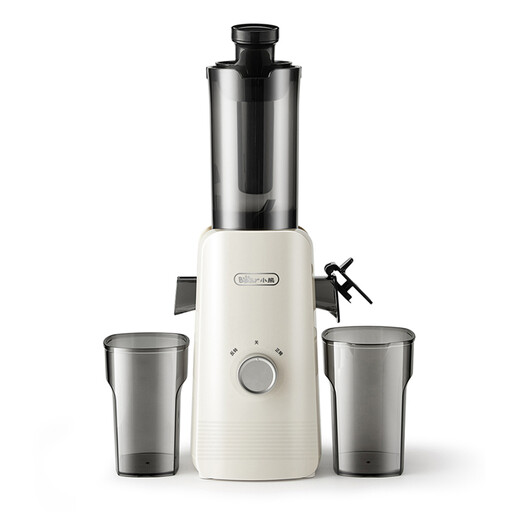
Bear YZJ-F01D6 Slow Juicer
A possible choice if you’re looking for a slow juicer with a stated container capacity and a cleaning brush.
1-L container; 80-mm opening. The description lists three components, a brush attachment and a maximum operating time of 15 minutes per use.
View at Joybuy
Frequently asked questions
Can green juice replace eating fruit and vegetables?
No, it’s not an equivalent replacement: the German Nutrition Society points out that juice provides less fibre and is less filling than whole fruit. Juice can be part of your family’s routine, but it shouldn’t be the only consideration when choosing fruit and vegetables.
How can I prepare leafy ingredients hygienically and store the juice?
Wash vegetables, salad leaves and herbs thoroughly, and only use plant parts that are usually eaten raw. The German Federal Institute for Risk Assessment gives this advice specifically for green smoothies; it’s used here as a precaution for raw ingredients. Clean the parts of the appliance that come into contact with food according to the instructions, and keep perishable ingredients as cool as possible until you prepare or eat them.
Can children help with juicing?
Follow the instructions for the specific model and supervise children. KLAMER warns against putting fingers or objects into the opening while its slow juicer is running, and says that children should only clean or maintain it under supervision. These model-specific instructions don’t set a general age limit for other juicers.
What should I check about product safety when buying an electric juicer in Germany?
Products sold in the EU must meet the applicable product safety requirements; relevant electrical and electronic equipment must carry the required CE marking. Check the marking, manufacturer’s information and instructions for the specific product. The CE mark is a manufacturer’s declaration, not an independent quality mark.
Are a manufacturer’s warranty and statutory rights the same thing?
No. Your statutory rights generally apply against the seller, while a manufacturer’s warranty is voluntary and subject to its own terms. If something goes wrong, check which rights apply to your purchase and which parts of the appliance are covered.


