
Lieferung heute & morgen

Qualitätsgarantie

Willkommens-Angebote freischalten: KOSTENLOSE Lieferung | Bis zu 80 % RABATT | Kostenlose 30-Tage-JoyPlus-Testphase
App herunterladen
Fresh juice made from apples, carrots, celery or leafy greens is easy to prepare at home with a slow juicer. However, models vary considerably in their feed chutes, running times, ease of cleaning and container capacity. If you focus only on the wattage or bold marketing claims, you could end up with a machine that clogs frequently, is difficult to clean or isn’t suited to the size of your household.
Motor power alone tells you little about how suitable a machine is as a cold press juicer. A slow juicer generally runs at a low speed and presses fruit or vegetables through an auger. The design, permitted running time and how the ingredients are handled matter too.
An electric juicer with a power rating of 130 to 220 watts may be sufficient for home use. Check the maximum running time carefully. For example, the Bear YZJ-F01D6 is specified for a maximum of 15 minutes per use. According to the product information, the WOOX MX0289 must not run for more than 10 minutes at a time and needs a break to cool down afterwards.
A juicer that takes whole fruit sounds convenient, but hard stones, stalks and very large pieces usually need to be removed or prepared first. Even with a juicer that has a wide feed chute, cutting ingredients into smaller pieces can help them feed through evenly.
The size of the opening is still an important consideration. Models with 80, 130 or 135 mm openings can reduce prep time compared with narrow feed chutes. Peel citrus fruit before juicing. Hard stones, ice cubes and unsuitable ingredients can put strain on the auger and motor.
A juicer that’s easy to clean should have just a few parts that are simple to access. A traditional filter can become clogged with fibrous vegetables and may need a brush to clean it. Filter-free designs can make rinsing easier, but they don’t necessarily mean there’s no maintenance involved.
Before buying, check:
For families and frequent use, a 130 to 135 mm-wide feed chute offers a practical advantage. Smaller households may find an 80 mm opening is sufficient, but they’ll need to cut fruit and vegetables into smaller pieces more often.
A capacity of around 600 to 800 millilitres is suitable for individual portions. Machines with a capacity of 1.5 to 1.8 litres are better suited to several people or larger quantities of juice. Also check whether the stated capacity refers to the juicing chamber, juice container or pulp container.
The decibel rating gives you a more objective basis for comparison. The WOOX MX0289 is rated at less than 72 dB, while the ROUNY is rated at a maximum of 75 dB. Based on their respective specifications, both are worth considering if you’re looking for a quiet juicer. However, these ratings are no substitute for checking the instruction manual.
For nutrient-rich juice, it also makes sense to process ingredients promptly. A slow juicer’s slow pressing action can limit foaming and heat build-up. However, this doesn’t justify making general health or therapeutic claims. Plan when to enjoy freshly pressed juice in line with the ingredients and your own dietary habits.
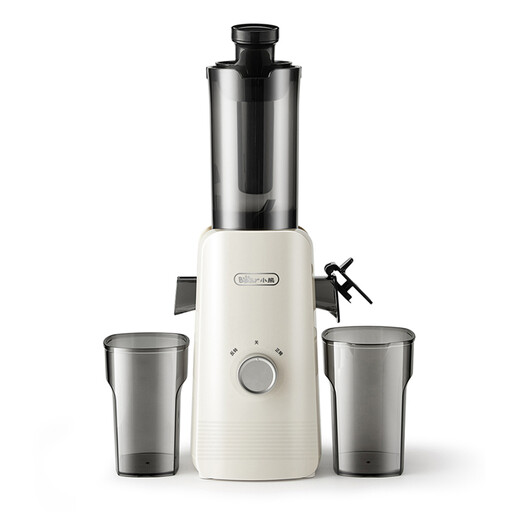
Why this product suits this profile: This compact model has a 130-watt motor and a stated capacity of 0.8 litres, making it suitable for individual portions and smaller kitchens. The 80 mm feed chute can reduce chopping for suitable ingredients.
The product information gives a specific operating limit of no more than 15 minutes per use. This makes it easier to plan your daily use realistically.
Three removable main components, a cleaning brush, and juice and pulp containers, according to the product description.
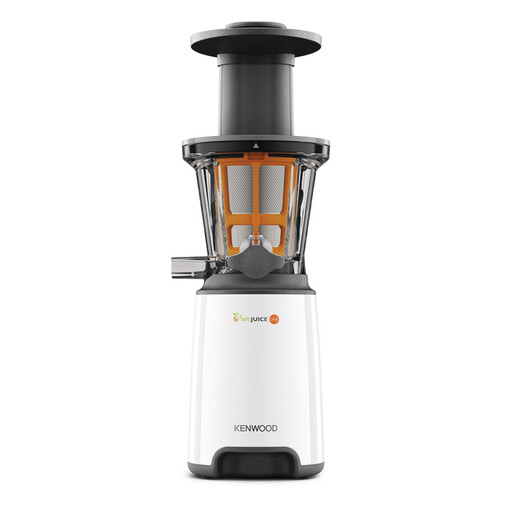
Why this product suits this profile: According to the specifications, the machine runs at 55 revolutions per minute and has a rinse function. It’s worth considering if you value a compact design and clearly specified accessories.
Cleaning isn’t promoted with just a vague claim: the rinse function and brush are listed as specific features.
700-millilitre juice jug, 1.3-litre pulp container and anti-drip closure, according to the product specifications.
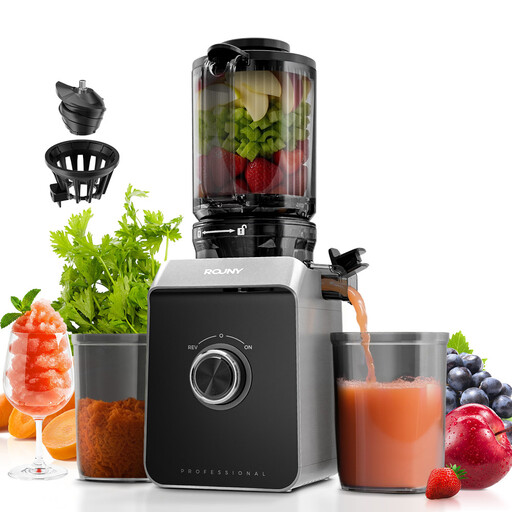
Why this product suits this profile: Its 1.8-litre capacity is suited to families and anyone who regularly makes fruit and vegetable juice. The product description also mentions a function for frozen fruit, provided it’s prepared appropriately.
According to the product information, its filter-free design makes rinsing easier. A reverse function is available if ingredients get stuck.
130 mm feed chute, 1.8-litre capacity, 50 revolutions per minute and BPA-free materials, according to the product information.
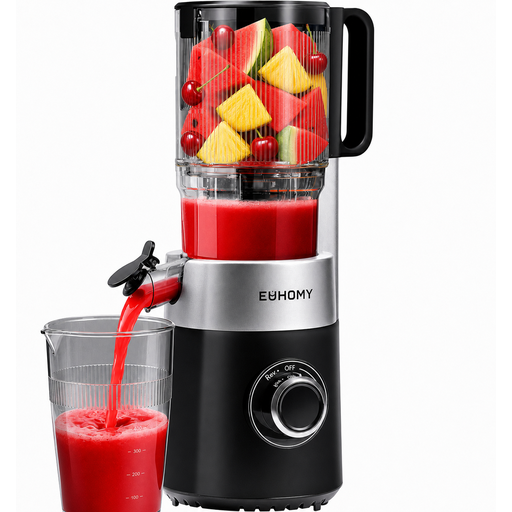
Why this product suits this profile: This model combines a 1.8-litre capacity with a 135 mm opening. That can make preparation easier when juicing larger quantities of fruit and vegetables.
The specifications state both the feed chute size and that the machine has a three-stage design. Still, check which parts need cleaning before you buy.
220-watt motor, 135 mm feed chute, 1.8-litre container and two glasses, according to the product description.
We’ve put together a complete, regularly updated list of products that meet these strict selection criteria and fully comply with the safety regulations in force in the EU.
Its lifespan depends on the motor, material quality, cleaning and how often it’s used. Follow the operating limits in the manual, remove stones and hard ingredients, and let the motor cool down during longer sessions. Before each use, check the machine for damage to the auger, filter, cable and housing.
You can estimate electricity use based on the power rating and running time. A 150-watt machine running for ten minutes uses around 0.025 kilowatt-hours, according to the calculation. You’ll also need to factor in the cost of fruit and vegetables, water for cleaning and any replacement parts. How long you use the machine at home will determine the actual running costs.
Wash the ingredients thoroughly, remove hard stones and unsuitable skins, and cut fibrous ingredients into smaller pieces. Use only the pusher supplied and feed the ingredients in slowly. Before cleaning, taking the machine apart or clearing a blockage, switch off the slow juicer and unplug it from the mains.