
Lieferung heute & morgen

Qualitätsgarantie

Willkommens-Angebote freischalten: KOSTENLOSE Lieferung | Bis zu 80 % RABATT | Kostenlose 30-Tage-JoyPlus-Testphase
App herunterladen
A species-appropriate home provides small animals like guinea pigs, rabbits, or hamsters with the necessary space for exercise and well-being. However, when choosing a suitable indoor enclosure, many owners encounter problems that only become apparent after the purchase. Certain design flaws or exaggerated marketing claims often lead to frustration and, in the worst case, an unsafe environment for the animal.
As your Joybuy Product Recommendation Officer, I'll help you recognise these pitfalls. We will focus on the objective criteria that truly matter, enabling you to make an informed decision. These are the three most common mistakes to avoid:
To avoid a bad purchase, you should focus on verifiable product features. A good small animal enclosure for indoor use, often also called an indoor small animal hutch, is distinguished by three essential characteristics.
The choice of material affects stability, ventilation, and safety.
A modular enclosure is the answer to varying living space situations and growing pet families. Such systems consist of individual panels that can be flexibly assembled into different shapes and sizes using connectors. This allows you to adapt the rabbit run or guinea pig enclosure to fit perfectly into a corner, against a wall, or within the available space. It can also be easily expanded if needed. This flexibility also makes it suitable as a temporary puppy playpen for small dog breeds.
Two aspects are crucial for safety indoors:
Here are some recommendations tailored to different needs and animal species that specifically avoid the pitfalls mentioned above.
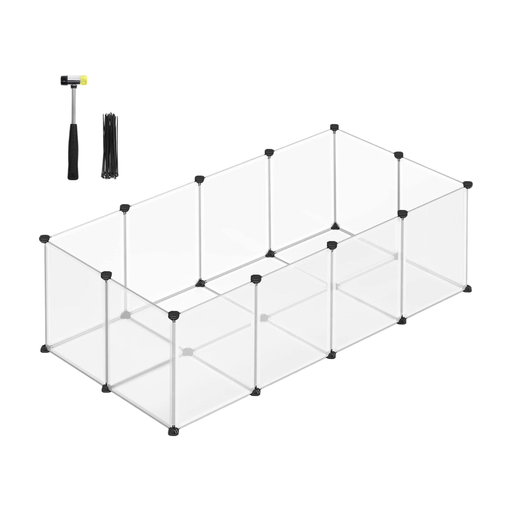
Why This Fits Their Persona: Ideal for owners looking for a clean and floor-friendly solution for their living room or other indoor spaces. Perfect for guinea pigs or hedgehogs that don't jump high.
The integrated floor panels directly solve the problem of hygiene and floor protection. There are no gaps for dirt to fall through, and cleaning is simplified.
The seamless construction of the plastic panels prevents chewing. The system is modular and can be expanded with additional sets to increase the area.
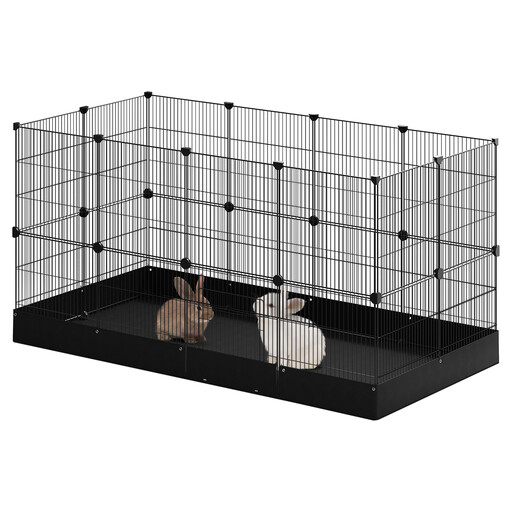
Why This Fits Their Persona: Designed for owners of agile animals like rabbits, ferrets, or chinchillas, where escape-proofing is the top priority.
At a height of 71 cm, it is escape-proof for most small animals. The narrow bar spacing of 1.5 cm reliably prevents animals from getting stuck or escaping.
The robust metal construction is durable and provides good ventilation. An included Oxford fabric mat serves as an enclosure with a floor and protects the underlying surface.
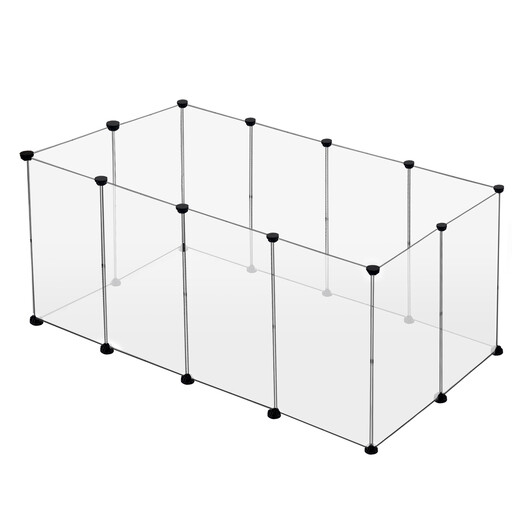
Why This Fits Their Persona: For pet owners who need maximum flexibility to create a very large or custom-shaped rabbit run while keeping a clear view of their animals.
This system solves the problem of rigid, inflexible enclosures. Thanks to the large panels (50x70 cm) and the modular design, it can be freely adjusted in height, width, and length.
The transparent plastic walls allow for constant observation of the animals. With a height of up to 100 cm, it is also suitable for very active rabbits or small puppies.
We have compiled a complete, up-to-date list of products that fully meet these strict selection criteria and safety standards.
Animal welfare organisations recommend a minimum floor space of 1 m? for two guinea pigs, though more space is always better. A modular enclosure measuring 140 x 70 cm provides a good foundation and sufficient space for movement, feeding stations, and hiding spots.
Both materials have their pros and cons. Metal grids offer better ventilation and are often more robust against chewing attempts. Plastic panels prevent bedding from falling out and are easy to clean. The choice depends on the animal species and personal priorities (e.g., cleaning effort vs. ventilation).
Most of the modular enclosures presented here are primarily designed for indoor use. According to manufacturer specifications, prolonged sun exposure and rain can make the plastic connectors brittle. For permanent outdoor use, special, weather-resistant outdoor runs made of galvanised metal are more suitable. However, they can be used for short, supervised outings in the garden on a dry day.