
Lieferung heute & morgen

Qualitätsgarantie
App herunterladen
Kategorien
Optimising storage in small bathrooms presents a significant functional challenge. A limited footprint demands intelligent solutions to maintain order and accessibility without compromising on space. The selection of suitable bathroom furniture for small spaces depends on a careful analysis of the available area and your specific storage requirements. Key strategies include vertical storage concepts, niche solutions, and multifunctional furniture.
This article analyses various types of small bathroom cabinets based on their construction, materials, and functional features to help you make an informed decision.
Your choice of a bathroom cabinet should be based on objective criteria. The following points outline the key parameters for selecting the right storage solution.
The cabinet's design is a key factor in how efficiently the available space is used. Common types for small bathrooms include:
The bathroom is a high-humidity environment. The choice of material is therefore crucial for the furniture's longevity.
Precise measurement of the intended space is essential. Consider not only the width and depth but also the height, especially for tall cabinets or over-the-toilet units. Also, check the clearance needed for opening doors and drawers.
Based on the criteria above, we present three distinct product concepts, each designed for specific requirements for storage in a small bathroom.
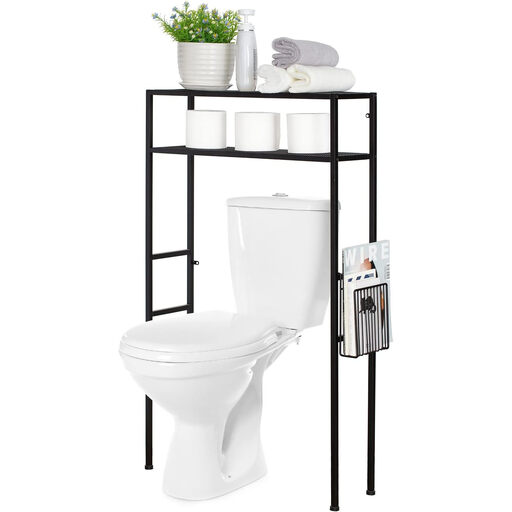
Why we're featuring this product: This over-the-toilet shelf is an example of a straightforward and flexible solution. The powder-coated metal construction is designed for durability in a humid bathroom environment. Its freestanding design requires no wall mounting and efficiently utilises the vertical space above the toilet.
Advantages:
Who it's for: This model is suitable for those in rental properties or anyone looking for a quick, non-permanent storage solution. It is ideal for users who prefer an open shelving system and appreciate a modern-industrial design.
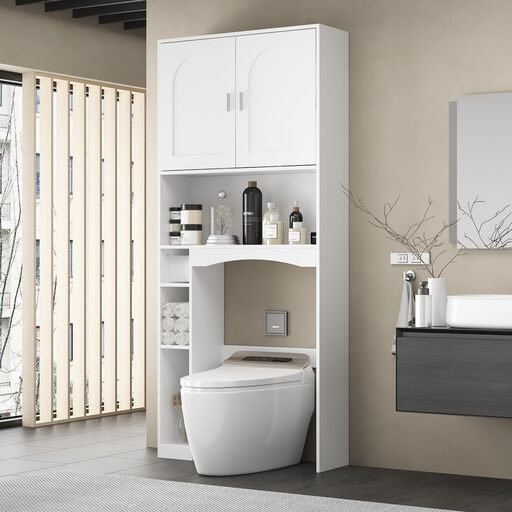
Why we're featuring this product: The over-the-toilet cabinet from Caldion combines open and closed storage. This hybrid solution allows frequently used items to be kept within easy reach, while other articles can be stored out of sight behind doors. At 180 cm tall, it offers substantial storage capacity.
Advantages:
Who it's for: This product is aimed at users with greater storage needs who prefer a structured organisation. It is an excellent choice for families or individuals who want a classic, enclosed look for their bathroom cabinet.
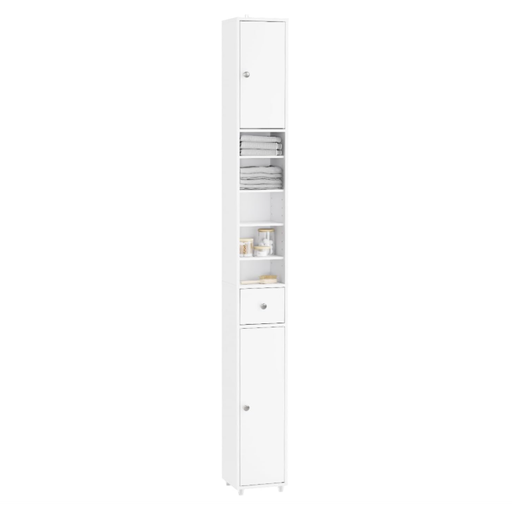
Why we're featuring this product: This narrow bathroom cabinet from SoBuy is designed as a classic niche cabinet. With a width of just 20 cm, it fits into the smallest gaps that would otherwise go unused—for example, next to the sink, toilet, or washing machine.
Advantages:
Who it's for: This model is the perfect solution for bathrooms with very limited space where narrow, unused niches exist. It is ideal for individuals aiming for maximum vertical space utilisation and seeking a discreet, enclosed storage solution.
The products featured cover specific use cases. If none of these models perfectly match your spatial constraints or design preferences, a broader selection of solutions may be helpful. Different dimensions, materials, and configurations offer further opportunities to optimise your bathroom.
Discover additional models and configurations in our Bathroom Toilets category.
1. How can I effectively create more storage space in a small bathroom? The most effective method is to utilise vertical space. Tall bathroom cabinets, narrow niche cabinets, or an over-the-toilet shelf make use of the room's height without occupying valuable floor space. Wall-mounted cabinets also make the room appear larger.
2. What is the best material for a bathroom cabinet? Materials with high moisture resistance are crucial. These include powder-coated metal and MDF boards with a high-quality, seamless seal (lacquer or melamine resin). Ensure that edges and joints are well-finished to prevent moisture penetration.
3. Does a bathroom cabinet always need to be fixed to the wall? Not necessarily. Freestanding shelves and cabinets, especially lower models or dedicated over-the-toilet units, often do not require wall mounting. However, for tall and narrow cabinets (tallboys), an anti-tip device fixed to the wall is strongly recommended for safety to ensure stability.