
Lieferung heute & morgen

Qualitätsgarantie

Willkommens-Angebote freischalten: KOSTENLOSE Lieferung | Bis zu 80 % RABATT | Kostenlose 30-Tage-JoyPlus-Testphase
App herunterladen
Designing a small bathroom or powder room to be both functional and stylish presents a unique challenge. The limited area demands thoughtful solutions where every element counts. The sink plays a central role: it must be compact without sacrificing usability and blend harmoniously into the overall aesthetic. This guide introduces various options and offers direction to help you find the perfect sink for a small bathroom.
The decision for a specific model depends on several factors. The following aspects will help you systematically narrow down your options and make an informed choice.
The mounting method has a significant impact on the sense of space and the use of the area beneath the basin.
Ceramic has established itself as the standard material for bathroom sinks. A ceramic sink offers a range of benefits that make it particularly suitable for daily use:
The shape of the sink should suit both the available space and the desired style. For instance, a rectangular vessel sink can be placed flush in a niche or corner, making optimal use of the space. Oval or round basins often appear softer and can feel less bulky in a narrow room. Models like a sink without an overflow support a particularly minimalist aesthetic but require a non-closable drain assembly.
Based on criteria of functionality, design, and space-saving features, we have compiled a selection of models ideal for small bathrooms and powder rooms.

Why it stands out: This oval vessel sink combines a timeless shape with modern features. The glossy glaze and soft lines lend an elegant touch to any bathroom, while its compact dimensions make it ideal for smaller vanities.
Features:
Who is it for?: Ideal for users who prefer a classic, elegant design and want to mount the sink on an existing or new countertop. The flexibility in faucet choice is an added advantage.
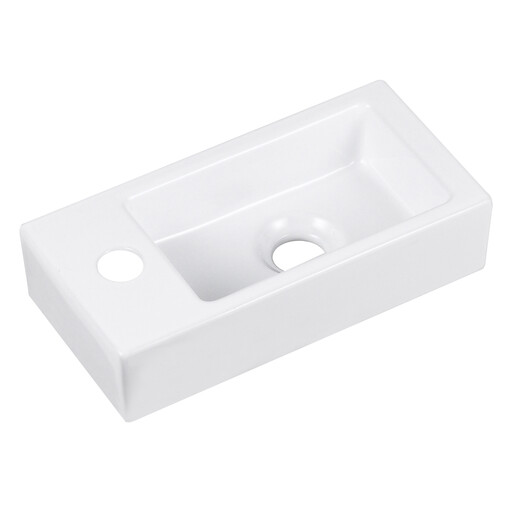
Why it stands out: This model is the definition of a space-saving small hand basin. With its extremely shallow depth and wall-mounted installation, it is specifically designed for very narrow powder rooms or niches. The side-positioned faucet hole (left side) is a clever detail that maximizes usability in the smallest of spaces.
Features:
Who is it for?: Perfect for homeowners and renters looking for a solution for a very small powder room where every centimetre counts. The asymmetrical design is both practical and a modern accent.

Why it stands out: With its clean, rectangular form and rounded edges, this vessel sink embodies a modern yet functional design. It offers a generous basin depth with compact exterior dimensions, fitting seamlessly into various interior styles.
Features:
Who is it for?: An excellent choice for anyone seeking a modern sink with a clean-lined aesthetic. It is suitable for both the main bathroom and a stylish powder room and pairs well with a vanity unit.
Choosing the sink is the first step. The right faucet completes the look and is crucial for functionality. Whether it's a tall vessel faucet for a countertop sink or a compact faucet for a small hand basin, the right choice will enhance your bathroom's style.
Discover a selection of high-quality faucets in our Designer Kitchen Faucets category. Find the perfect complement for your new sink and other areas of your home.
There are especially compact models for powder rooms. A small hand basin can be as narrow as 35 to 40 cm wide and only 20 to 25 cm deep. Such models are specifically designed to fit into very tight spaces without compromising the basic function of hand washing.
The term "sink" refers to the actual bowl or basin that holds water. A "vanity" is a more comprehensive term that usually means the combination of the sink and its accompanying furniture (under-sink cabinet) or support surface. A vanity for a small bathroom often integrates the sink seamlessly and provides additional storage space.
No, the choice of faucet is not directly affected by the absence of an overflow. What is important, however, is the drain assembly. A sink without an overflow must be fitted with a non-closable drain valve. This ensures that the basin cannot accidentally overflow if the faucet is left running. The faucet itself can be chosen freely based on design and function.