People with limited kitchen space
If you make single-serving kiwi smoothies, compare the appliance’s dimensions and cup size with the space you have available. Bosch, for example, gives the MMB2111S dimensions as 367 × 122 × 126 mm.


For a single serving made with fresh kiwi and liquid, a compact blender with a matching blending cup is a sensible place to start. Above all, check that its dimensions and blade assembly are right for your kitchen and easy to clean. If you often use frozen or harder ingredients, look for an explicit suitability statement for the specific model; Bosch, for example, lists frozen fruit as suitable for the MMB2111S. A rechargeable blender is worth considering if you really want to blend without a mains socket, although the WMF KÜCHENminis Mix on the go has a 300 ml container.
If you make single-serving kiwi smoothies, compare the appliance’s dimensions and cup size with the space you have available. Bosch, for example, gives the MMB2111S dimensions as 367 × 122 × 126 mm.
If you use frozen fruit or harder ingredients as well as fresh kiwi, check the suitability of the specific model. Bosch explicitly lists frozen fruit as suitable for the MMB2111S.
If you want to drink your smoothie on the go, check the cup and lid. If you also want to blend without a mains socket, battery operation, charging requirements and container size are key; WMF lists the KÜCHENminis Mix on the go as having a 300 ml capacity.
If you want to make kiwi smoothies in a small kitchen, the key things to consider are the space available, your ingredients, cleaning and how you plan to take your smoothie with you.
| Consideration | What to check before buying | Who it matters most to |
|---|---|---|
| Counter space and serving size | The dimensions of the appliance when ready to use and the usable cup capacity; make sure it will also fit beneath your shelves. | If counter space is limited, I want to know whether the appliance will fit beneath the shelf and whether the cup is big enough for my serving. Around 36% of consumers put counter space and serving size first. |
| Ingredients and blending task | Check what the manufacturer says about frozen fruit or harder ingredients for the exact model, rather than relying on the wattage alone. | If I want to combine kiwi with frozen fruit, I need to know that the specific model is suitable. That’s why around 29% of consumers prioritise the ingredients they want to blend. |
| Cleaning | Check the instructions for cleaning the cup, lid and blade assembly separately; the guidance may vary for each part. | If I make smoothies often, I want to know which parts are easy to clean after each serving and which are dishwasher-safe. Around 21% of consumers put cleaning first. |
| Taking it with you and power supply | Decide whether you only want to take the finished drink with you or actually blend without a mains socket; check the cup capacity and charging requirements. | If I want to drink my smoothie on the go or make it away from the kitchen, the features need to suit the way I plan to use it. Around 14% of consumers prioritise taking their smoothie with them or blending on the go. |
Wattage alone won’t tell you what texture your kiwi smoothie will have. Information about suitable ingredients and blending capabilities applies to the specific model.
Start by choosing based on your ingredients and the space available. If you want to use frozen fruit, check whether the manufacturer lists it as suitable for the specific model.
A blender with a drinking cup may let you take the finished drink with you, but that doesn’t mean you can blend on the go. These are two different ways of using a blender.
Think about whether you only want to carry the finished drink or actually blend without a mains socket.
The number of containers, accessories and cleaning instructions depend on the exact model variant.
Before ordering, compare the full model number, what’s included and whether the accessories are compatible.
The models listed include compact blenders with drinking cups and a rechargeable mini blender.
The Mix & Go Steel 23472-56 is a compact smoothie maker supplied with cups for taking your drink with you.
The VitaPower Serie 2 MMB2111S is a mini jug blender with a travel cup.
The Daily Collection HR2602/00 is a mini jug blender for smoothies and shakes.
The Original 600 NB606DG is described as coming with two travel cups in different sizes.
This Joybuy selection features portable blenders for smoothies on the go. Some models are rechargeable, so you can also use them to blend without a mains socket.
 Image unavailable
For smoothies on the go; the product description also lists frozen fruit and ice as suitable ingredients.
710 ml travel cup; three preset automatic programmes; removable, dishwasher-safe parts according to the product description.
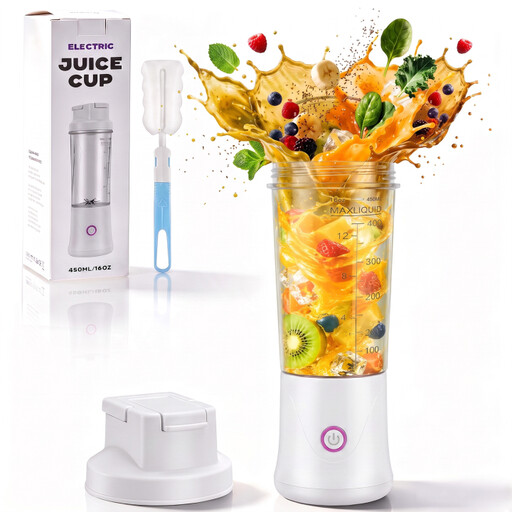 Image unavailable
For smoothies or shakes you want to make at home or on the go.
652 ml cup; six-blade system; the product description mentions a matching lid.
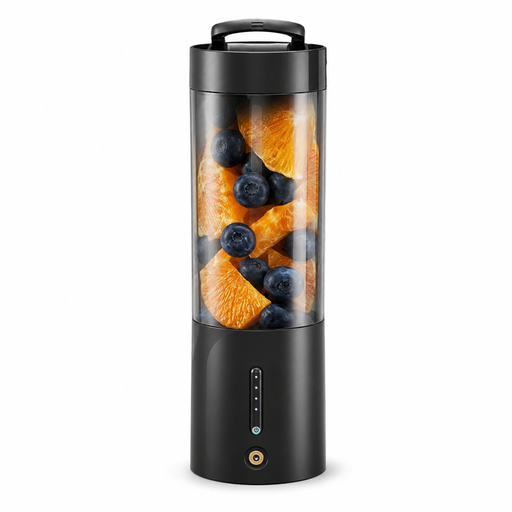 Image unavailable
For a single serving and blending without a mains socket; the product description lists soft fruit and smoothies as intended uses.
450 ml PCTG container; battery and magnetic charging port according to the product description.
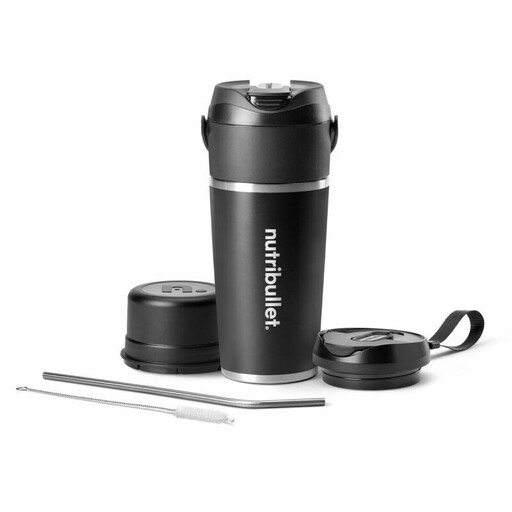 Image unavailable
For smoothies on the go; according to the product description, it is also designed for hard and frozen ingredients.
590 ml cup, rechargeable operation and USB-C charging; the model is described as coming with a drinking lid and straw. Do not blend hot liquids; continuous operation is limited to one minute at most.
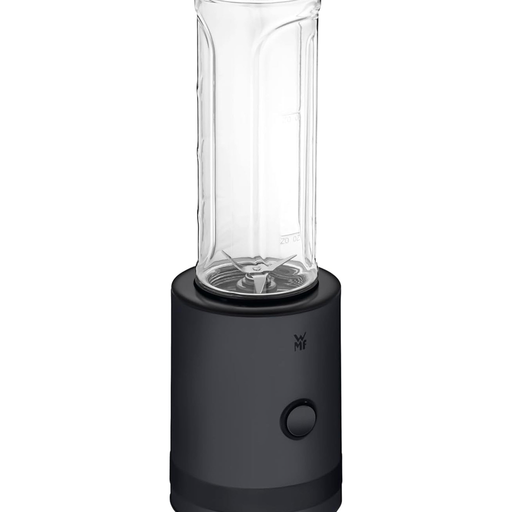 Image unavailable
For smoothies you want to take with you in the blending and drinking containers; the set includes two containers with tightly closing lids.
300 W and four-blade knife according to the product description. Do not use continuously for more than one minute; liquids above 60 °C should not be used.
You can halve the kiwi and scoop out the flesh, or peel and chop it. The German Federal Centre for Nutrition describes halving and scooping it out as a simple option; the Braun recipe page gives a kiwi and orange smoothie made with water as an example.
It depends on the model and the individual part. For the nutribullet NB606DG, the manufacturer describes the cups and attachments as dishwasher-safe, but recommends washing the unscrewed blade with soap and water. No dishwasher suitability is specified for the WMF KÜCHENminis Mix on the go; always follow the instructions for your model variant.
Your statutory rights against the seller are separate from any voluntary guarantee offered by the manufacturer or retailer. The consumer advice centre recommends keeping these terms distinct. When buying replacement cups and seals, check the exact model number and the guarantee terms.
The CE marking is the manufacturer’s declaration that the product meets the relevant EU requirements; it is not an independent EU quality mark. The European Commission explains that the marking is required when applicable harmonised EU rules specify it.
Check the manufacturer’s guidance on how the specific cup is intended to be used. The German Federal Institute for Risk Assessment explains the requirements of Regulation (EC) No 1935/2004 for materials that come into contact with food during normal or foreseeable use; plastics are also subject to Regulation (EU) No 10/2011. A material description alone does not prove that an individual cup complies with the requirements.