A small group baking together
If you’re planning a loaf for just a few people, first check which small loaf size the specific model supports.


For a small group baking together, the key questions are which smallest loaf size the machine explicitly supports and whether you want to shape the dough yourselves during the session. Panasonic lists around 400 g for the SD-PN100, while the Gastroback and Tefal models considered here offer a 500 g size. A full bread programme can take several hours, so a dough programme followed by shaping and baking in the oven may be a better fit for a shared activity.
If you’re planning a loaf for just a few people, first check which small loaf size the specific model supports.
If you want to shape the dough together, you can use a dough programme and then work it by hand.
If you’re planning to try other recipes or bake larger loaves after your first session, make sure the available programmes and loaf sizes will suit your needs.
First decide how small you want the loaf to be, and whether you’d like to shape it together or wait for a finished loaf. Then you can weigh up other loaf sizes, recipes and the work involved after baking.
The figures below show the main priority for consumers who want to bake a small loaf together.
| Priority | What to check before buying | Who it matters most to |
|---|---|---|
| Right-sized loaf | Check the smallest loaf size specifically listed, and look for guidance on using smaller quantities of dough. | If the loaf needs to serve just a few people, I’d start by looking for the smallest suitable setting. Around 36% of consumers put loaf size first. |
| Time together | Check how long the recipe programme takes, and distinguish between a dough programme, a timer and a full baking programme. | If everyone wants to help shape the dough, a dough programme followed by hands-on preparation is one option. Around 29% of consumers prioritise spending time together and fitting the session into their schedule. |
| More recipes to try | Check that the available loaf sizes and programmes match the recipes you have in mind. | If you’d like to bake other types of bread later, look for suitable sizes and programmes. Around 21% of consumers see the range of recipes they can make later as their main priority. |
| Cleaning and effort | Consider the care instructions for the bread pan and kneading paddle, as well as the ingredients and electricity required. | If the work involved after baking is a deciding factor for me, I check how easy the individual parts are to clean. Around 14% of consumers put cleaning and ongoing effort first. |
The Rommelsbacher BA 550 lists loaf sizes of 700 g and 900 g. Rommelsbacher also says that smaller loaves are possible, as long as there’s enough dough in the pan for the kneading paddle to reach it.
If you need a predictable small loaf size, choose a model with a setting specifically designed for it, and follow the manufacturer’s instructions when using smaller quantities.
A full programme can take several hours. A timer lets you schedule when it starts, but it won’t shorten the programme itself.
Check the instructions for how long your chosen recipe takes. If you want to shape the dough together, a dough programme followed by baking in the oven may be a better fit.
The rated power alone doesn’t tell you how much energy a complete baking cycle uses. Ingredients and electricity are also part of the ongoing cost.
If running costs matter to you, compare the energy use of complete baking cycles under similar conditions.
The SD-PN100 is designed for a small loaf.
The BA 550 offers a range of recipes and the option to bake smaller quantities of dough.
The Design Bread Maker Advanced 42823 combines a 500 g size with other selectable loaf sizes.
The Pain Delice PF240E starts at a listed loaf size of 500 g.
The BBA 3774 is a comparison model with a large bread pan.
This selection includes bread makers for a range of recipes and loaf sizes. Check the smallest setting on each model to see if it suits the loaf you have in mind.
 No image available
If you’d like to choose between several loaf sizes, check in advance which setting is intended for a small loaf.
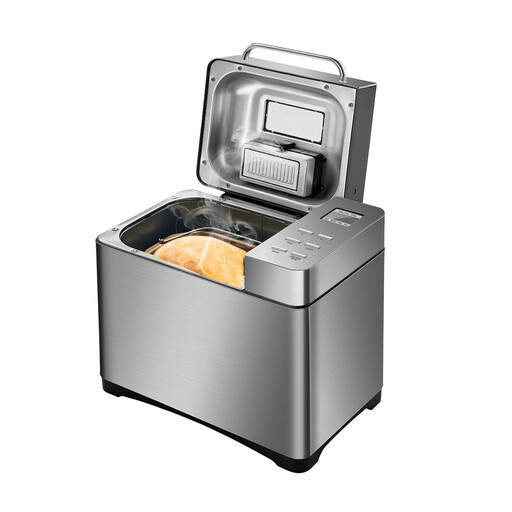
The product title lists 650 W, three loaf sizes, three crust settings, a 15-hour timer, a one-hour keep-warm function and a non-stick bread pan. The stated capacity is 2.2 lbs.
 No image available
The selectable 500 g size is worth noting if you want to make a small loaf; check that it suits the recipe you’ll be using.
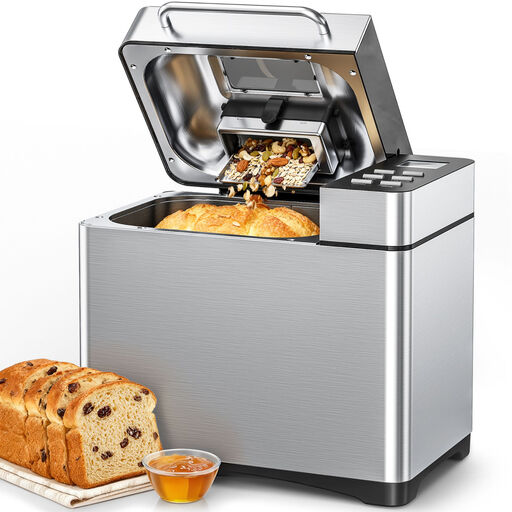
The product lists three loaf sizes, three crust settings, 19 programmes, an ingredient dispenser and a 15-hour timer. The stated capacity is 1 kg.
 No image available
If extra recipe options matter to you, compare the listed programmes and features with the baking sessions you have planned.
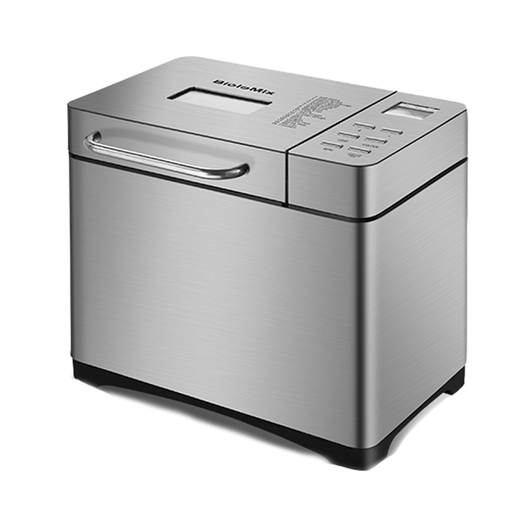
The model is listed with 17 automatic programmes, an ingredient dispenser for fruit and nuts, a dual heating-tube baking system, a one-hour keep-warm function and a 15-hour delay start. Check that it offers a suitable small loaf size for your recipe before choosing it.
No. The weight shown for a bread mix refers to the ingredients, while the loaf size refers to the finished bread. Rommelsbacher explicitly distinguishes between the quantity of a bread mix and a loaf weighing up to 900 g when baked. Check the recipe quantity against the machine setting in the instructions for your specific model.
Before you meet, check the instructions to see how long the programme takes for your chosen recipe. CHIP notes that baking in a bread maker can take several hours. A dough programme lets you save the shaping for your group session; a timer can delay the start, but it won’t shorten the programme.
According to Rommelsbacher, it’s possible as long as there’s enough dough in the pan for the kneading paddle to reach it. The listed size settings are 700 g and 900 g; there’s no dedicated 400 g setting. Follow the instructions when making smaller quantities.
A programme name alone doesn’t tell you whether the preparation is suitable for that person. Check the ingredients and avoid possible cross-contamination from stored food and kitchen equipment; the German Coeliac Society highlights this as part of everyday gluten-free food preparation.
The Verbraucherzentrale generally recommends storing bread at room temperature in a dry place away from light, such as a bread bin. You can also freeze bread and defrost it in portions as needed. Any bread with visible mould should be thrown away in its entirety.