For a loaf of around 400 g, an obvious choice is a machine specifically designed for this size, such as the Panasonic SD-PN100. A review by Technik zu Hause gives a flour quantity of 200–280 g for this model, so the recipe and amount of flour need to be right for the machine. For around 500 g, consider models with a dedicated 500 g setting, such as the Tefal PF2101 or Unold Backmeister Bernd. Allow for the programme time and cooling time: a delay timer lets you set a later start, but it doesn’t shorten the baking process.
Who can benefit from a small bread maker?
Classes making individual portions
If you’re planning to bake a small loaf each time, match the recipe quantity to the loaf size specified for the model you’re considering. Panasonic gives an approximate loaf weight of 400 g for the SD-PN100, while Tefal and Unold each offer a 500 g setting.
Classes with a set time slot
If you need to fit kneading, proving, baking and cooling into a lesson, check the programme time for your chosen recipe. A delay timer changes when the programme starts, not how long it takes.
Classes for trying out recipes
If you’re teaching a range of recipes or techniques, look for suitable bread and dough programmes, or programmes you can customise. Rommelsbacher, Unold and GRAEF list these features on specific models.
What should you look for when buying?
First, match your desired finished loaf weight to the recipe and quantity of ingredients. Then check that the programme and timings suit the way your class is run.
| What matters |
What to check before buying |
Who is this important to? |
| A suitably small loaf |
Distinguish the finished loaf weight from the weight of the flour or bread mix; check the recipe against the instructions for the specific model. |
If I’m planning a small loaf for each person, I want to make sure the recipe quantity matches the stated loaf size. Around 36% of consumers put getting the right small loaf size first. |
| Fitting the class schedule |
Check the programme time for the recipe, and allow extra time to remove and cool the loaf. |
If there’s only a set time slot available, the loaf needs to be ready in time. Around 29% of consumers prioritise making sure the process fits the class schedule. |
| Programmes for the learning process |
Compare the programme stages with what the recipe requires; if you’re using a dough programme, allow time for shaping and baking afterwards. |
If I want to vary recipes or techniques during the class, the right function matters more than simply having lots of programmes. Around 21% of consumers prioritise flexibility for recipes and learning. |
| Space and cleaning |
Check the appliance dimensions, including room to operate it; consider whether the bread pan and kneading paddle can be removed. |
If worktop space in the classroom is limited, or the machine needs cleaning between batches, its footprint and ease of use matter. Around 14% of consumers prioritise space, cleaning or the purchase price. |
Common buying and planning mistakes
-
Confusing the bread mix with the finished loaf
500 g of bread mix won’t automatically make a finished loaf weighing 500 g. Rommelsbacher says smaller loaves can only be made in the BA 550 if there’s enough dough in the pan for the machine to knead properly.
Compare the weight of the mix and other ingredients with the stated loaf size and the instructions for the specific model.
-
Assuming the delay timer shortens the baking time
A delay timer sets when the programme starts. It doesn’t shorten the programme or the time the bread needs to cool after baking.
Check how long the chosen programme takes, and allow time to remove and cool the loaf during the class.
-
Assuming that more programmes mean a model suits your recipes
Bread, dough and customisable programmes each do different jobs. A dough programme on its own won’t shape and bake a finished loaf.
Decide which steps you want participants to do themselves, then check these against the programmes listed in the model’s instructions.
Key brands at a glance
Panasonic
The SD-PN100 is an option for loaves of around 400 g, while the SD-PMC100 is another mini model with loaf sizes up to 500 g.
- Panasonic lists 18 programmes and a 13-hour delay timer for the SD-PN100.
- A review by Technik zu Hause gives a flour quantity of 200–280 g for bread or cake. Larger recipes for a class therefore won’t fit this quantity range without adjustment.
Tefal
According to Tefal, the Pain Doré PF2101 has a 500 g setting as well as larger loaf sizes.
- Tefal lists 500, 750 and 1,000 g loaf sizes, a dough programme and a delay timer of up to 15 hours.
- This model doesn’t have a stated setting for around 400 g. A delay timer doesn’t remove the need to check how long the programme takes.
Unold
The Backmeister Bernd offers a 500 g setting alongside larger loaf sizes you can select.
- Unold lists 500, 750 and 1,000 g loaf sizes, a customisable programme and a removable bread pan for this model.
- These details apply to the Backmeister Bernd and shouldn’t be assumed to apply to other Backmeister models.
GRAEF
The BA806 is another option with a 500 g setting.
- GRAEF lists 500 and 750 g loaf sizes and 36 programmes for the BA806. Baking without the kneading paddle is a manufacturer’s claim.
- The number of programmes and the features on offer don’t, by themselves, prove that every recipe for your class will suit this model.
Rommelsbacher
The BA 550 may suit classes where a customisable process or automatic ingredient dispensing is important.
- Rommelsbacher lists 700 and 900 g settings, a freely programmable programme and an ingredient dispenser.
- There’s no selectable 400 or 500 g setting. Rommelsbacher says smaller loaves are only possible if there’s still enough dough for kneading.
Explore bread makers for your class
These bread makers may suit classes where different loaf sizes, programmes or automatic ingredient dispensing are important.
 No image available
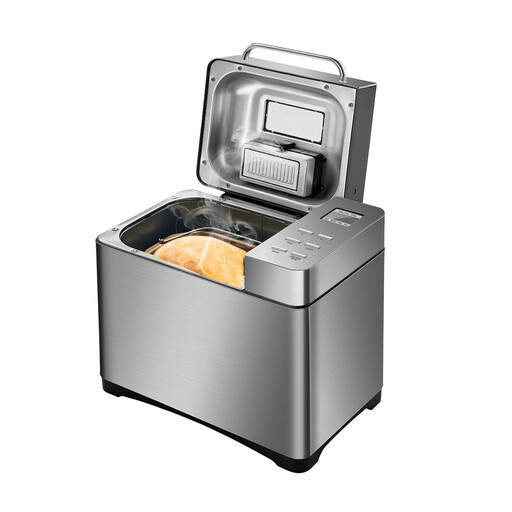
Bread maker, 650 W, up to 2.2 lb
May suit classes where you want to try different loaf sizes and programmes.
19 programmes, three browning levels and three loaf sizes. Programmable 15-hour timer and one-hour keep-warm function.
View at Joybuy
 No image available
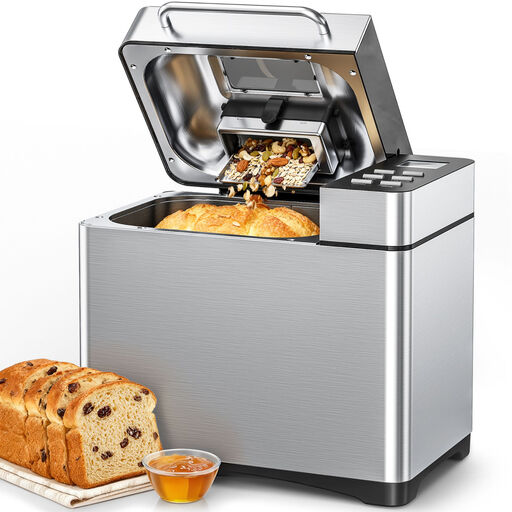
HavenWell bread maker, 500–1,000 g
May suit a class if the recipe is designed for one of the stated loaf sizes and you want ingredients to be added automatically.
Selectable loaf sizes: 500, 750 and 1,000 g. 19 programmes, automatic ingredient dispenser and 15-hour timer.
View at Joybuy
 No image available
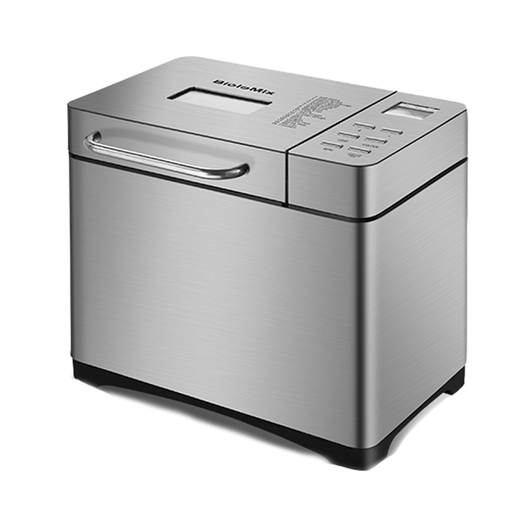
BioloMix BBM013 bread maker
May suit classes featuring different recipes or automatic dispensing of fruit and nuts.
17 programmes, including bread, gluten-free bread, cake and dough. Automatic fruit and nut dispenser and 15-hour delay timer.
View at Joybuy
Frequently asked questions
Is 500 g of bread mix enough for a 500 g loaf?
No. The weight of the dry mix isn’t the same as the weight of the finished loaf. Rommelsbacher describes using half a 500 g pack of bread mix in the BA 550; the right setting and other ingredients depend on the mix and the machine’s instructions.
How do I fit the baking time into a class?
Check how long the specific programme takes, then allow extra time to remove and cool the loaf. A delay timer moves the start time, but doesn’t make the baking programme any shorter.
What should I consider when choosing a spot for the machine in the classroom?
As well as measuring the space for the machine, allow room to open the lid and follow the clearances given in the instructions for your chosen model. For the SD-PN100, Technik zu Hause highlights the importance of a stable worktop and clear space above the machine.
Is a dough programme the same as a bread programme?
No. A dough programme prepares the dough. If the loaf then needs to be shaped or baked separately, you’ll need to allow time for those steps in the class too. Check the programme stages in the instructions for the specific model.
How should I store leftover bread from the class?
The Verbraucherzentrale recommends storing bread at room temperature, for example in a bread bin. If bread has gone mouldy, the whole loaf should be thrown away.


