
Lieferung heute & morgen

Qualitätsgarantie

Willkommens-Angebote freischalten: KOSTENLOSE Lieferung | Bis zu 80 % RABATT | Kostenlose 30-Tage-JoyPlus-Testphase
App herunterladen
Finding a compact bean-to-cup machine that brews excellent coffee while fitting into a small kitchen is a challenge. The market is filled with appliances that make big promises but often fail on the fundamentals. Many buyers only realise after a few months that their supposed bargain creates more work than enjoyment. This guide shows you what to look for to avoid the common pitfalls and make an informed decision.
Manufacturers often advertise a long list of features, but the devil is in the details. Two problems in particular frequently lead to disappointment with compact models:
Don't be dazzled by marketing terms. Instead, focus on these three technical features that determine the quality and longevity of your machine.
A good coffee machine with a grinder should have a conical or flat burr grinder made of ceramic or hardened steel. These grind the beans evenly and gently. Pay attention to the following points:
The brew group is where hot water meets the coffee grounds. A removable brew group, accessible from the side or front, is a decisive advantage. You can simply rinse it under running water to completely remove coffee oils and residue. This not only ensures consistently good taste but also significantly extends the machine's lifespan.
A fully automatic espresso machine needs constant pressure to force water through the finely ground coffee powder. While many manufacturers advertise 15 or even 20 bars, around 9 bars is ideal for extraction at the brew head. More important than the maximum pump pressure is the machine's ability to maintain this pressure and a stable brewing temperature (approx. 90–95 °C) throughout the entire brewing process.
Here are some models that are suitable for different user profiles based on their technical specifications and design.
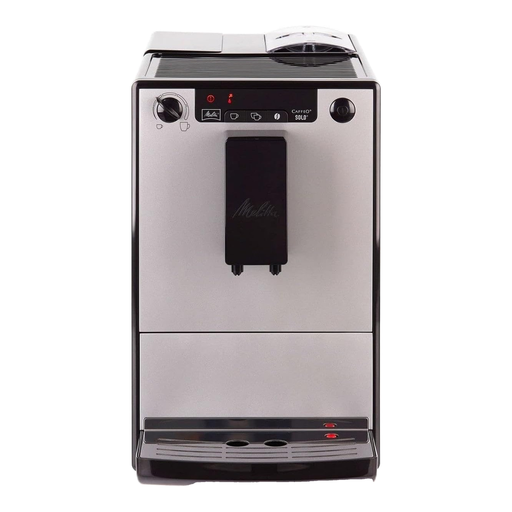
Why This Fits Their Persona: Ideal for coffee lovers who appreciate pure espresso and café crème and don't need a milk system. At just 19 cm wide, this small bean-to-cup machine fits into the tightest kitchenette or home office.
The Melitta Caffeo Solo features a removable brew group for straightforward and thorough cleaning. The integrated steel conical burr grinder ensures a consistent grind, avoiding the drawbacks of cheap blade grinders.
Focus on the essentials: excellent coffee without unnecessary features. The Aroma-Extraction-System pre-wets the coffee before brewing, leading to more intense flavour development.
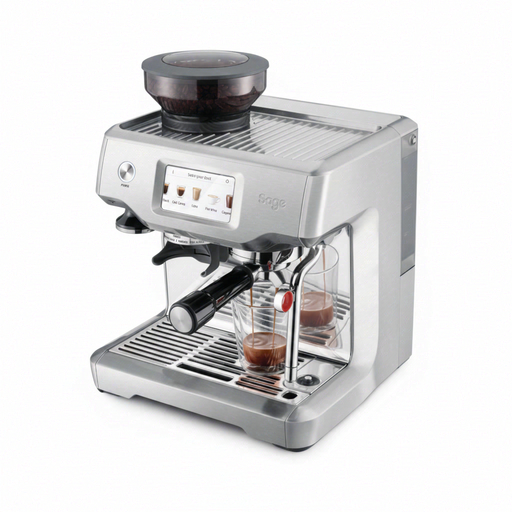
Why This Fits Their Persona: For users who want a premium feel, intuitive touchscreen operation, and barista-quality results at home. The machine combines the features of a portafilter machine with the convenience of a fully automatic one.
The integrated conical burr grinder with dose control delivers the exact right amount of coffee at the touch of a button, ensuring maximum aroma. This prevents the problem of unevenly ground coffee common in lower-quality machines.
The innovative ThermoJet heating system reaches the optimal extraction temperature in just 3 seconds. The automatic milk frother allows for easy preparation of milk-based coffees with silky microfoam.
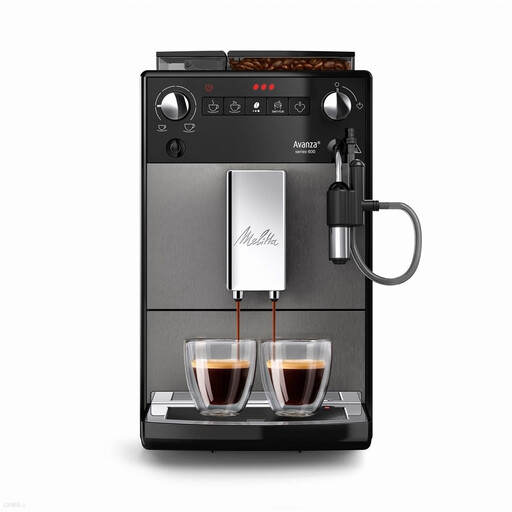
Why This Fits Their Persona: Perfect for households where both black coffee and milk specialities are in demand, but space is limited. At only 20 cm wide, this bean-to-cup machine with a milk system is extremely space-saving.
This model bypasses both main pitfalls: it has a quiet, 5-level adjustable grinder and a fully removable brew group. The automatic cleaning and descaling programs further simplify maintenance.
Despite its compact design, the machine offers an XL water tank and bean hopper, reducing the need for frequent refills. The one-touch function and intuitive LED display make operation very simple.
We have compiled a complete, up-to-date list of products that fully meet these strict selection criteria and German safety regulations.
The frequency of descaling depends on the water hardness in your area and how often you use it. Most modern machines indicate when descaling is necessary. As a rule of thumb, with average use and medium water hardness, the machine should be descaled every two to three months. Using a water filter in the tank can extend the descaling intervals.
For a small bean-to-cup machine, a conical or flat burr grinder made of steel or ceramic is the right choice. These grinders guarantee a consistent grind size, which is crucial for the quality of espresso and coffee. Avoid machines where the grinder type is not specified, as they may be using inferior blade grinders.
A bean-to-cup machine without a milk system specialises in preparing black coffee and espresso. For a cappuccino or latte macchiato, you need frothed milk. You can prepare this separately with an external electric milk frother. This even offers the advantage of easier cleaning compared to integrated milk systems.