For a small desk, an adjustable monitor around 24 inches is a sensible starting point, provided the stand and viewing distance work for you. A 16:10 aspect ratio gives you more vertical pixels than 16:9; QHD offers more pixels, though the benefit depends on choosing scaling that keeps text easy to read. USB-C docking is only useful if your laptop, cable, video output and, where relevant, charging requirements are all compatible – the monitor itself won’t make a script run faster.
What matters to different users
Profiling on a cramped desk
You need a screen that’s easy to position alongside your keyboard and computer, and want to check that it will fit on your desk with its stand. Idealo suggests 24-inch monitors as a sensible starting point for small desks, although the dimensions of the individual model remain key.
Comparing code and profiling views
You read longer sections of source code or compare code with profiling views, and want to choose a resolution and scaling that work well with your software. Chrome for Developers describes Flamegraph, Bottom-up and Call Tree views for JavaScript and Node.js CPU profiles.
Using a laptop with docking
You’d like to connect video, peripherals and, where needed, power with as few cables as possible, so you’ll need to check your laptop’s capabilities. Philips describes these connection options for the 24B2G5301/00; the key is whether they’re also compatible with your computer.
What to look for when buying
Start by measuring the space available, including room for the stand. Then check how easy your profiling views are to read, and consider extra ports only if you’ll actually use them.
| Priority |
What to check before buying |
Who it matters most to |
| Desk space and positioning |
Measure the desk’s width and depth, including the stand; Idealo suggests 24 inches as a sensible starting point for small desks. |
When there’s little room alongside my keyboard and computer, I want to be sure the stand and seating position will work together. Around 36% of consumers focus primarily on desk space and positioning. |
| Readability and screen space |
Lenovo lists 1920 × 1200 for the ThinkVision T24d-30, Dell lists 2560 × 1440 for the P2425DE, and BenQ lists 2560 × 1600 pixels for the RD240Q; compare the views using your preferred text scaling. |
If I want to compare code and profiling views with text that’s easy to read, the available screen space needs to work with my scaling. Around 29% of consumers prioritise readability when viewing code and profiling data. |
| Connections and laptop docking |
Check your laptop’s video output, cable and monitor connection separately; if you want to charge your laptop, also consider its power requirements. |
I want to connect my laptop and peripherals with as few cables as possible, but I need to check video output and charging requirements. Around 21% of consumers prioritise connections and laptop docking. |
| Essential features, not unused extras |
Prioritise only the connections, adjustments and display features you’ll actually need; don’t assume extra gaming features are essential for profiling. |
If I mainly use my monitor for coding and profiling, I want to focus on the features I need for those tasks. Around 14% of consumers prioritise essential features over extras they won’t use. |
Assumptions to check before you buy
-
Comparing only the screen size with the available desk width
The stand, desk depth and your seating position all affect whether you can position the monitor comfortably.
Check the monitor’s dimensions, including the stand. Only consider a monitor arm if the mounting points and desk surface are suitable.
-
Assuming USB-C guarantees video output and power delivery
A compatible connection depends on the capabilities of your laptop, cable and monitor.
Check the video output and cable type. If you want to charge your laptop, compare its power requirements with the monitor’s charging output too.
-
Comparing pixel counts without considering aspect ratio and text scaling
A higher pixel count alone doesn’t tell you how many lines will be visible at a text size you find comfortable to read.
Where possible, compare code and profiling views using your preferred scaling and the aspect ratio you plan to use.
Brand models to consider
Dell
The P2425DE is a specific 23.8-inch example, combining QHD and a USB-C hub in a compact screen.
- Dell lists a 2560 × 1440-pixel resolution, IPS and adjustment options for this model.
- You’ll need to check separately whether the hub and text scaling suit your computer and workflow; the specifications don’t demonstrate how it performs for profiling.
BenQ
BenQ presents the RD240Q as a 24.1-inch monitor for programming, with a 16:10 aspect ratio and pivot adjustment.
- BenQ lists a 2560 × 1600-pixel resolution and pivot adjustment for the RD240Q.
- These features don’t demonstrate that it makes script analysis faster or more accurate; check the positioning and text scaling for yourself.
Lenovo
The ThinkVision T24d-30 is an example of an adjustable 24-inch WUXGA monitor for viewing text vertically.
- Lenovo lists a 1920 × 1200-pixel resolution, an adjustable stand and HDMI and DisplayPort connections.
- If you need USB-C video docking, check the connections on the specific model separately.
Philips
The 24B2G5301/00 is a compact Full HD model with USB-C docking.
- Philips describes video, data and power delivery via the dock on this model; its resolution is 1920 × 1080 pixels.
- According to Philips, PowerSensor 2 only works with Windows 11 installed. This limitation applies to the feature, not to all Philips monitors.
LG
The 24BA750-B is a 23.8-inch Full HD example with USB-C and an adjustable stand.
- LG lists a 1920 × 1080-pixel resolution, pivot adjustment and 65 W USB-C power delivery for this model.
- Whether the charging output suits your laptop depends on its requirements; these specifications apply to this model.
Joybuy monitors for coding and profiling
The Joybuy models below are 24-inch monitors that offer a compact starting point for coding and profiling. Check the actual dimensions of the monitor and stand against your desk.
 No image available
KOORUI MB24V29FS4, 24-inch, Full HD, IPS
The stated 24-inch size is a compact starting point when desk space is limited; check the footprint, including the stand.
The product name lists Full HD, IPS, 120 Hz, 5 ms, HDMI and VGA, as well as tilt adjustment and a 100 × 100 mm VESA mount.
Full HD in a 16:9 format offers fewer vertical pixels than 1920 × 1200 in a 16:10 format; Lenovo lists this resolution for the ThinkVision T24d-30.
View at Joybuy
 No image available
KTC H24B9S, 24-inch, Full HD, IPS
The 24-inch size can be a compact starting point for a small desk; measure the footprint, including the stand.
The product name lists Full HD, IPS and 144 Hz; HDMI, DisplayPort and tilt adjustment are also specified.
If you’re looking for more vertical screen space for text, compare your view with a 16:10 monitor; Lenovo lists a 1920 × 1200-pixel resolution for the ThinkVision T24d-30.
View at Joybuy
 No image available
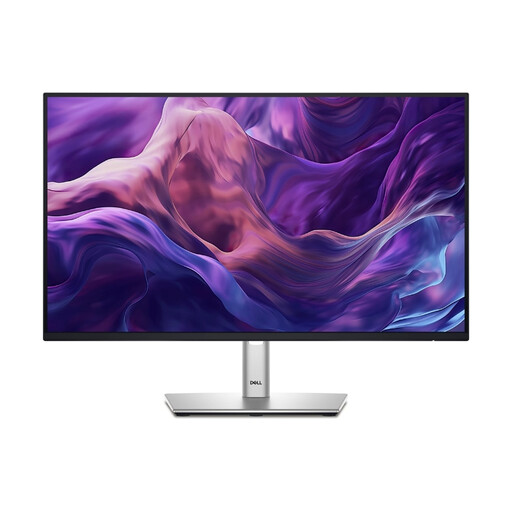
Dell P2425HE, 24-inch, Full HD, IPS, USB-C
This model may suit you if you’re looking for a compact screen with a USB-C connection; check its capabilities against your laptop.
The product name lists 24 inches, Full HD, IPS and USB-C. The charging output needs to meet the requirements of the connected computer.
To get more vertical pixels, compare the Full HD view with a 16:10 model; Lenovo lists a 1920 × 1200-pixel resolution for the ThinkVision T24d-30.
View at Joybuy
 No image available
Acer Vero B247YGbmiqprx, 24-inch
The stated 24-inch size is a compact starting point; check the footprint and screen position at your workstation.
If pivot adjustment is important for viewing longer sections of text, check that the specific version offers the setup you want.
View at Joybuy
 No image available
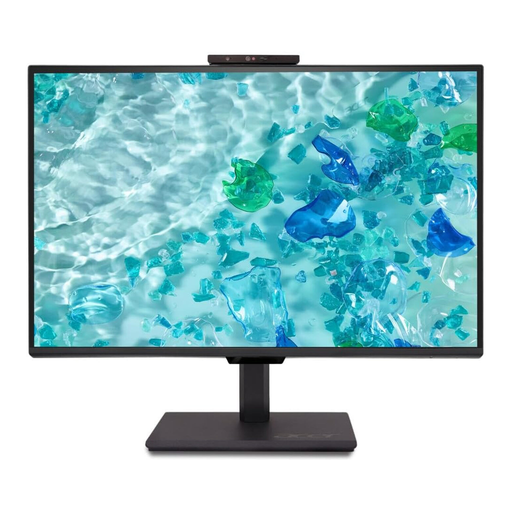
Acer Vero B248YGbemiqprcuzx, 24-inch, with 5 MP IR webcam
This 24-inch model can be a compact starting point if you also want a webcam built into your monitor.
The product name lists a 5 MP IR webcam with a microphone. Check that the screen view and overall dimensions suit your profiling workspace.
View at Joybuy
Frequently asked questions
Will a new monitor make my slow script run faster?
No. A monitor displays analysis results; to investigate what’s making a script run slowly, use a profiler suited to it. Chrome for Developers describes Flamegraph, Bottom-up and Call Tree views for JavaScript and Node.js CPU profiles; this doesn’t tell you anything about other programming languages.
How should I set up a monitor on a small desk?
Check your desk dimensions, including space for the stand, choose scaling that’s easy for you to read, and position the monitor to suit your workspace. The ASR A6 sets out requirements for the workplaces and remote working arrangements it covers; it isn’t a blanket purchasing requirement for every home user.
Is one USB-C port on my laptop enough for a single-cable connection?
Not necessarily. Check video output through the relevant laptop port and make sure you’re using a compatible cable. If you want to charge your laptop, also compare its power requirements with the monitor’s stated charging output.
Who is responsible if a monitor is faulty?
For a consumer purchase from a business seller, your statutory rights are with the seller. EU guidance states that these rights apply for at least two years from receipt of the goods; an additional manufacturer’s guarantee does not replace them. Check the type of contract and the specific offer.


