Image editors with limited desk space
If you’re comparing edits at your only, compact workstation, you’ll need to balance screen width and stand depth against the desk space you can actually use.


Start by measuring the available desk space, including room for the stand and cables, then choose a monitor to suit your output. For images that will mainly be viewed digitally, consider a monitor with documented sRGB coverage. For colour-critical print preparation, you’ll need a suitable wider colour gamut and a clear calibration process. Manufacturer claims about colour coverage are no substitute for measuring your specific device.
If you’re comparing edits at your only, compact workstation, you’ll need to balance screen width and stand depth against the desk space you can actually use.
For a print workflow where a wider colour gamut matters, suitable colour coverage and a repeatable calibration process are key.
If your images will mainly be viewed digitally, an sRGB-focused colour workflow with a suitable monitor profile may matter more than features for a print colour gamut.
| What matters | What to check when buying | Who should pay particular attention? |
|---|---|---|
| Desk space and screen area | Measure the available width and depth, including space for cables, then compare them with the dimensions of the monitor and stand. BenQ lists the SW242Q as 533.2 mm wide and 262.6 mm deep with the stand. | If you need to compare images and control panels on a small desk, every centimetre of space counts. Around 33% of consumers put available space first. |
| Assessing colour for print | Check the colour gamut used in your print workflow and work out how you’ll profile and calibrate the monitor. BenQ lists 99% Adobe RGB and hardware calibration for the SW242Q; EIZO also lists these features, with 99% AdobeRGB, for the CS2400S. | If you’re assessing edits for a print workflow where Adobe RGB matters, you’ll need a suitable colour gamut and a manageable calibration process. Around 27% of consumers prioritise print colour control. |
| Comparing colour for digital output | Check the documented sRGB coverage and set up a suitable monitor profile. ASUS lists 100% sRGB for the PA248CRV; the manufacturer’s claim does not prove that your specific device will remain accurate over time. | If your images will mainly be viewed digitally, you can prioritise a suitable sRGB workflow over print features you won’t use. Around 20% of consumers put digital colour output first. |
| Connecting a laptop | Check that your laptop and cable support video over USB-C, and that the charging power is suitable for your laptop. ASUS lists 96 W for the PA248CRV, BenQ lists 90 W for the SW242Q, and EIZO lists up to 70 W Power Delivery for the CS2400S. | If your small desk doubles as a laptop workstation, a connection with fewer cables can be handy, provided your devices and cable are compatible. For around 20% of consumers, connecting a laptop is the main consideration. |
The diagonal measurement doesn’t tell you whether the stand and cables will fit on your desk.
Measure the available width and depth, then compare them with the dimensions of the specific monitor-and-stand combination.
A stated level of colour coverage isn’t the same as the colour accuracy of your device. For repeatable colour control, you’ll also need to factor in profiling and recalibration.
Choose a colour gamut to suit your intended output, and check how you’ll profile and calibrate the monitor before buying.
You may need a suitable measuring device to recalibrate the monitor.
A compatible connector alone doesn’t confirm that your laptop supports video output or that the charging power will be sufficient.
Check the documented capabilities of your laptop, monitor and cable before relying on the connection.
Depending on the connection, you may also need a suitable cable or a separate power supply.
The ProArt range includes the 24.1-inch PA248CRV, designed for sRGB-focused and mixed creative workspaces.
The 24.1-inch SW242Q from the Creative Pro range is also aimed at colour comparisons for print work where Adobe RGB matters.
The 24-inch ColorEdge CS2400S is a graphics monitor for repeatable colour control, including in photography and print workflows.
The 23.8-inch UltraSharp U2424H is an option for general screen work if you’re not looking for the documented specialist features of a graphics monitor.
The Joybuy options below include 24-inch monitors for compact workspaces. For colour-critical print preparation, check the colour gamut and calibration details for the specific model.
 No image available
If you’re looking for a 24-inch monitor to compare images in an sRGB-focused workflow, the product title lists 99% sRGB.
The product title also lists FHD resolution, an IPS panel, 120 Hz, HDMI and VGA.
 No image available
If you want to compare a 24-inch monitor with a stated sRGB figure, the product title lists 116% sRGB for this model.
The product title also lists FHD resolution, an IPS panel, 144 Hz, HDMI and DisplayPort.
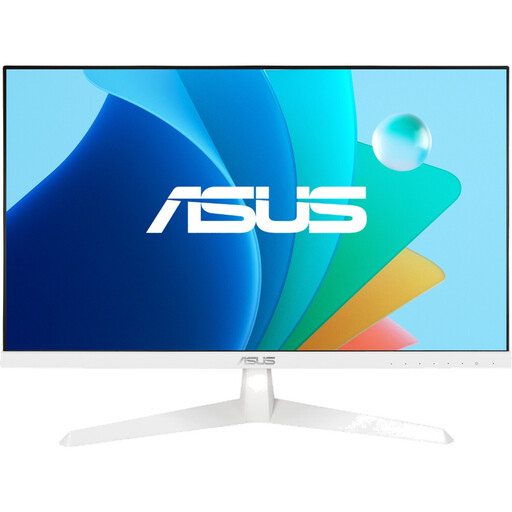 No image available
If you’re looking for a 24-inch monitor for general screen work, you can compare its stated display specifications with your actual colour workflow.
The product title lists Full HD, an IPS panel, 100 Hz, 1 ms MPRT and HDMI.
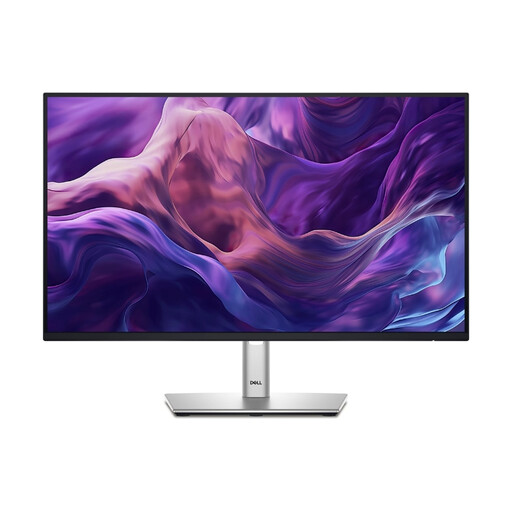 No image available
If your small desk also serves as a laptop workstation, USB-C may be useful when planning your connections. Check that it’s compatible with your laptop and cable.
The product title lists FHD, IPS and USB-C.
 No image available
If you’re looking for a 24-inch display for a compact workspace, check before buying that the product’s colour and positioning details meet your needs.
The product title lists a 24-inch screen.
No. The percentage describes the stated coverage of a colour gamut, not the accuracy of your specific device throughout its working life. Check that the colour mode is suitable, and set up an appropriate calibration and profiling process for colour-critical work.
Measure the available space, including room for the stand and cables. If you want to connect a laptop via USB-C, check its video output, charging requirements and cable compatibility. The stated charging power varies between monitors.
A measuring device for recalibration may be an additional purchase. To work out your own electricity costs, you’ll also need the power consumption of the specific monitor, how long you use it for and your electricity tariff.
When you buy from a business seller, you’re generally entitled to a statutory guarantee lasting at least two years from the date you receive the product; a voluntary manufacturer’s warranty doesn’t replace it. For eligible online distance purchases, there is generally a 14-day cancellation period. The European Commission lists computer monitors as electronic displays covered by EU energy labelling rules; check the label for the specific offer.