If you already have a monitor
If you want to keep using your screen, a mini PC can free up desk space for paperwork. Before buying, check the monitor connection and exactly what’s included in the box.


If you already have a suitable monitor, a mini PC is often a space-saving place to start. If you don’t, an all-in-one can combine the computer and screen. A compact desktop is worth considering if ports or future upgrades matter more to you than having the smallest possible case. In every case, consider the footprint of your entire workspace, whether the connections and software meet your needs, and whether the operating system is supported and can be updated.
If you want to keep using your screen, a mini PC can free up desk space for paperwork. Before buying, check the monitor connection and exactly what’s included in the box.
If you need a computer and a screen, an all-in-one is worth considering. Make sure there’s enough room on your small desk for the screen and its stand.
For household files or occasional online banking, choose a supported, up-to-date system and make sure you have a backup you can restore from. These requirements apply whatever the PC form factor.
A good fit if: you already have a suitable screen or want to choose your computer and screen separately.
Bear in mind: a screen and input devices aren’t always included; some models are barebones.
A good fit if: you want to buy the screen and computer together and have enough desk space for the screen and stand.
Bear in mind: you’re tied to the screen that comes with the device; ports and upgrade options vary by model.
A good fit if: you already have a screen and suitable ports or future upgrades are especially important to you.
Bear in mind: the case, screen, cables and paperwork all need to fit in your workspace.
| What matters | What to check before buying | Who it matters most to |
|---|---|---|
| Space and monitor | Measure the total footprint and check that the PC’s video output matches the monitor’s input. | If I want space to put paperwork beside my screen on a small desk, I need to consider the case, stand and connections together. Around 36% of consumers prioritise saving space and continuing to use a monitor they already own. |
| Updates and backups | Check operating system support, software compatibility and that you can make a separate backup and restore from it. The Federal Office for Information Security recommends backing up data regularly. | If I use household files or online banking, I want to keep my software up to date and be able to restore my own files. Around 29% of consumers put these security and backup considerations first. |
| Complete workspace | For the exact product listing, check the screen, keyboard, mouse, RAM, SSD, operating system and required cables. | If I don’t have a suitable screen yet, I want to know whether the listing gives me everything I need for a complete workspace or whether I’ll need extra parts and setup. Around 21% of consumers prioritise a complete workstation with a screen and pay particular attention to what’s included. |
| Ports and future upgrades | Check that the exact model number has the USB and video outputs you need, along with documented RAM and SSD options. | If I want to connect devices I already own or upgrade my computer later, I should compare the specific ports and options on the configuration I’m considering. Around 14% of consumers prioritise ports and future upgrades over having the smallest case. |
You’ll only have space for paperwork if you also allow room on the desk for the monitor, stand, keyboard and cables.
Plan out your entire workspace and check the footprint before choosing a form factor.
The tested Intel NUC 13 NUC13ANKI7 needed RAM, storage and an operating system to be purchased and installed separately. This doesn’t mean every mini PC comes with the same contents.
Compare the parts list for the exact product listing with that of a ready-to-use PC.
Components and operating systems can vary within a product range, so one configuration doesn’t tell you what’s included with another product number.
Check the full model number, along with the RAM, SSD and operating system for the exact configuration.
The screen and stand still need to fit on your desk. Display features and upgrade options also vary between models.
Check the screen position, footprint and specification of the exact configuration before buying.
Mini PCs for workspaces with a separate screen.
Cubi mini PCs for workspaces with a separate monitor.
ExpertCenter all-in-one models combine a computer and screen.
ThinkCentre M75q Gen 5 Tiny for compact workspaces with a separate screen.
Pro Mini 400 G9 for small workspaces with a separate monitor.
Mac mini, a compact macOS desktop for use with an external screen.
This selection features mini PCs for use with a separate monitor. Check that the connections, specification and what’s included suit your existing screen and your needs.
 No image available
For a small workspace with an existing monitor; the HDMI outputs listed may be useful for connecting it.
Listed in the product title: Windows 11, 8 GB DDR4, 256 GB SATA SSD, Bluetooth 5.2 and Wi-Fi 5.
 No image available
A possible option for a compact workspace if the listed HDMI outputs are compatible with your existing monitor.
Listed in the product title: Intel N4100, 8 GB LPDDR4, 256 GB SSD, two HDMI outputs, 1000M LAN, 2.4/5 GHz Wi-Fi and Bluetooth 5.0. Keep the ventilation openings clear and use only the supplied power adapter.
 No image available
For a small workspace with a separate screen; the product title lists HDMI and DisplayPort.
Listed in the product title: Intel Core i3-8109U, up to 3.6 GHz, 12 GB RAM, 256 GB SSD, HDMI, DisplayPort, 1000M LAN, Wi-Fi 5 and Bluetooth 5.0.
 No image available
For use with a separate monitor; the product description lists several video outputs. Check they match your screen before buying.
Listed in the product title: AMD Ryzen 5 6600H, 12 GB LPDDR5 and 512 GB NVMe SSD. The description says to use the original power adapter and keep the ventilation clear.
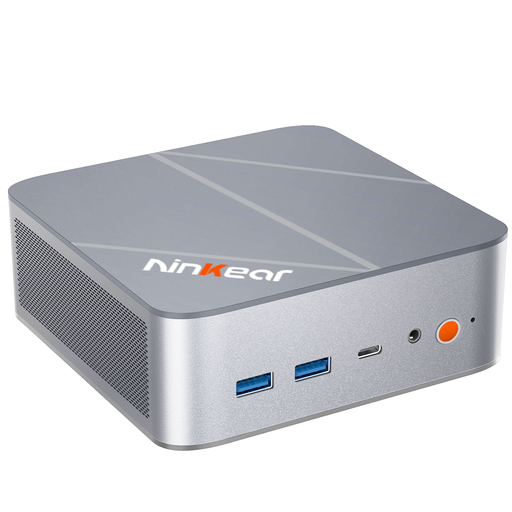 No image available
For use with a separate screen; the listed case dimensions can help you plan your desk space.
Listed in the product title: Intel i9-12900HK, 16 GB DDR4, 1 TB SSD, USB 4.0 and 130 × 127,5 × 52 mm. The title lists Windows 10/11 and compatibility with Windows and Ubuntu; check which operating system is actually installed before buying.
According to the Federal Office for Information Security, online banking doesn’t require a high-performance computer. Check the system requirements for your household finance software, and keep your operating system and browser up to date.
Regularly make copies of files you’ve created and store them on a separate storage device. Check that you can restore them. For personal use, the Federal Office for Information Security recommends options including external hard drives and USB sticks.
Not necessarily. The Intel NUC 13 NUC13ANKI7 included in the mini PC test needed RAM, storage and an operating system to be purchased and installed separately. What matters is what’s included with the exact product listing.
Check its update status, as regular support for Windows 10 Home and Pro ended on 14 October 2025. Microsoft lists extended security updates as a separate option; check which supported system is installed on the specific device.
If a product is faulty, your statutory rights are against the seller and are separate from any voluntary guarantee. According to the consumer advice centre, goods bought online can generally be returned within 14 days of receipt using your right to cancel; the details and exceptions depend on the contract.